The Railway Bridge
Audio narration in this language is not available yet.
the third-oldest bridge in Prague
The railway bridge from the 19th century designed to link the Main Station and the Smíchov Station.
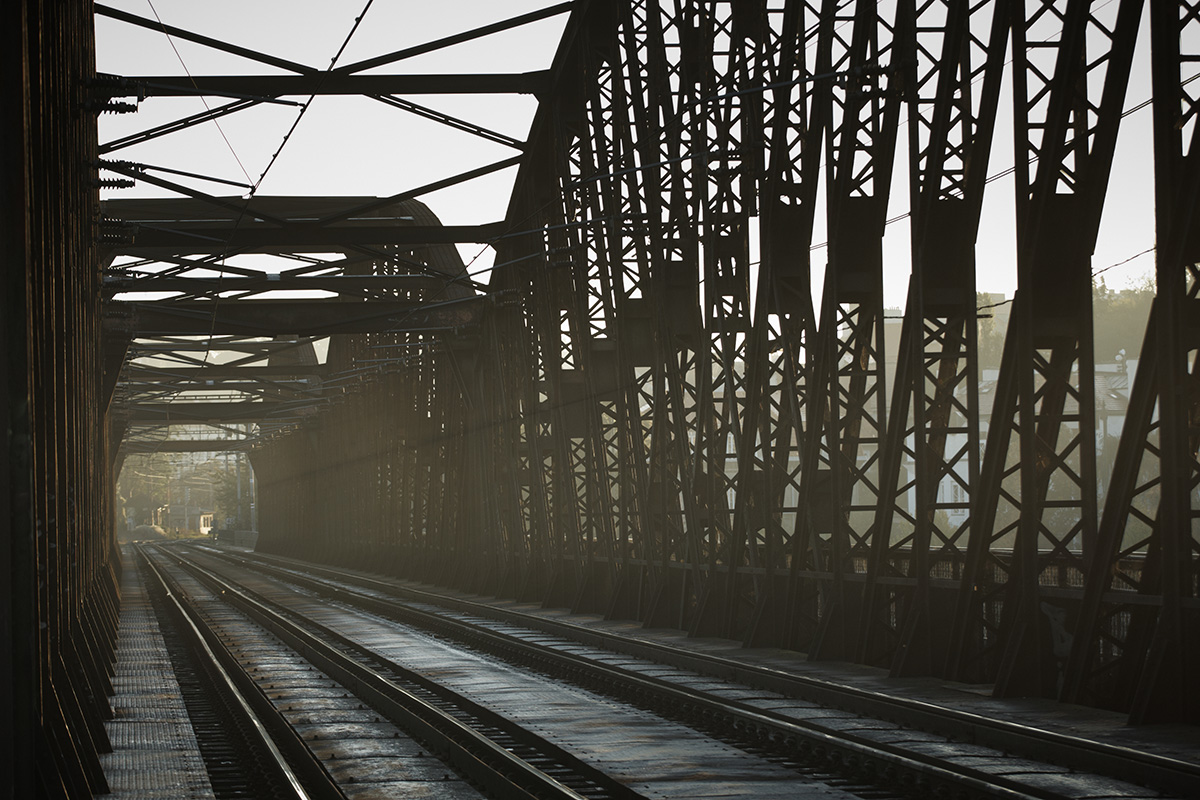
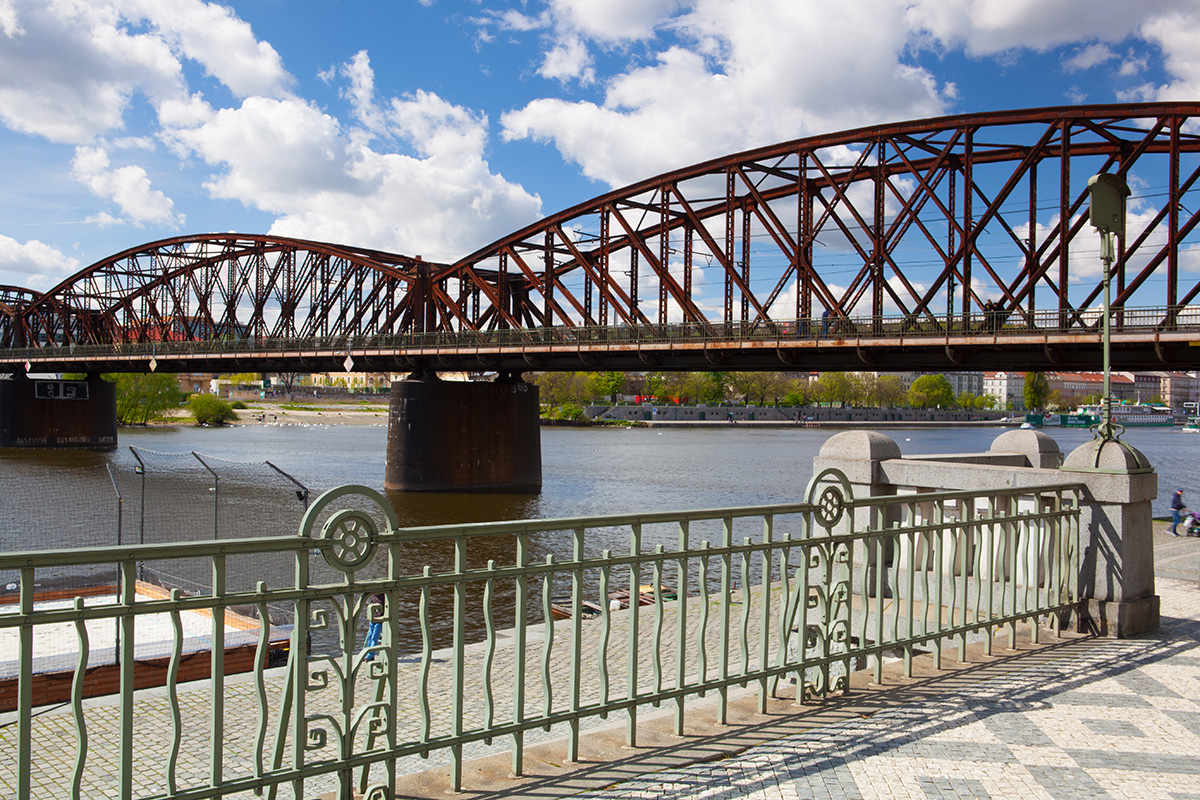
The Vyšehrad Railway Bridge at Výtoň is the fourth bridge over the Vltava River in Prague, the second Prague railway bridge across the Vltava River, and the third-oldest bridge in the city. The bridge was built in 1871 – 1872 by the bridge building company Harkort in Duisburg and was a link between the then Franz Joseph Station (now Main Station) and the Western Station (now the Smíchov Station).
In the beginning it was used only for freight transport; passenger traffic on the bridge was allowed only in 1888. Originally, the bridge was just a monorail made of low-grade wrought iron, and soon had to be rebuilt as a double-track of cast iron. In addition pedestrian walkways were added on both sides.
The new structure was built by three domestic companies: Bohemian-Moravian Machine Works, the firm of the Prášil brothers, and the Ruston Machine Works. It is hard to believe that the old bridge was replaced in just three days! Work began at 6 a.m., the original beams were removed using a cable construction 7.5 m downstream, and then new beams were put on the new pillars in the axis of the original bridge. On the second day the new bridge was in place, and rail traffic was restored on the night of the third day. River transport was not disrupted at all.
The old bridge had 5 main spans of 56.9 m and the new one had only three spans of 69.9 m. The width of the old bridge was 4.3 m, whereas the new one was 8.1 m. The biggest contributor to the design work was Jan Kolář, a professor at the Prague School of Technology.
In 2004, the bridge was declared a cultural monument, which complicates plans to modernise the track between the Main Station and the Smíchov Station.