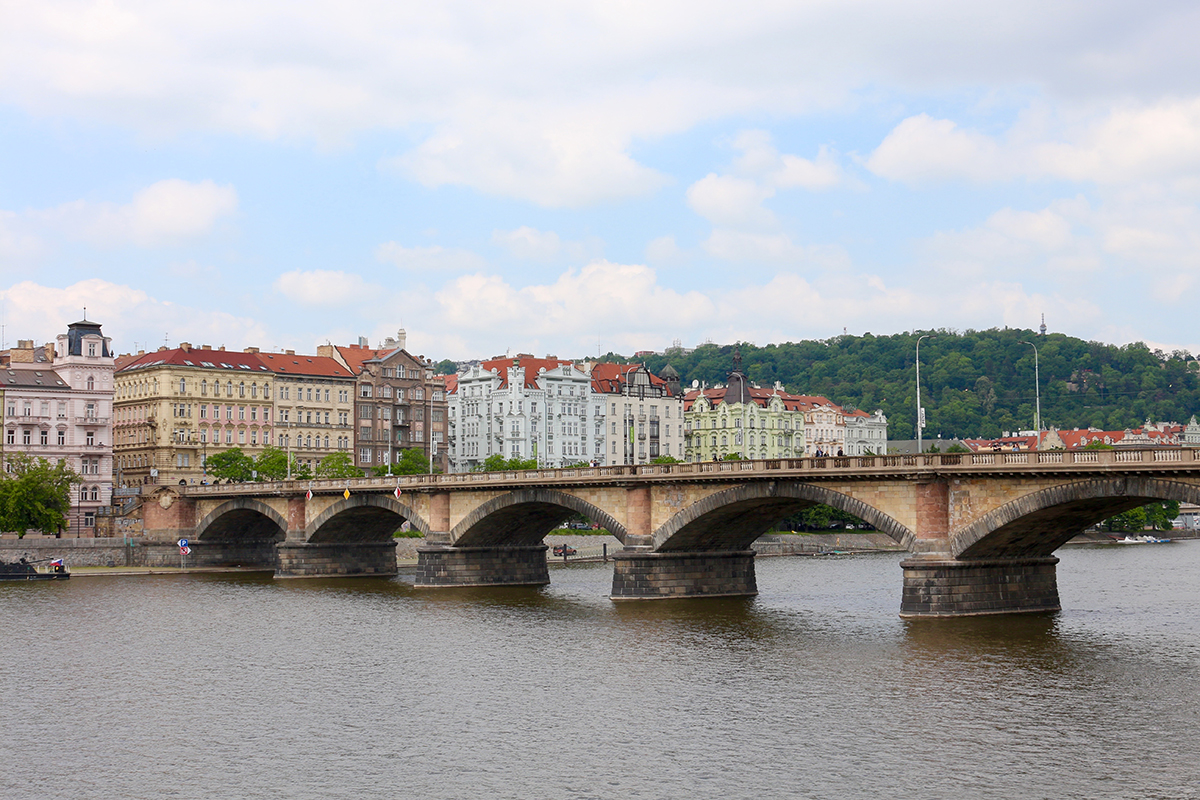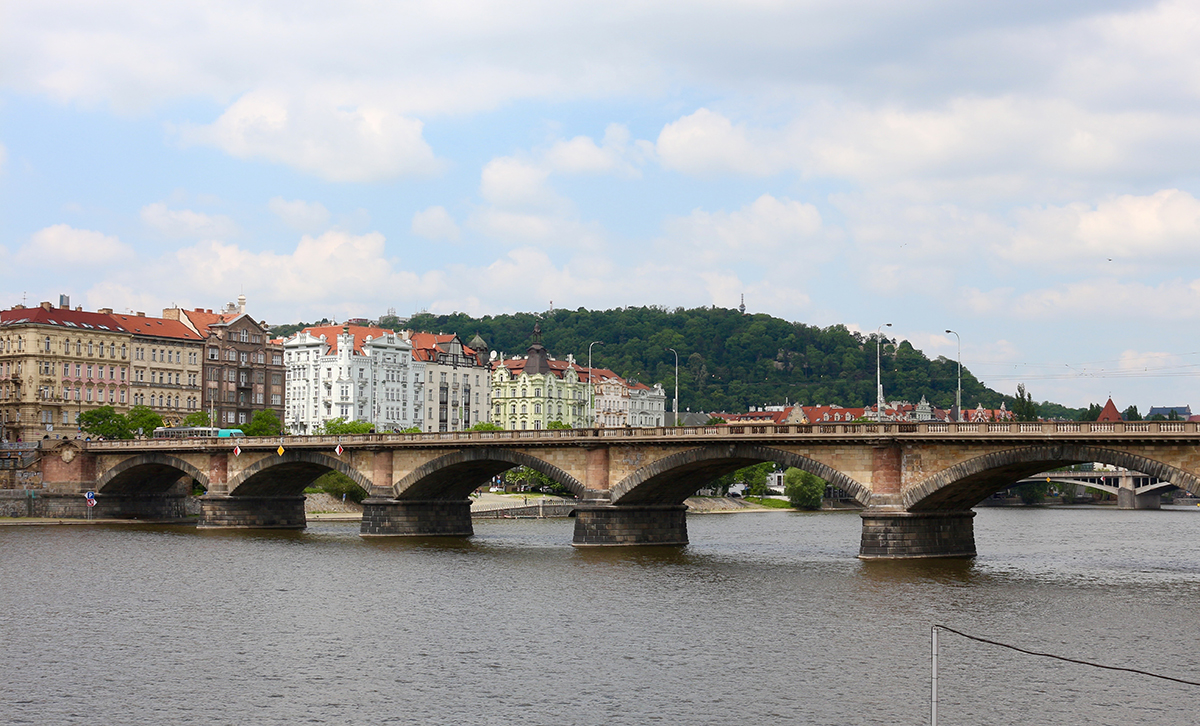
Palacký Bridge
Audio narration in this language is not available yet.
the third-oldest stone bridge
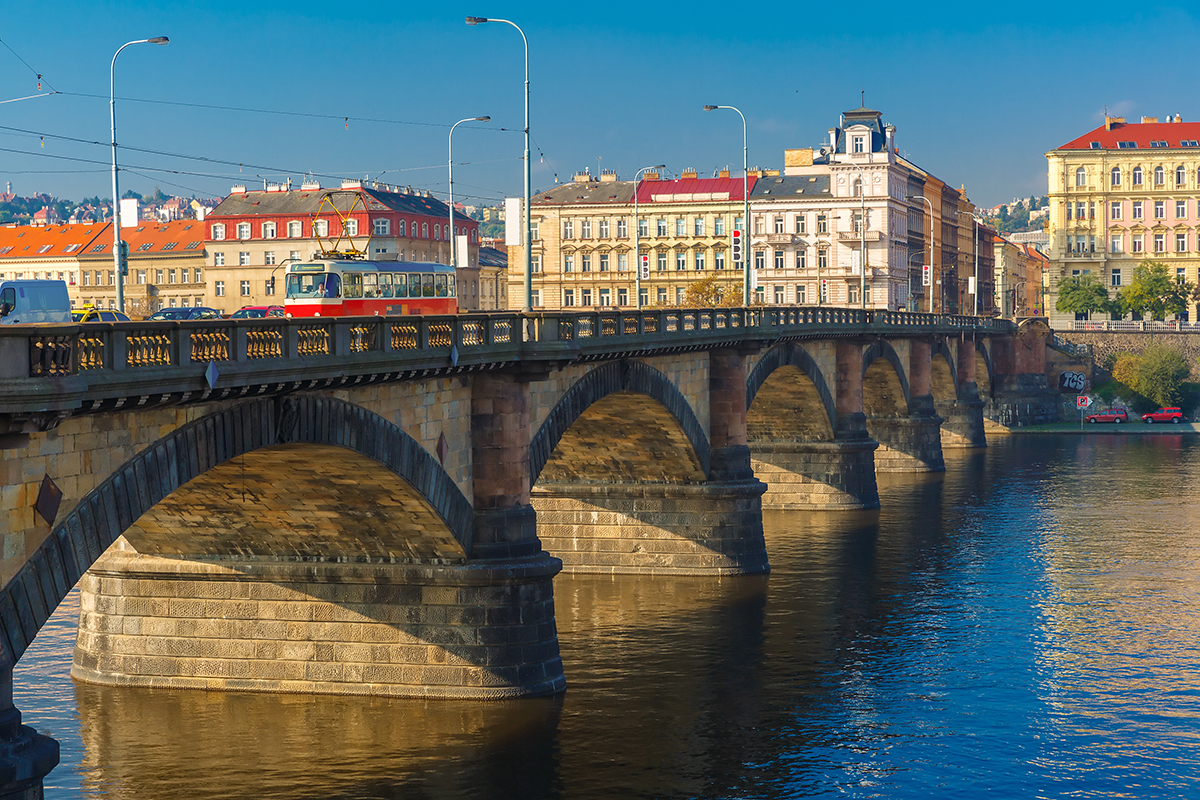
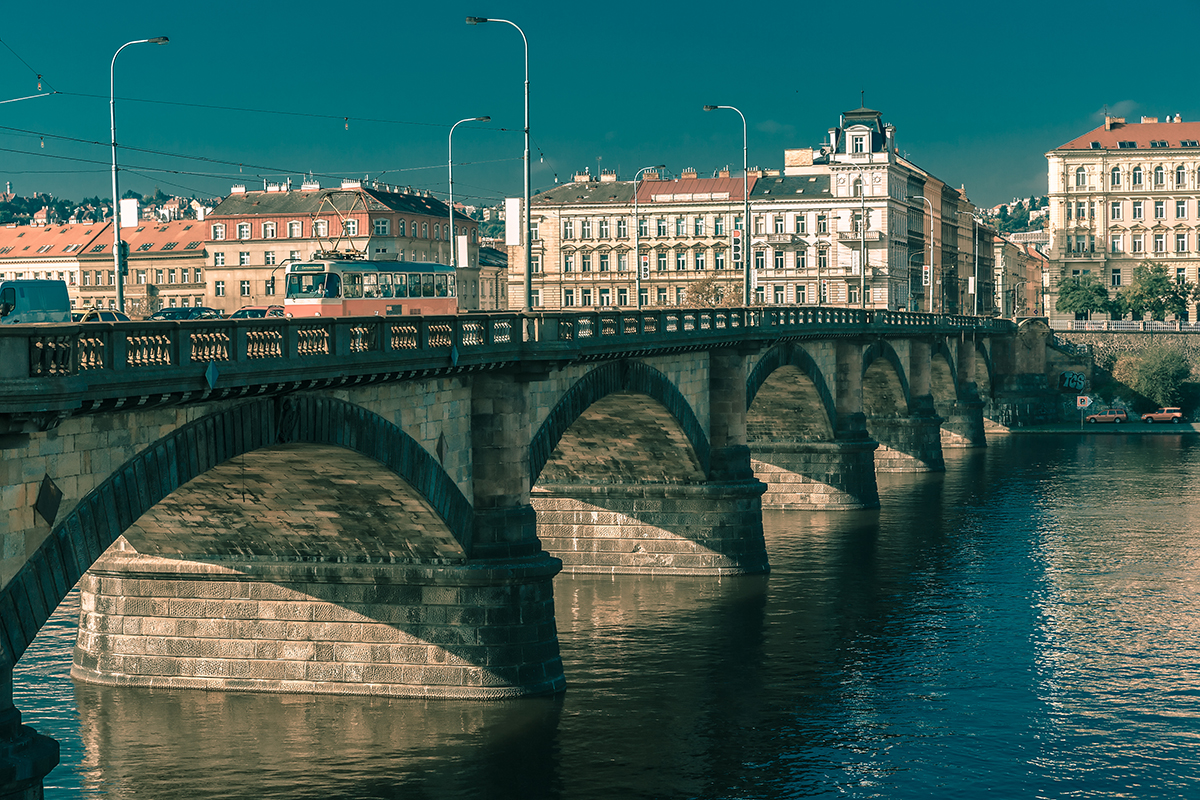
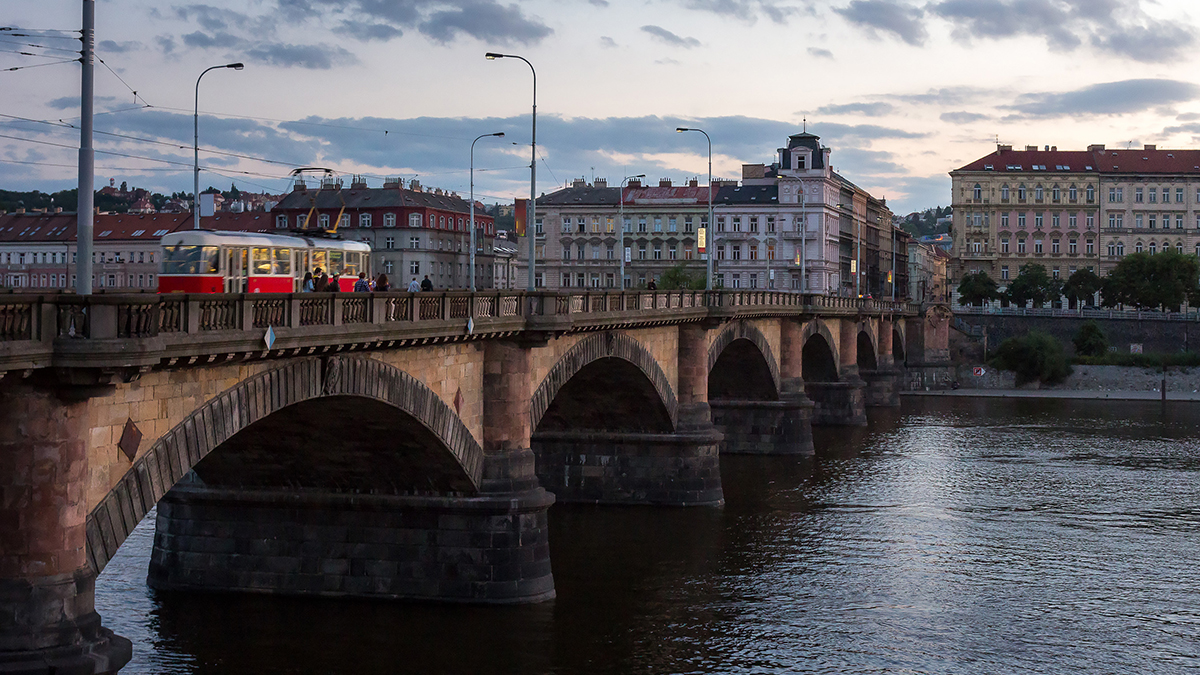
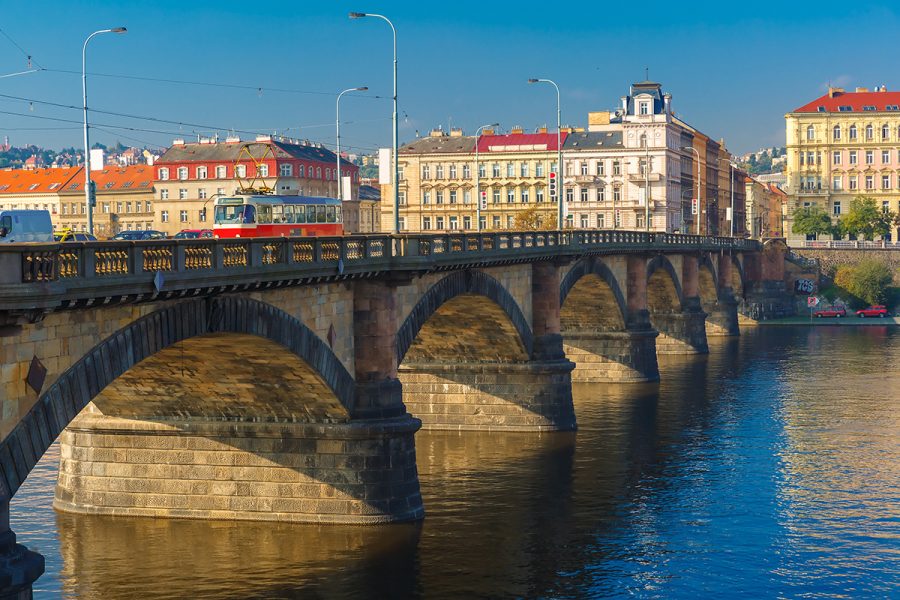
This 19th century bridge named after František Palacký is the third-oldest stone bridge in Prague.
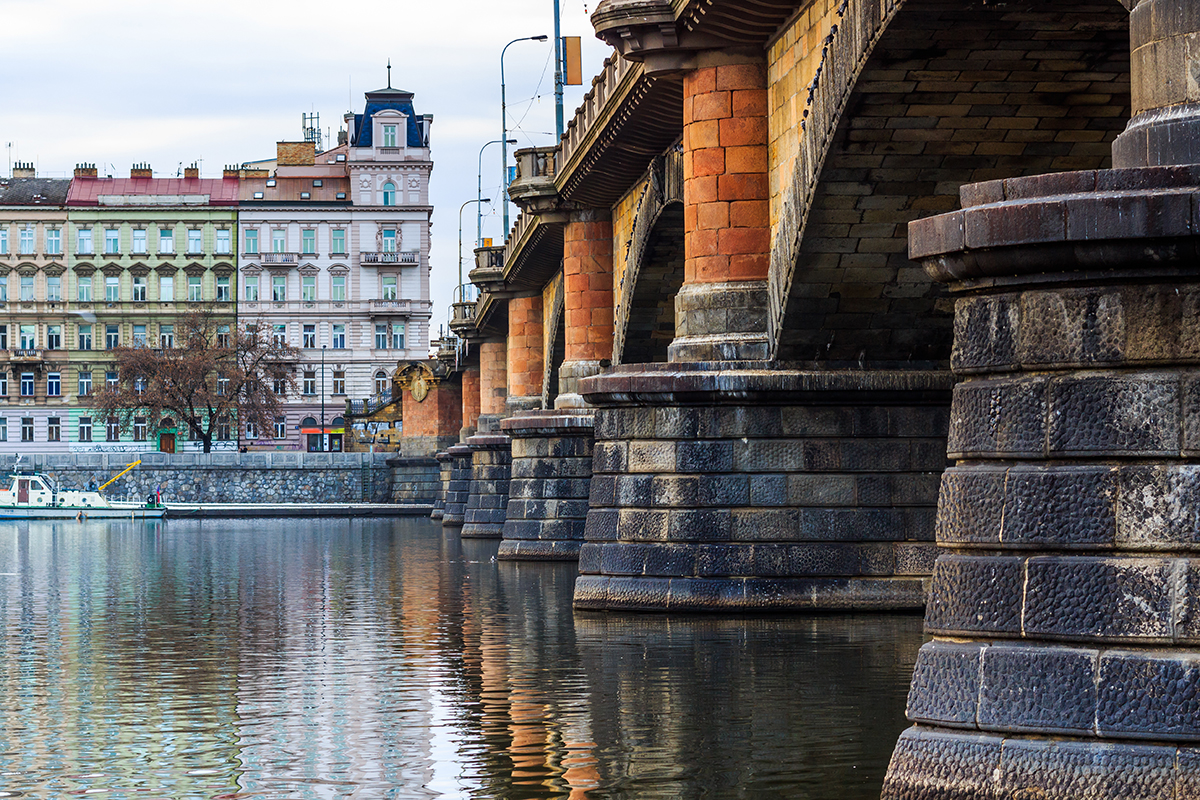
The Palacký Bridge is the fifth bridge across the Vltava River in Prague and the third-oldest stone bridge in Prague (after the Charles Bridge and the Negrelli viaduct). The bridge also has one first – during its construction was used new techniques – coffer-dam foundation of the pillars. Until that time pillars were placed in open ditches, on gridirons or were driven into piles. The coffer-dams were supplied by the Ringhoffer engineering works in Smíchov.
The reason for its construction was the need to link industrial Smíchov with the rapidly increasing mechanical factories, brewery and calico factories by direct rail and road links with other industrial areas in the Czech lands (in particular Dvůr Králové, Plzen and Kladno). The authors of the project were the engineer Josef Reiter and Bedřich Münzberger; the bridge was built by a German company from Vienna, the brothers Klein, Schmoll and Gärtner.
The construction began with the laying of the foundation stone in 1876. The bridge was built of stone with elements in the national colours; the pillars and vaulted header blocks were made of blue granite, the parapet walls of red sandstone and the balustrades of white Carrara marble. These colour differences, however, were soon obscured by the effects of fumes.
In 1878 traffic was launched on the bridge. The railway tracks were laid eccentrically and cars ran only on one side and in one direction. The bridge was first known as "the stone bridge at Smíchov" or the "Podskalský bridge", but soon was named after prominent figure of the Czech revival František Palacký, whose monument stands on the right bank.
Although it was the widest bridge in its time, it soon needed to be expanded. The fact that this was being considered is evidenced by the location of the monument at the axis of the intended extension of the bridge. Finally, the bridge was expanded according to a different design only after the Second World War at the same time as the removal of damages caused by the aerial bombing of 1945. In 1950 – 51 the bridge was repaired and expanded from 7.7 m to 10.3 m for transportation, the sidewalks were expanded to 1.8 m, and the total usable width of the bridge, therefore, from 10.7 to 13.9 m. The length of the bridge between the pillars is 228.8 m.
The bridge also had rich sculptural decoration, which is today preserved only in part. At the tops of each of the arches are 14 stone coats of arms of Prague and other cities located on the Vltava and Labe rivers created by sculptor Bohuslav Schnirch. On the walls of the outermost wings on both sides of the bridge were four other larger coats of arms of cities; however, only two on the Smíchov side have been preserved.
On the massive pedestals of both pillars of the bridge were statues by Josef Václav Myslbek with figures from Czech mythology – Libuše and Přemysl, Lumír and Píseň, Záboj and Slavoj, Ctirad and Šárka. The air raid on Prague in 1945 seriously damaged the sculptures on the New Town side. After the repair three sculptures were relocated to Vyšehrad. The fourth and most heavily damaged, the sculpture of Libuše and Přemysl, was replaced with a copy, which was also later relocated.