Hlávka Bridge
Audio narration in this language is not available yet.
the twelfth bridge across the Vltava River
The widest bridge in the country, the first concrete bridge over the Vltava River, bears the name of Czech architect Josef Hlávka.
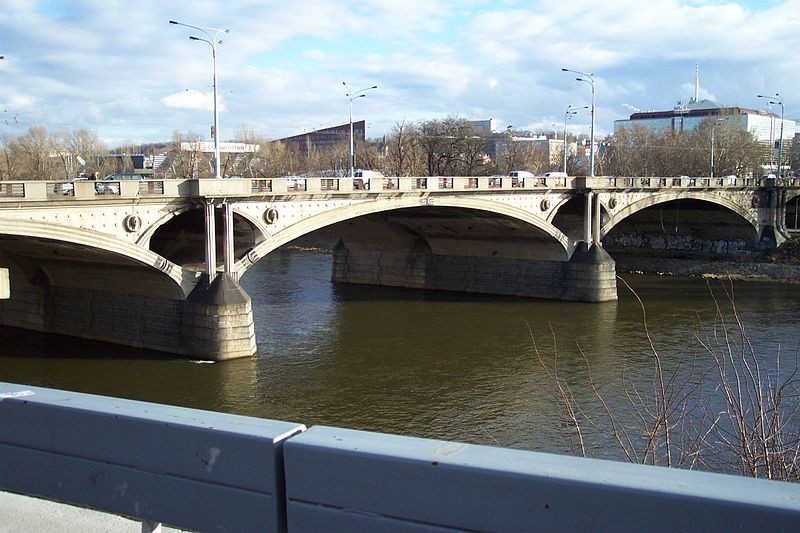
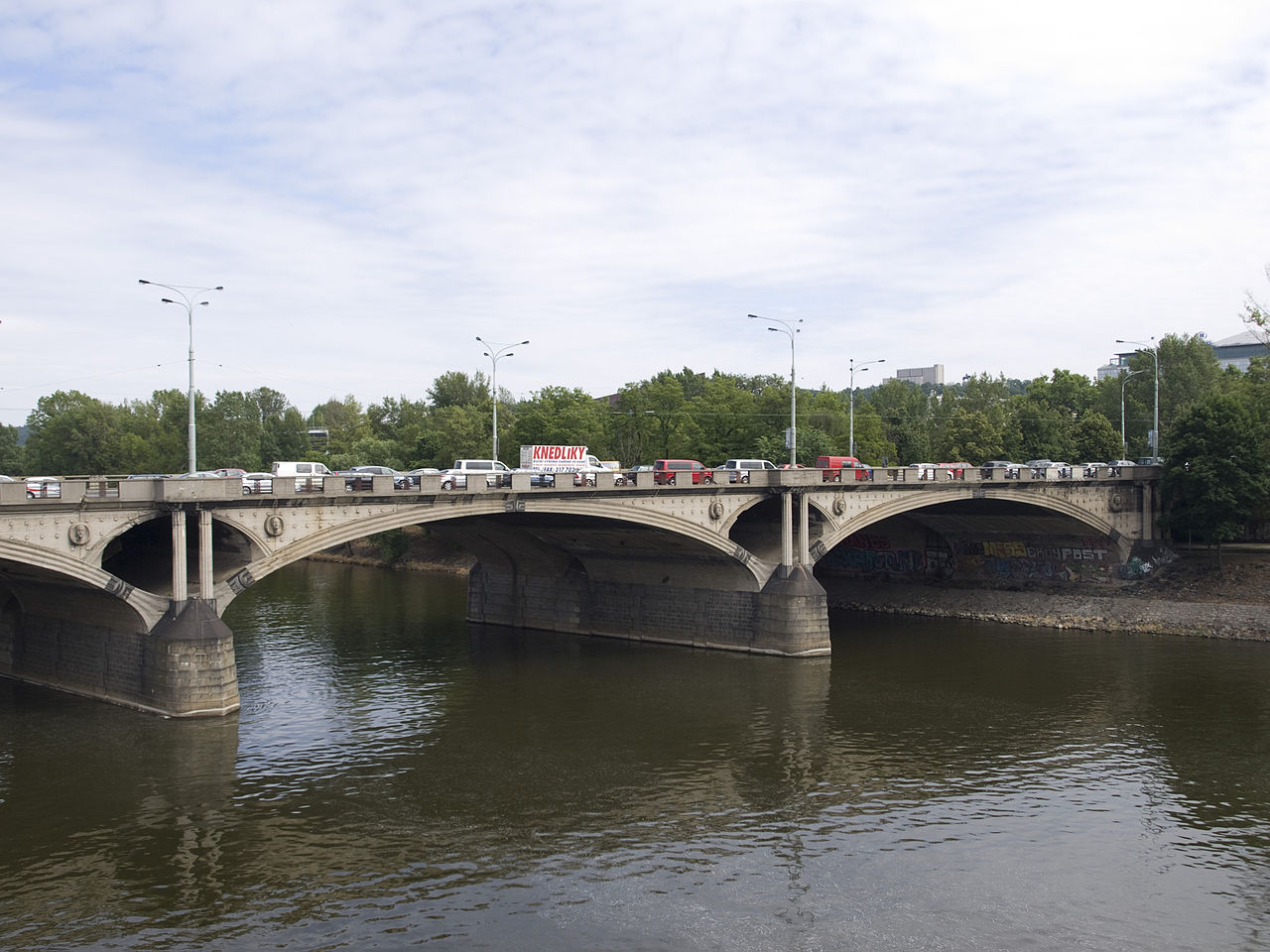
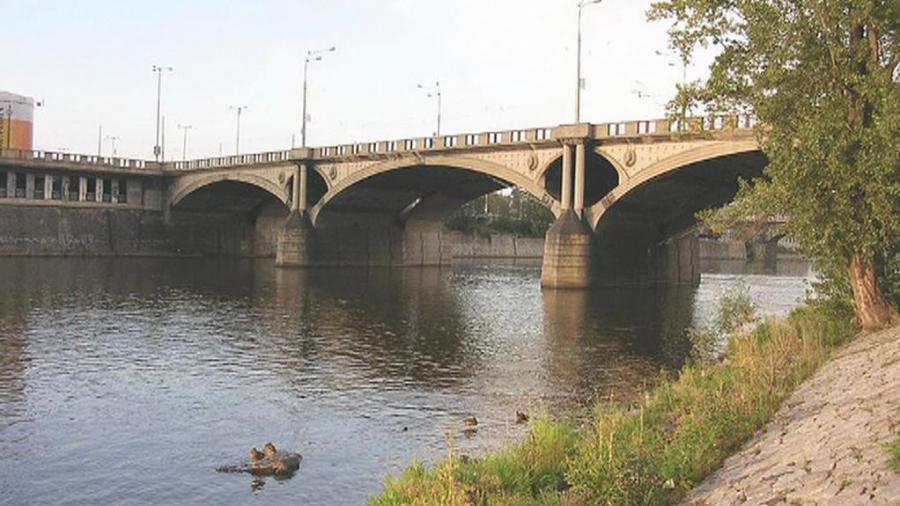
The Hlávka Bridge is counted as the twelfth bridge across the Vltava River in Prague and is the widest bridge in the country. It was also the first Prague concrete bridge over the Vltava River. After the reconstruction and extension of the bridge from 16 to 28 m it took this title from today's Štefánik Bridge. The Hlávka Bridge is an important part of the North-South motorway.
The impetus for its construction was the establishment of a central slaughterhouse in the Holešovice district at the end of the 19th century, which needed to be better linked to the Těšnov station. Two generations of engineers clashed over the bridge project. The older experts preferred iron, while the younger preferred the more modern material concrete; therefore, it was eventually decided that one part of the bridge would be iron and the other concrete.
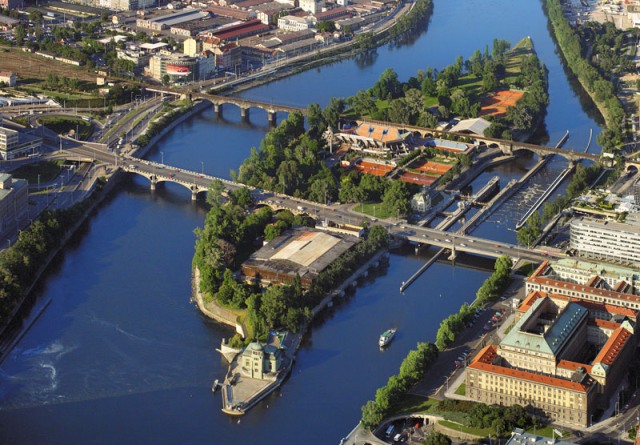
The City of Prague then bought Štvanice Island from private owners. The construction of a steel bridge was launched in 1908 from the southern part based on a design by Mečislav Petrů. For the first time converter Thomas steel was used as opposed to steel from Siemens-Martins furnaces. The length of the iron bridge was 96 m and the width 16 m; the sidewalks were three metres. Like the Čech Bridge, the road was paved just with Australian Jarrah hardwood.
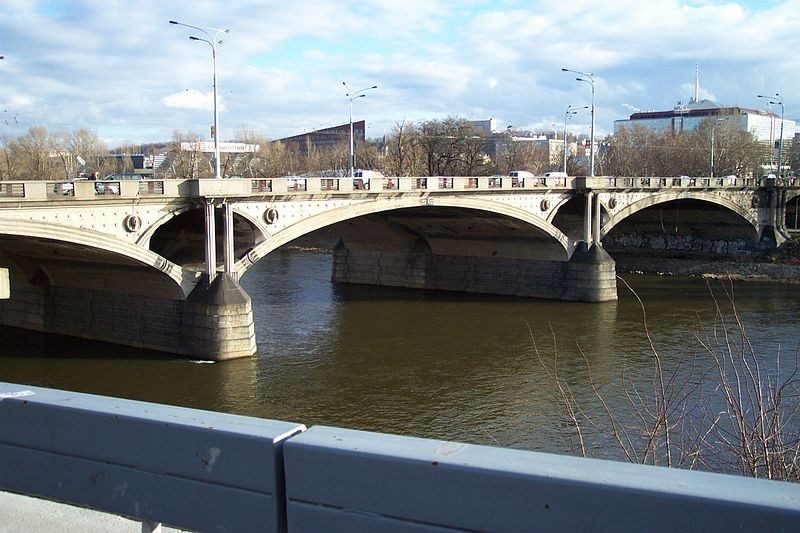
The bridge was opened to traffic after the completion of the second part of the bridge on the Holešovice side, which was concrete. It was designed by František Mencl and Pavel Janák and built by the firm of Karel Herzán. The concrete part has three large arches over the river and four smaller ones over Štvanice Island.
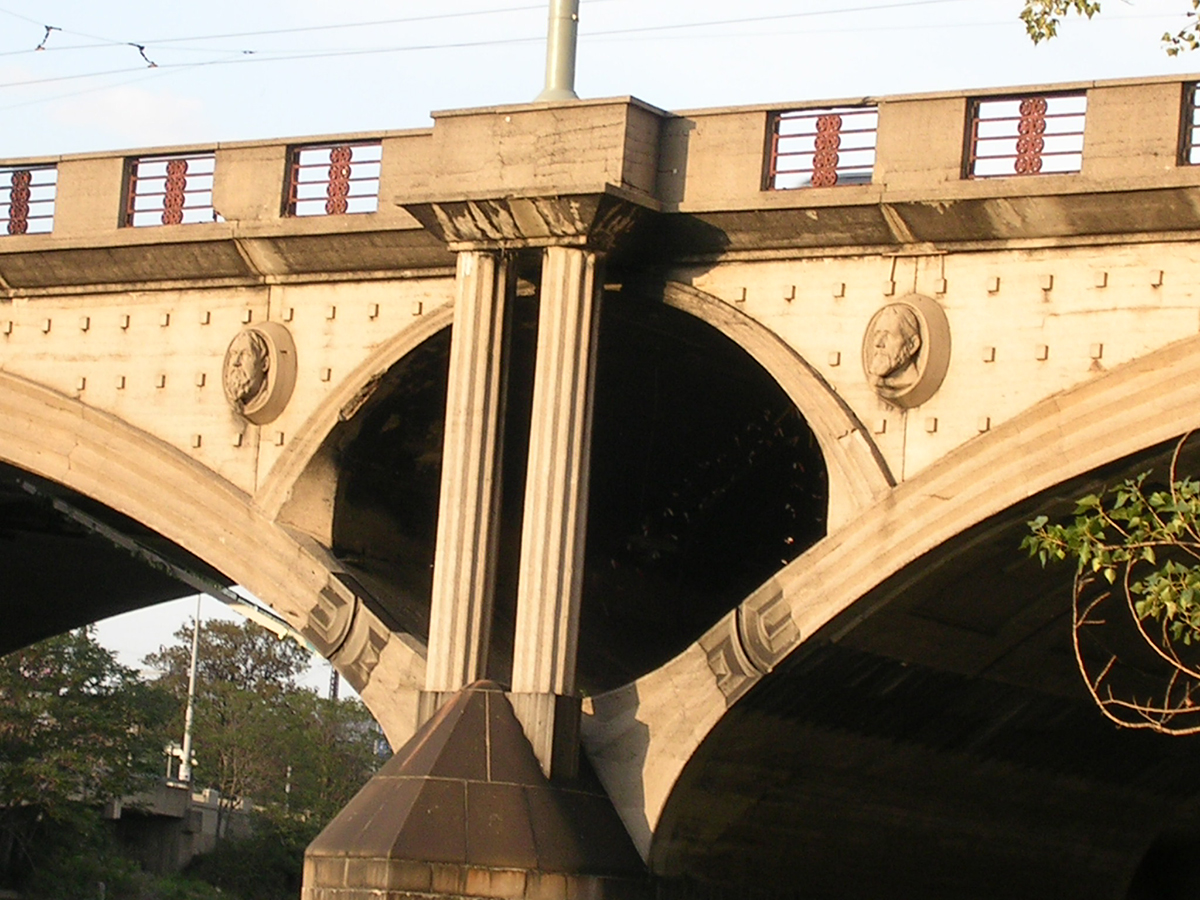
It is worth mentioning the remarkable decorations. Above the island piers are less well-known 2.5 m high reliefs of male torsos. These were carved directly into the concrete masonry by Myslbek's pupils Bohumil Kafka and Ladislav Kofránek. When extending the bridge in the 1980s they were replaced with copies. Better known are the medallions of the 12 Councillors above the pillars at the sides of the bridge by sculptors Josef Mařatka and Otto Guttfreund.
The most important and best-known sculptures are the group Work and Humanity created by Jan Štursa. In the Work group the sculpture depicted himself as a mason in the figure of a man with a hammer. A giant sandstone sculpture weighing 16 tons was dismantled and stored on Štvanice Island for nearly 20 years due to the extension of the bridge and the construction of an extra-level junction. In 1983 it was restored to the Holešovice bridgehead on newly built pylons separated by more than 80 m. The bridge is named in honour of builder, architect, generous patron and founder of the Czech Academy of Sciences Josef Hlávka.
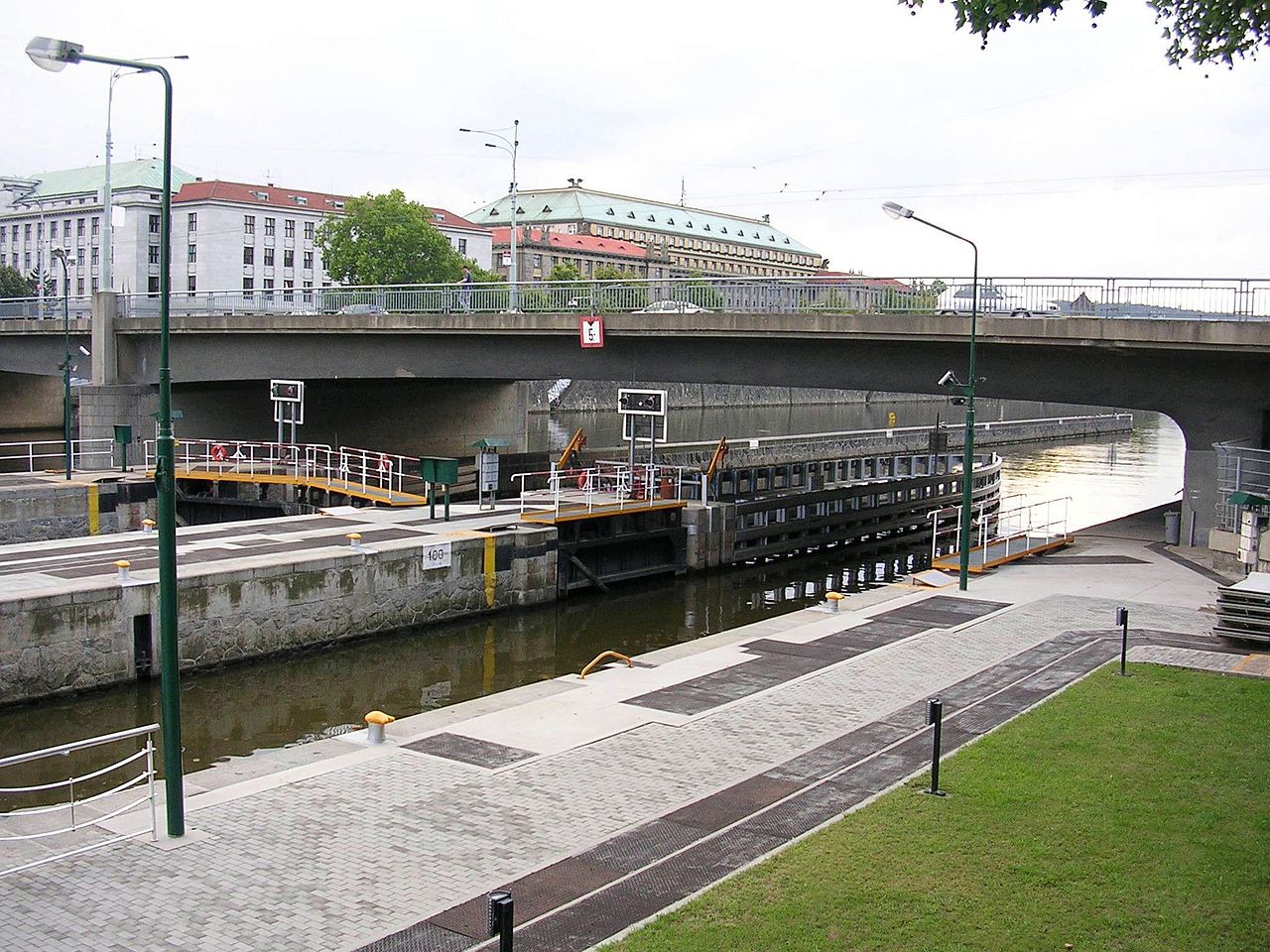
During the reconstruction in 1958 – 1962, the bridge underwent a thorough reconstruction and the iron part of the bridge was replaced with reinforced concrete.