Smetana Embankment
Prague's first promenade
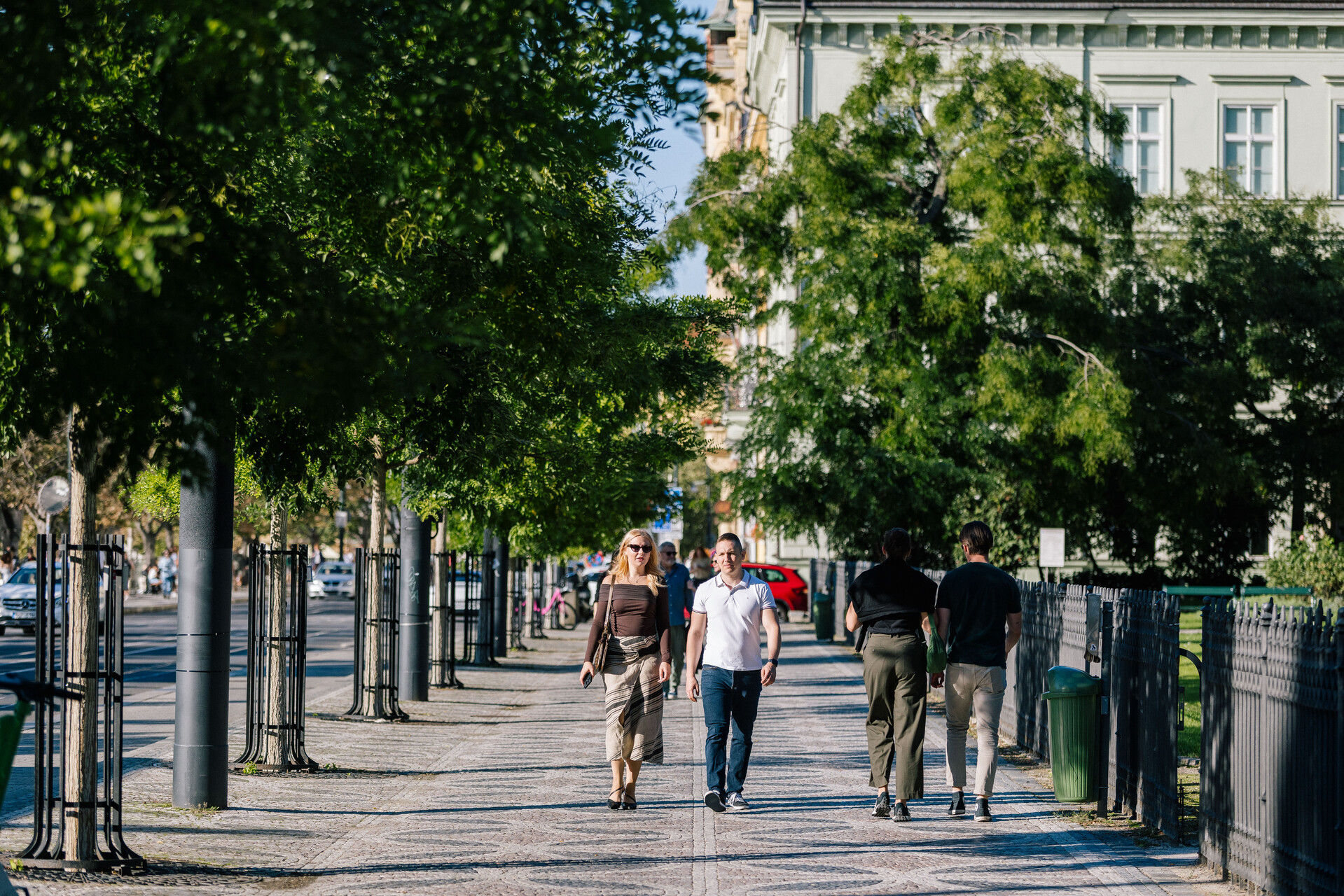
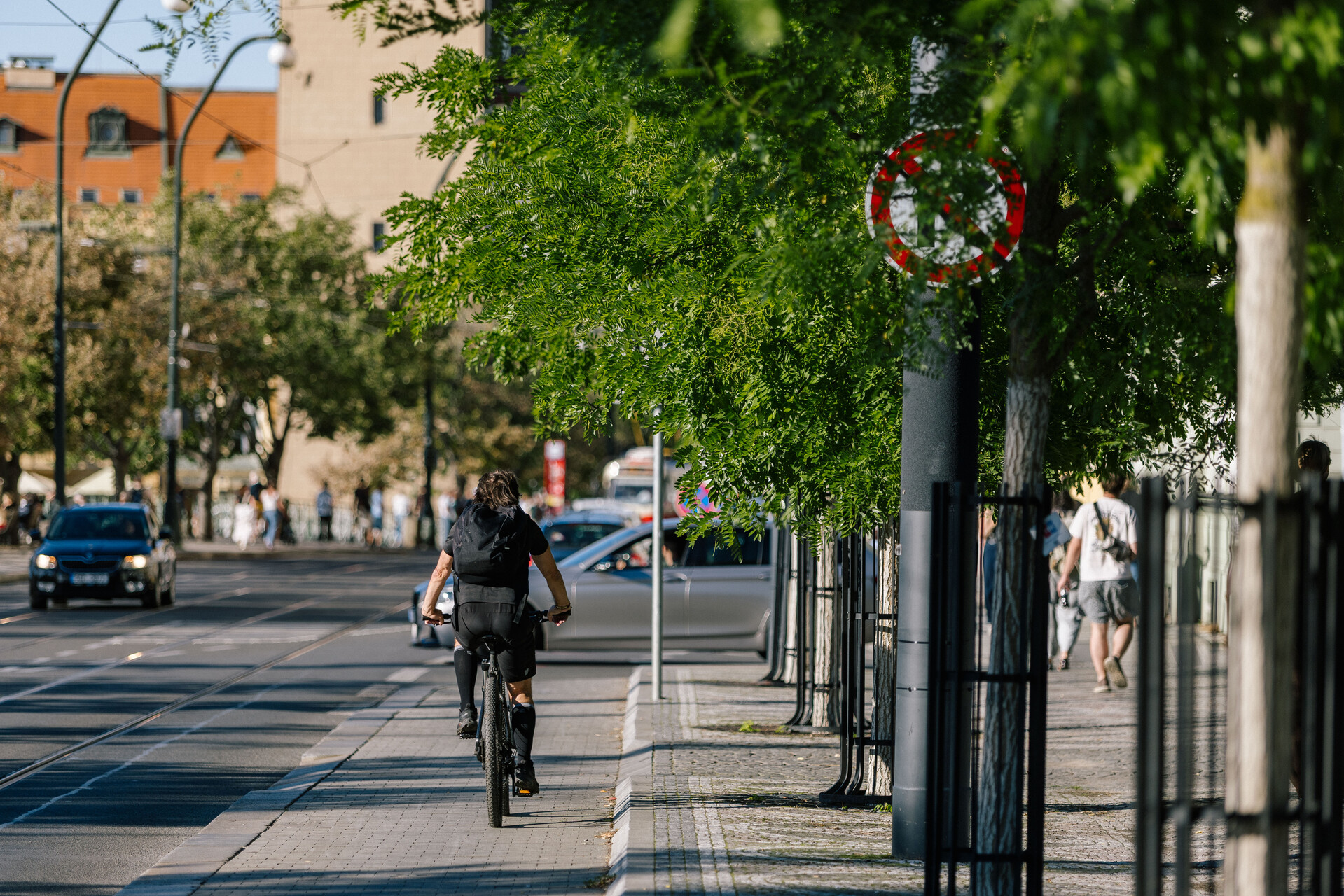
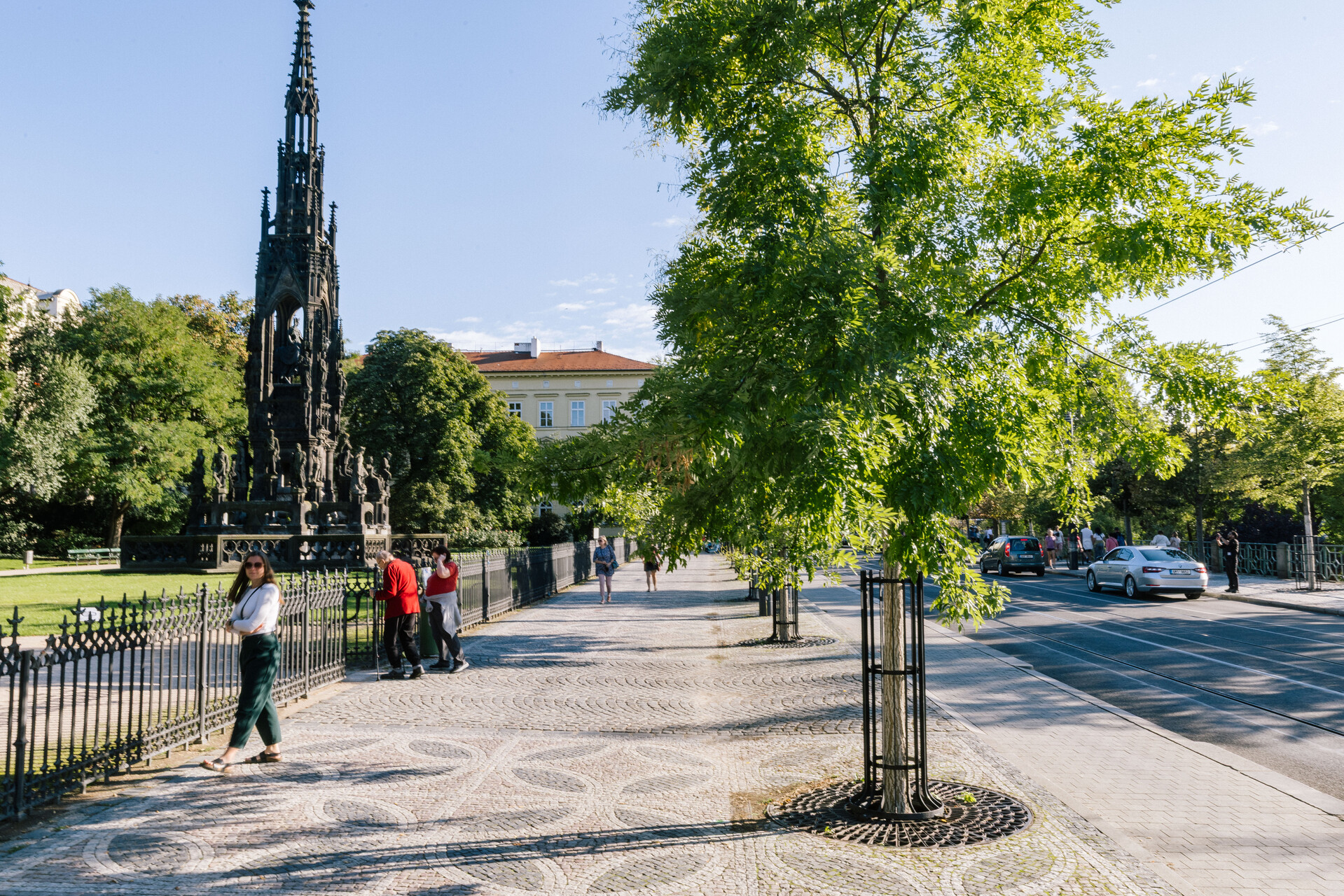
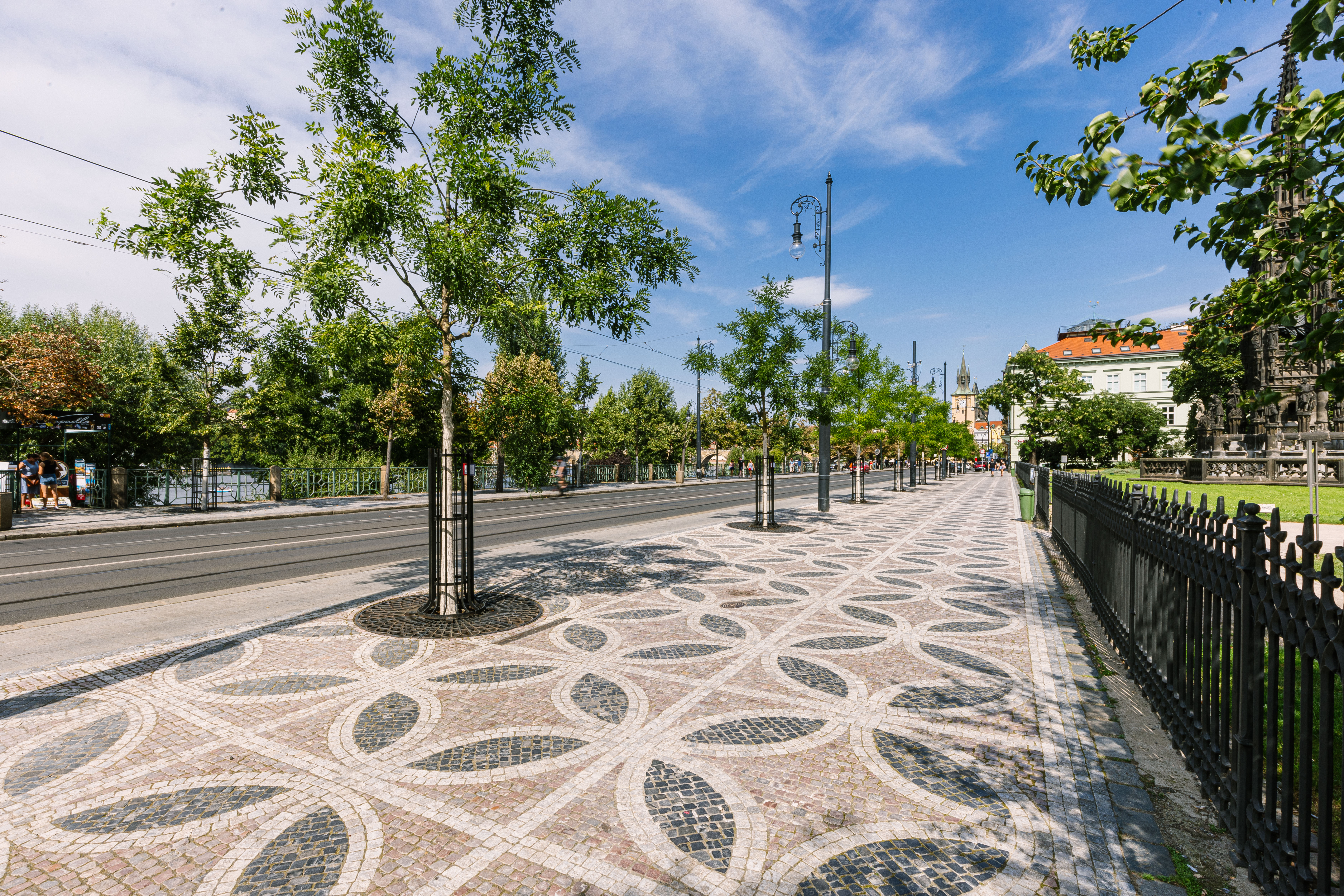
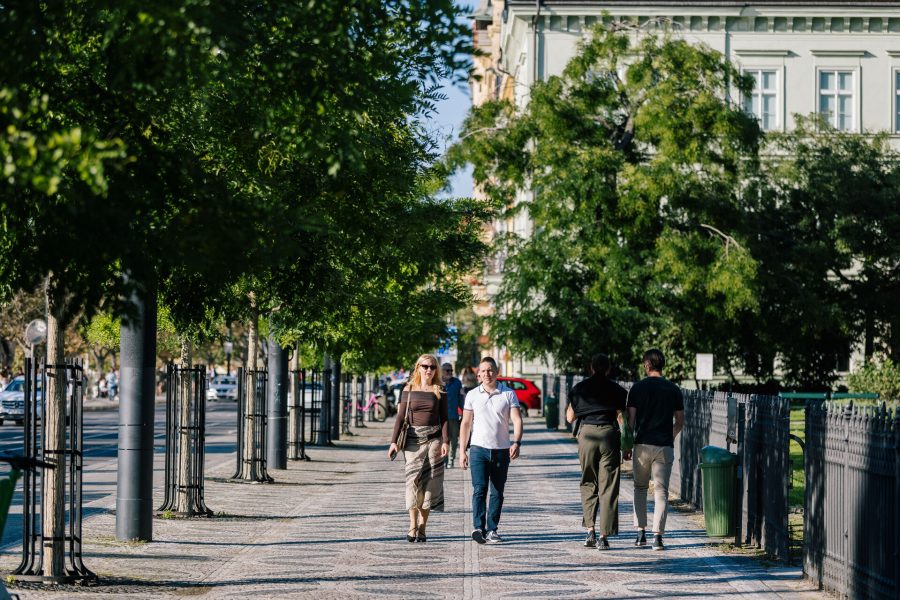
New tram stops, a freshly planted avenue of trees, a broad pedestrian promenade paved in Prague mosaic and a safe, segregated cycle lane: the transformation of Smetana Embankment is the largest change to central Prague in several decades.
Smetana Embankment was created between 1841 and 1845 as Prague's first riverfront promenade, designed by German architect Bernhard Grueber. It ran from Charles Bridge to the then new Emperor Francis Chain Bridge. Around 1894 it was named Francis Embankment. From 1919 to 1952 it was called Masaryk Embankment, apart from 1940–1945 when it formed part of Vltava Embankment. It has borne its present name since 1952. During the 20th century the promenade ideal receded and the embankment became dominated by heavy traffic. That has slowly begun to change.
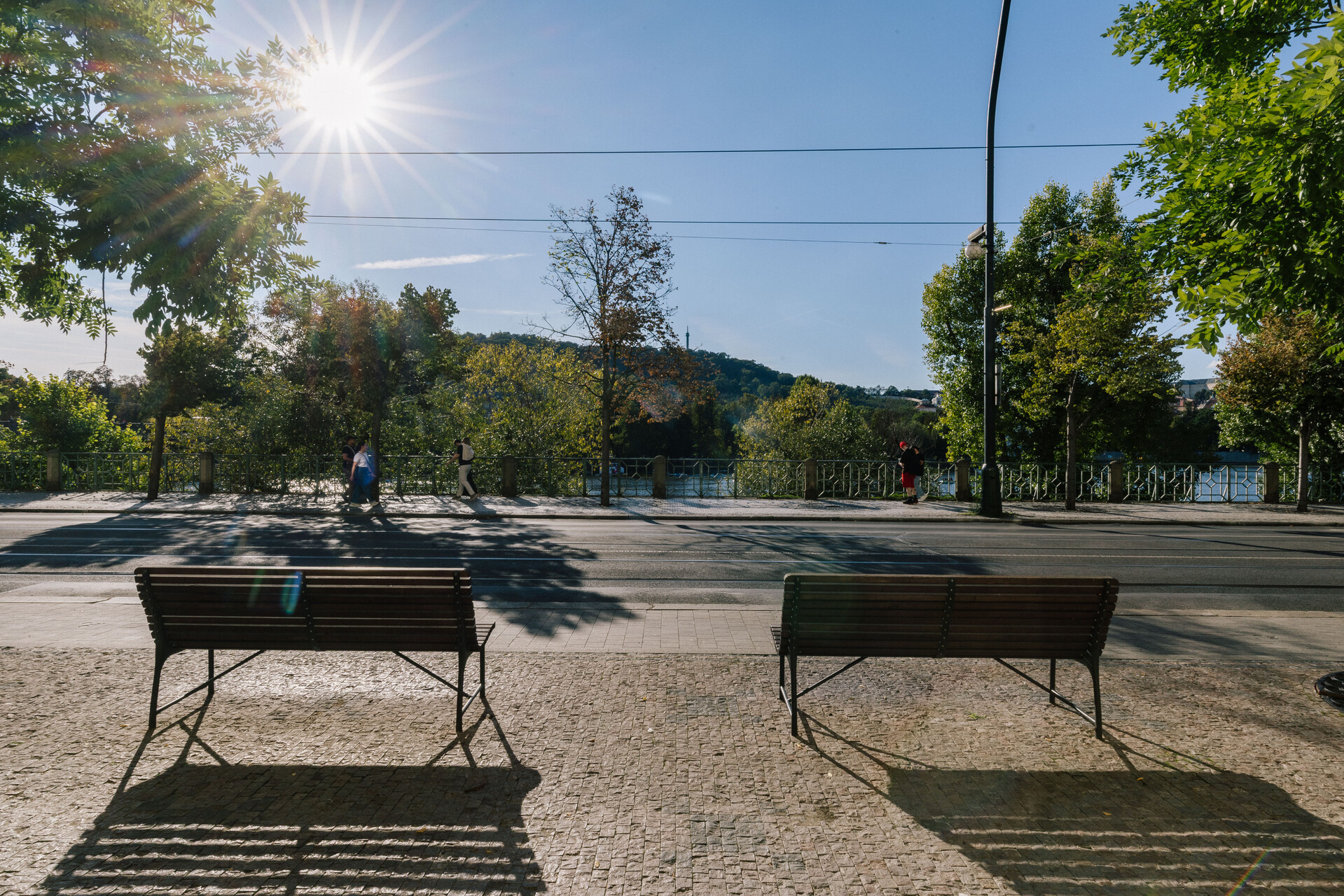
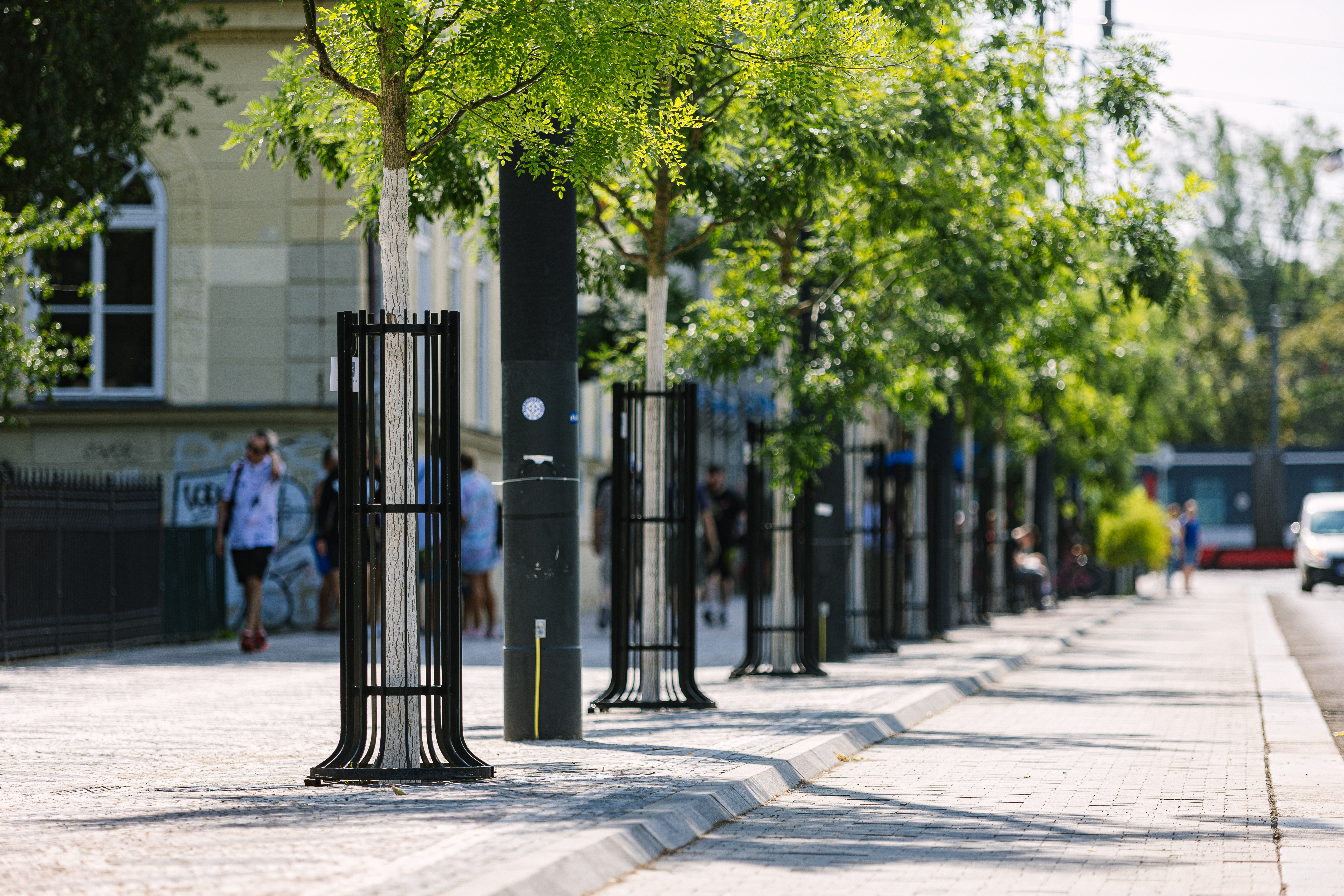
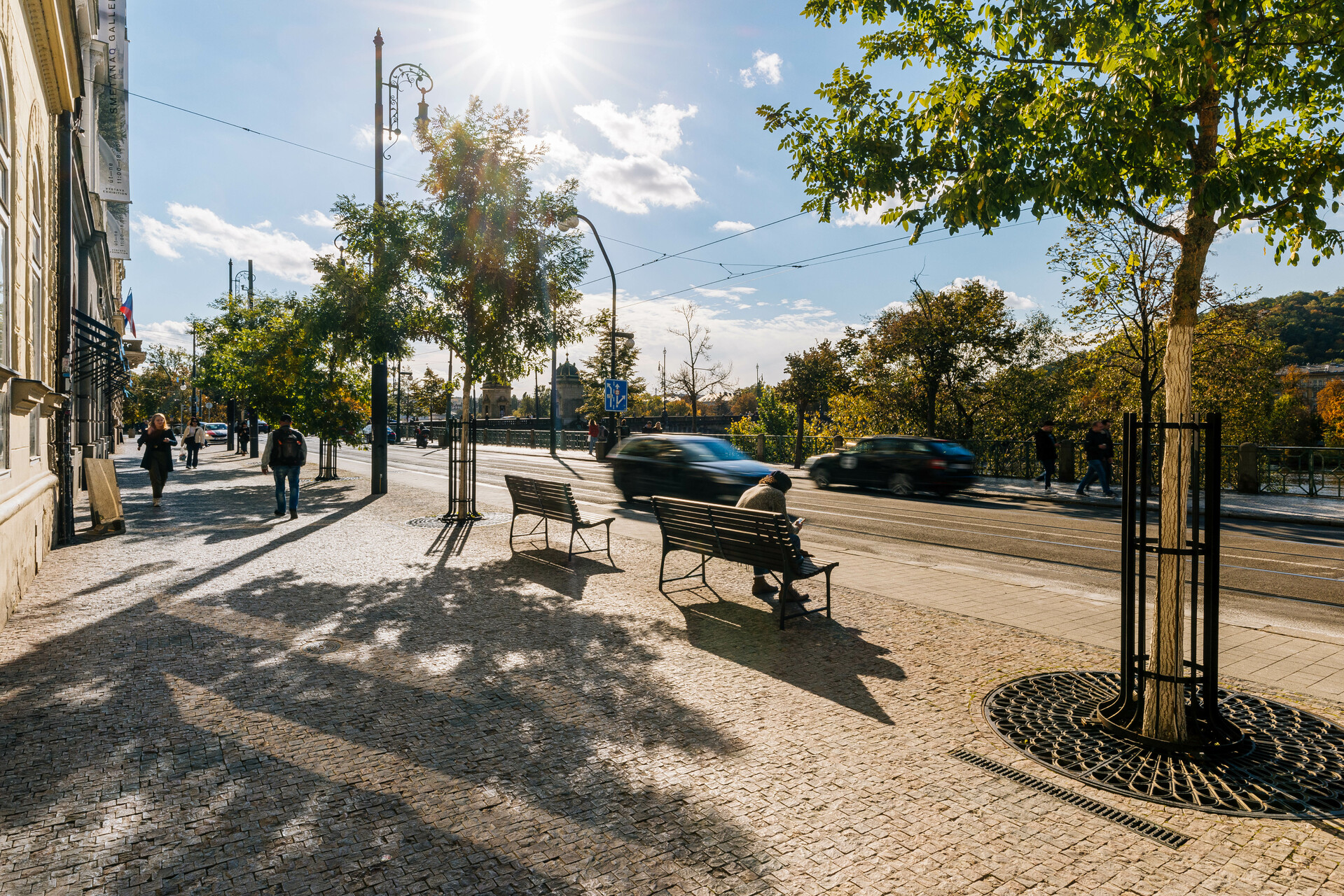
A major renewal is taking place in several stages. The first phase, completed in 2022, widened the promenade and added an avenue of seventeen Japanese pagoda trees. A new northbound tram stop, Karlovy lázně, was created, while the Smetanovo nábřeží stop moved south towards the National Theatre. New benches were installed along the waterfront. A Danish-style cycle lane, separated from both pavement and road by kerbs, now gives cyclists a much safer route.
A second phase from the Mánes building across Křižovnické Square to Jan Palach Square is now in preparation. Křižovnické Square is one of central Prague's busiest places, where trams and cars intersect with the Royal Route, used by as many as 100,000 pedestrians a day in summer. A new promenade towards the National Theatre, with its iconic view of Hradčany, should make the area far more comfortable for people on foot.