Legion Bridge
Audio narration in this language is not available yet.
the seventh Vltava bridge
This bridge from the turn of the century got its current name in 1918. It was originally named after Emperor Franz Joseph I.
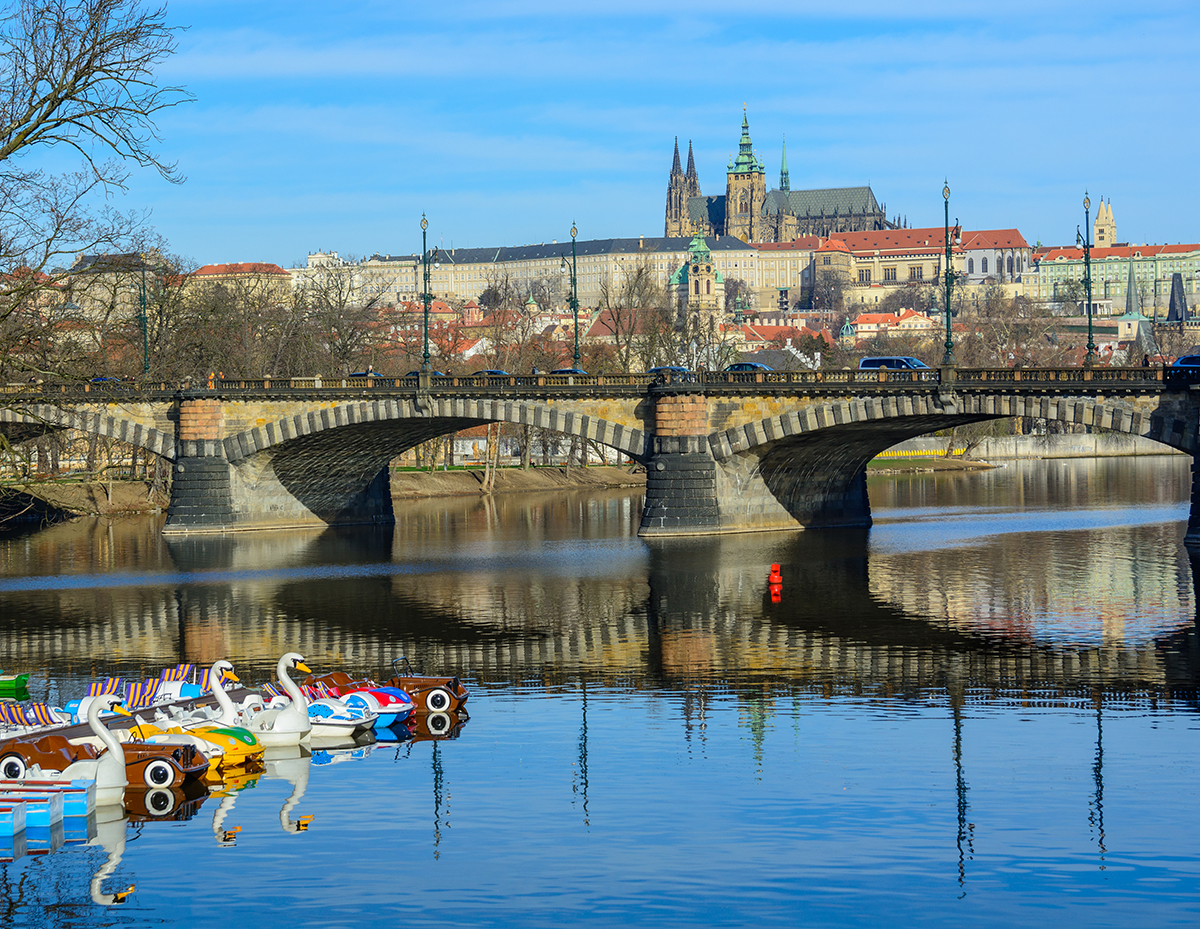
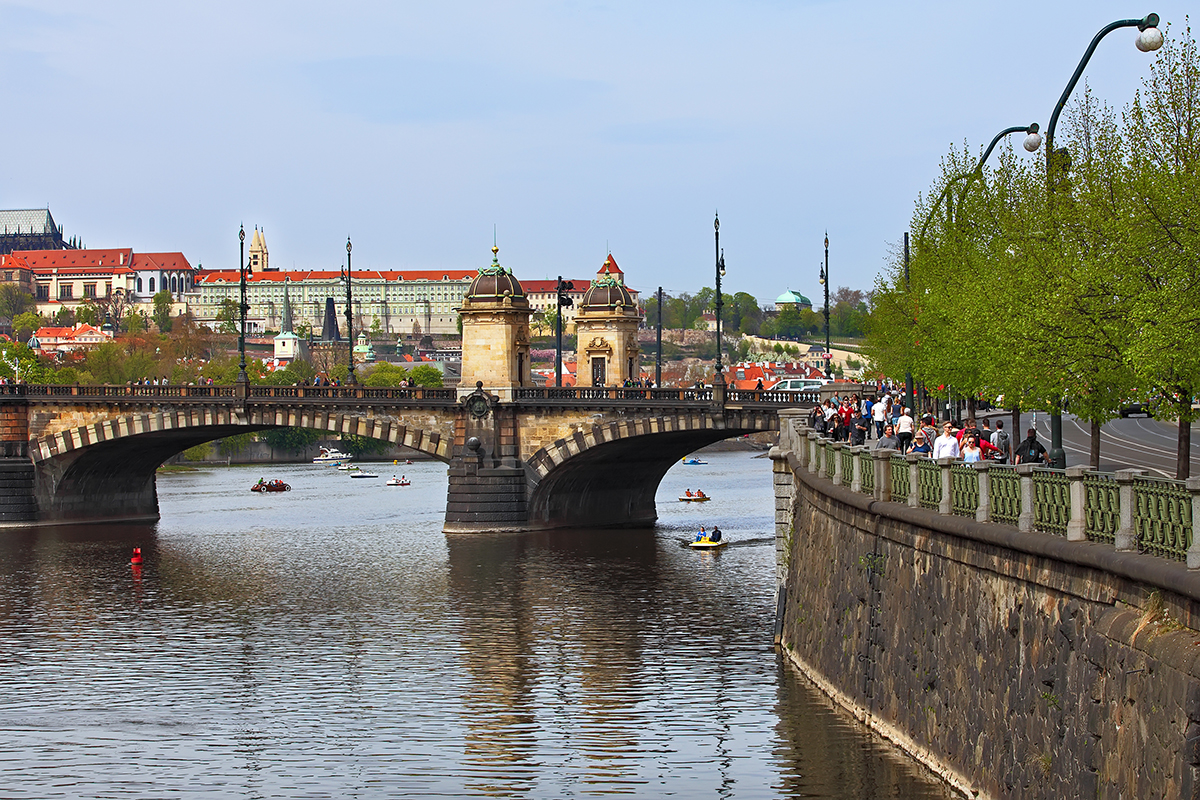
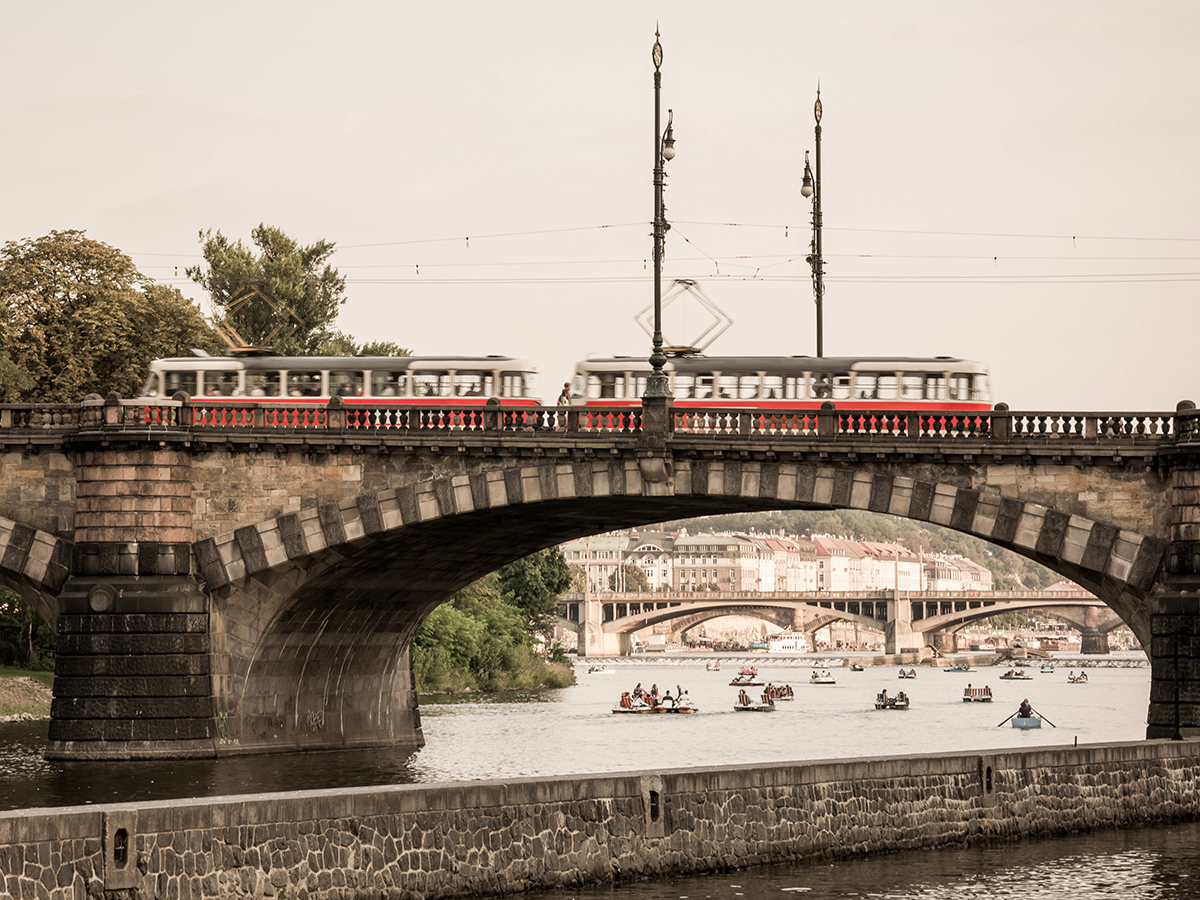
The Legion Bridge is the seventh bridge over the Vltava River in Prague. It replaced the original suspension chain bridge at the order of Emperor Francis I. It connects today's Národní třída with Střelecký Island, Újezd and the Lesser Quarter. During the construction of the bridge, traffic was first rerouted to a makeshift wooden bridge that was later used between the Holešovice and Libeň districts. The bridge is designed for pedestrians, vehicular traffic and trams.
The bridge was built by Czech entrepreneur Vojtěch Lanna, based on a project by architects Antonín Balšánek and Jiří Soukup. The construction itself was managed by the firm of G. Gregersen & Sons from Budapest, which had previously built two new pillars for the Charles Bridge, which were destroyed by the flood in 1890. In 1898 the foundation stone was placed and an iron box with commemorative plaque was set in the base of one of the guide pillars.
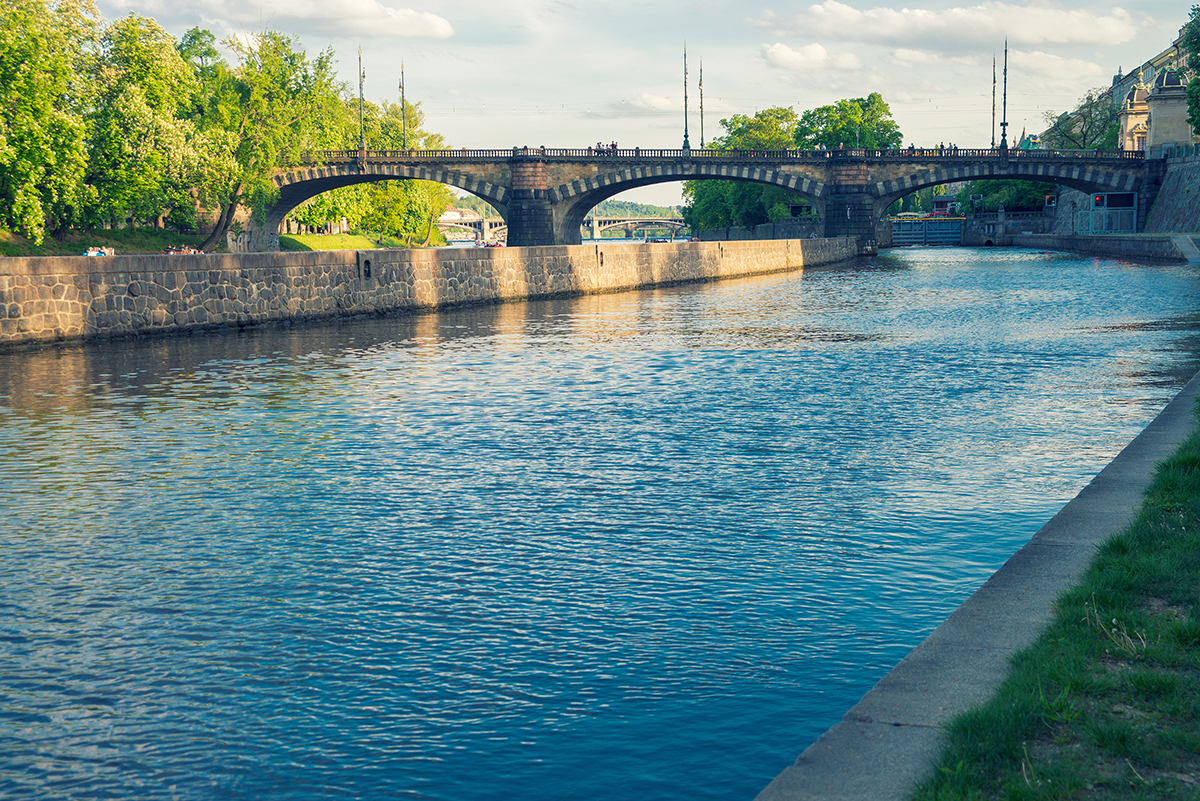
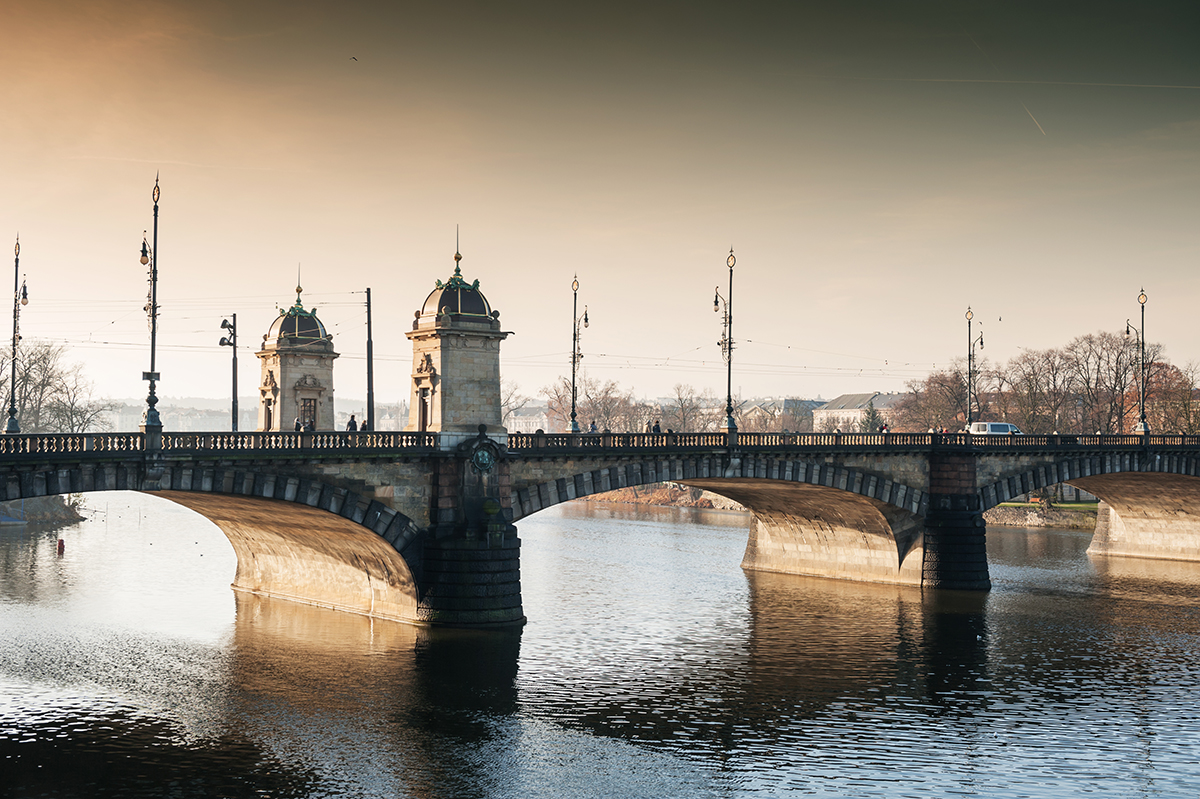
The construction of the bridge was somewhat complicated by the planned use of the pillars of the original suspension bridge for the new, arched bridge. The nine vaults have a different span and elliptical shape. There was also an effort to use material of different colours in red, blue and white, but like the Palacký Bridge, this effect was eliminated by fumes. The bridge is 343 m long and 16 m wide. Under the pavement of the sidewalks there was a water pipeline, a gas pipeline, telephone and electrical cables, and even a pneumatic mail pipeline. The bridge was given electric lighting by the arc lamps of František Křižík.
The bridge was inaugurated in 1901, and was named after Emperor Franz Joseph I, who was also present at the opening. It was renamed the Legion Bridge in 1918. Later it was briefly called the Smetana Bridge and then 1. máje. Since 1990 it again bears the name Legion Bridge.
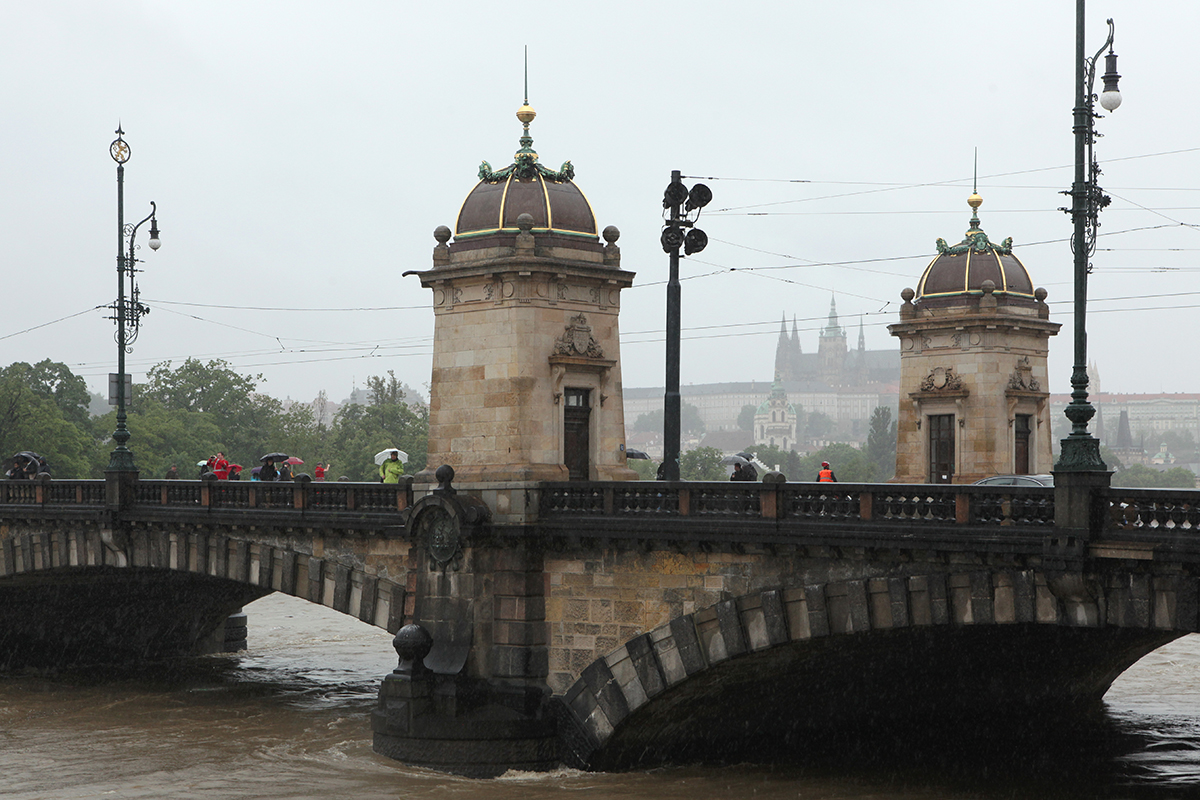
The decoration is much richer than that of the Jirásek Bridge. The sculptures are from the workshop of Vilém Amort and Josef Palouš and the balustrade is in the neo-Renaissance style. The dominant feature is the 18 cast 10 m tall iron lamp-posts with reliefs depicting crafts and floral decorations. The spires are decorated with gilded lions by Gustav Zoula. Today they are replaced with copies from the year 1969. At the end of the bridge are four towers that previously served as a tollhouse. These were first repaired in 2010.