Jirásek Bridge
Audio narration in this language is not available yet.
the sixth Prague bridge
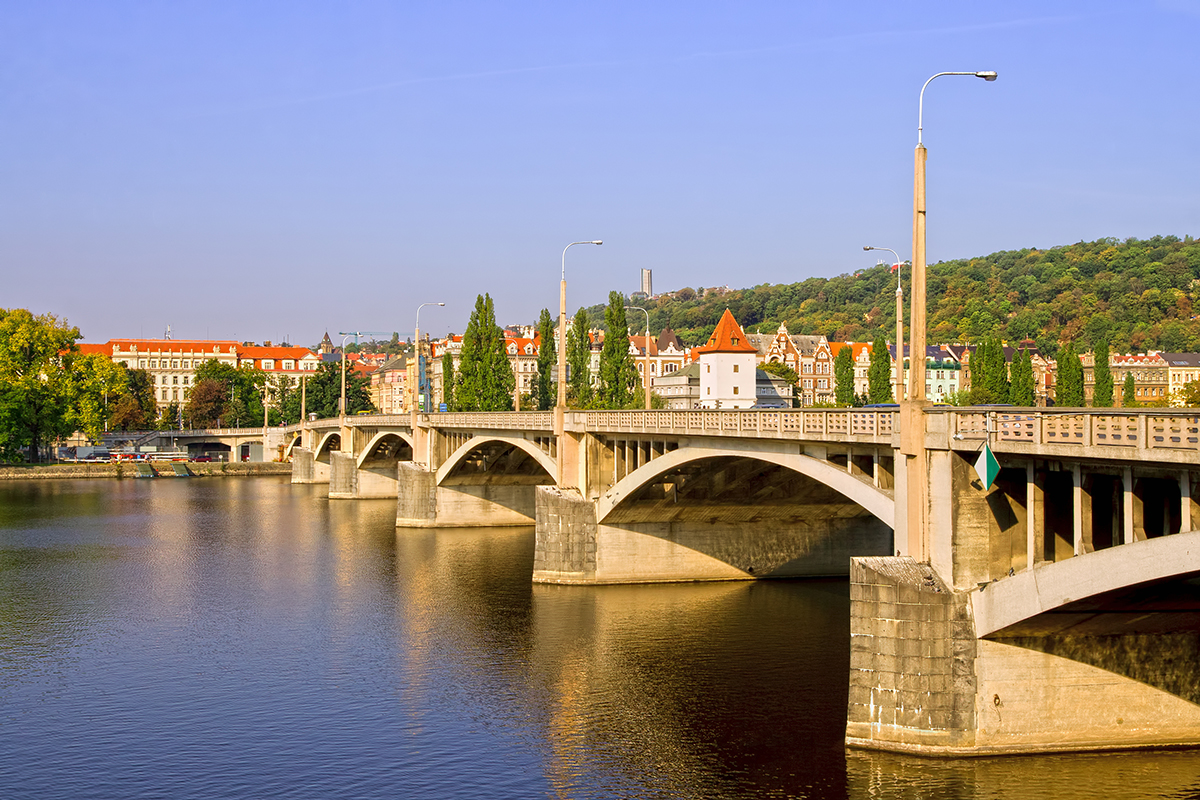
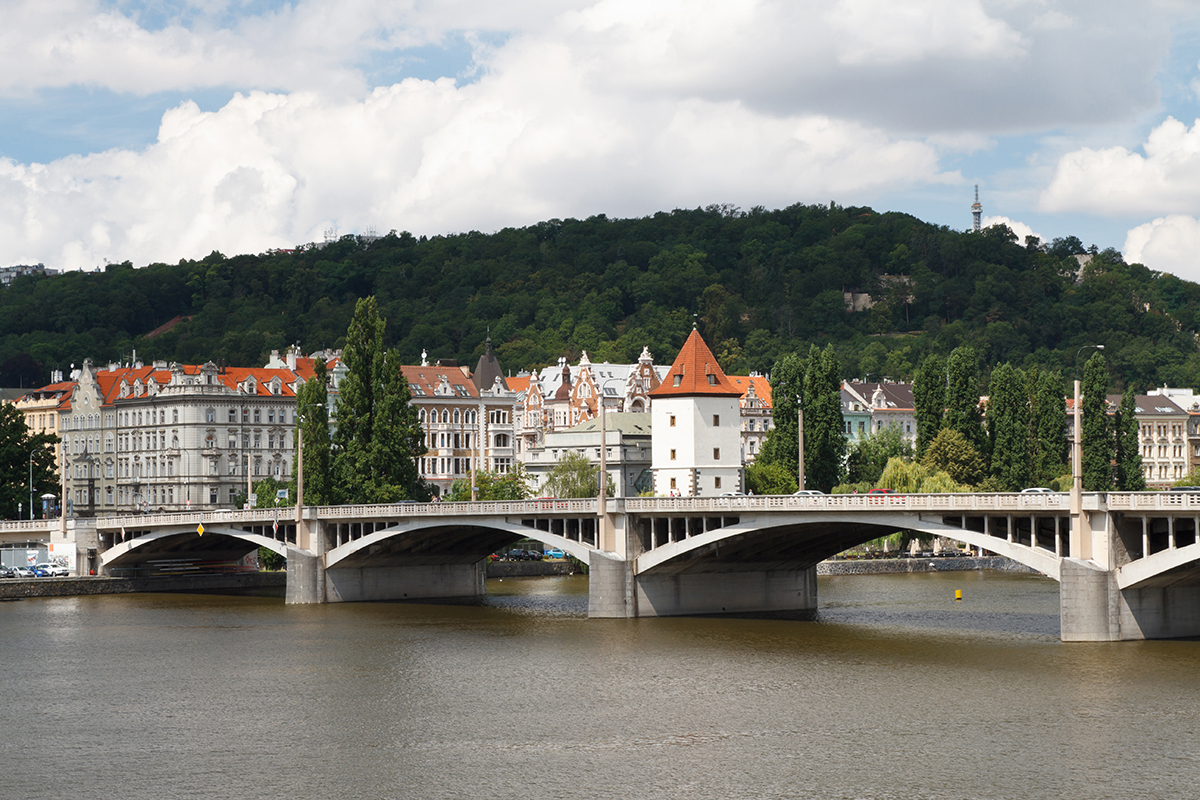
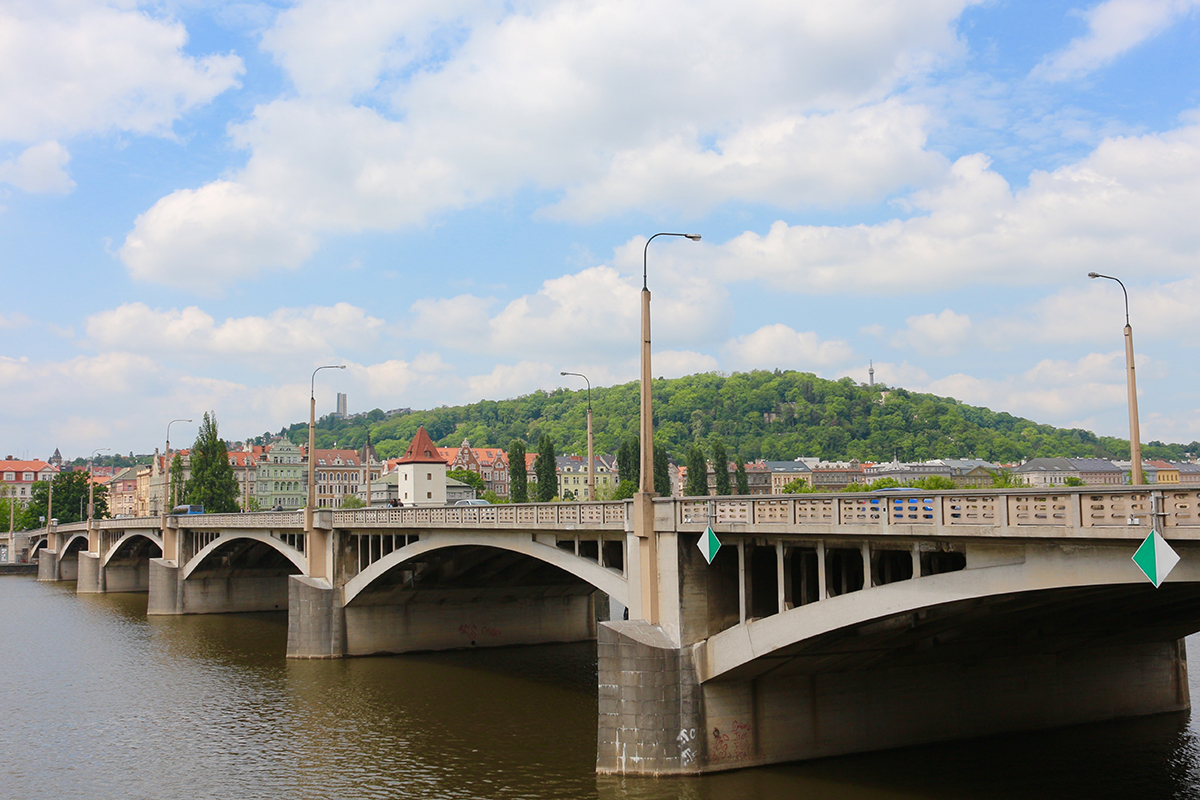
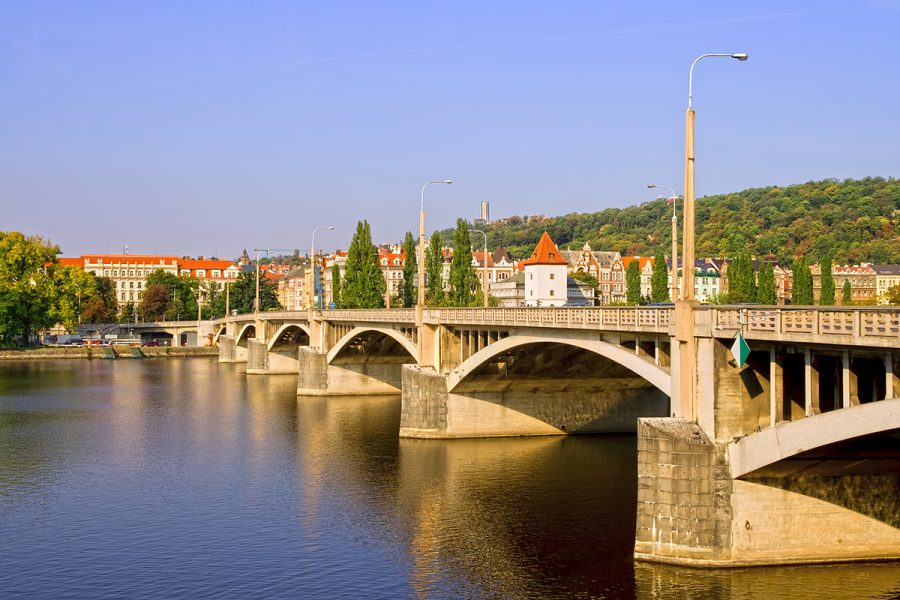
A reinforced concrete bridge named after Alois Jirásek, who lived in the house on the right bridgehead of the bridge.
The Jirásek Bridge is the sixth bridge across the Vltava River in Prague. The rapidly developing Smíchov district needed more than one bridge, and so it was decided to build a new bridge, which would be an extension of Ječna and Resslova streets. The construction of the bridge was started in 1929 by the architects Vlastimil Hofman and František Mencl.
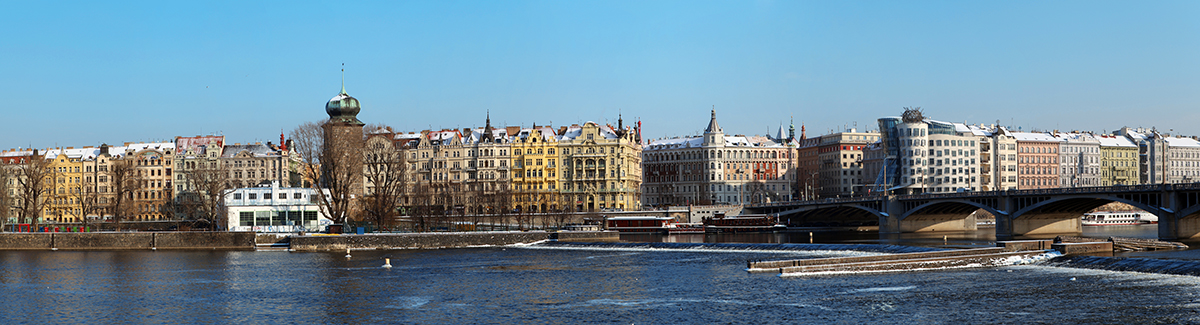
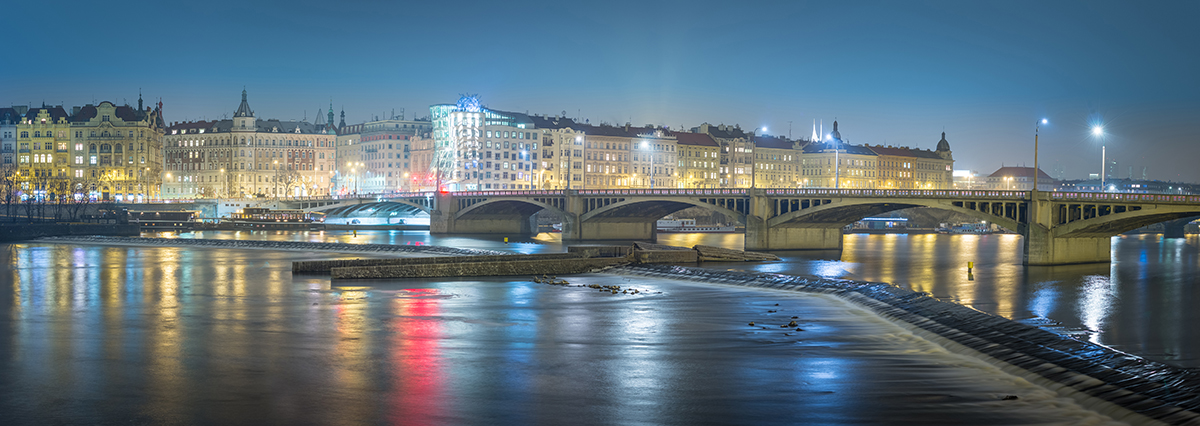
The bridge is made of reinforced concrete and is 310.6 m long and 21 m wide. The five concrete guide pillars connect six arch spans. The external surfaces are made of artificial stone and concrete railings and illuminating masts have a terraced polished surface. In terms of artistic decoration the practical purpose of the bridge takes precedence over its aesthetic aspect. On the bridgeheads are placed lighting pylons with decorative fountains and obelisks by Vlastislav Hofman.
It is interesting that the bridge was placed in the two pillars of seamless pipe that should be used to place bombs and detonate the bridge in case of need. But during World War II the Germans poured concrete in it to ensure it would not be used by the Czech resistance.
The Jirásek Bridge was put into operation in two stages – first a central lane with rails in the middle and then the entire bridge. However, the rails were finally removed. The bridge then temporarily served the only trolleybuses in Prague. The bridge was named in honour of Alois Jirásek, who in from 1903 – 1930 lived and died in house no. 1775 in today's Jirásek Square. Today his monument, which was moved here in 1960, is also located here.