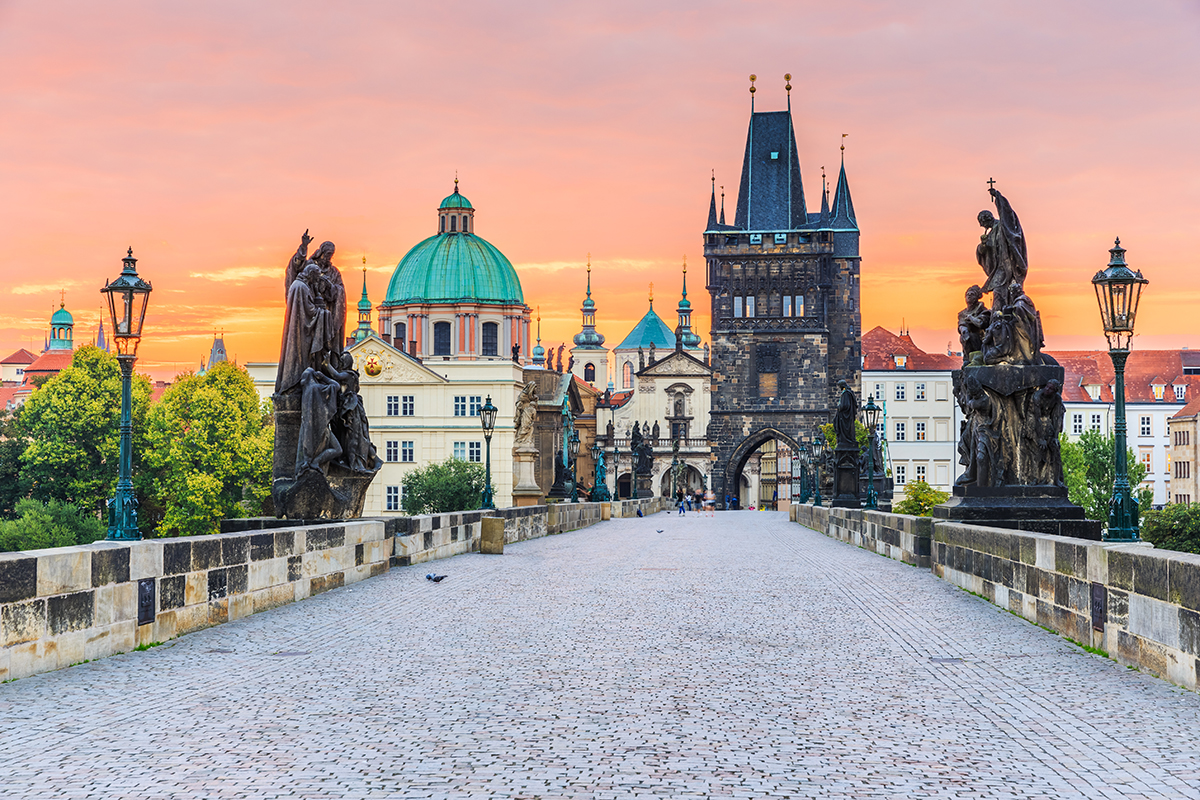
Charles Bridge
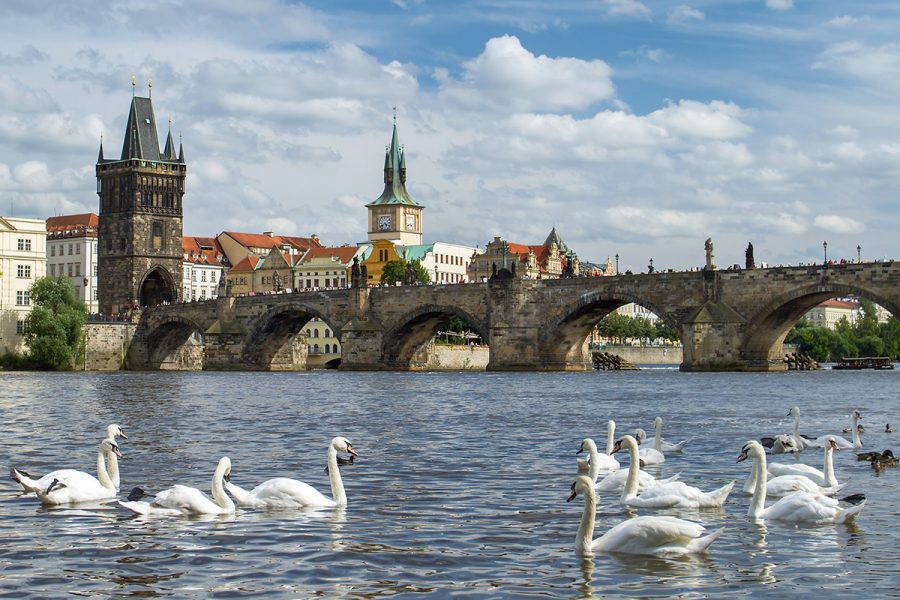
the oldest stone bridge in Prague
A national cultural monument, built by Charles IV in the 14th century, and later complemented with Baroque sculptural decorations.
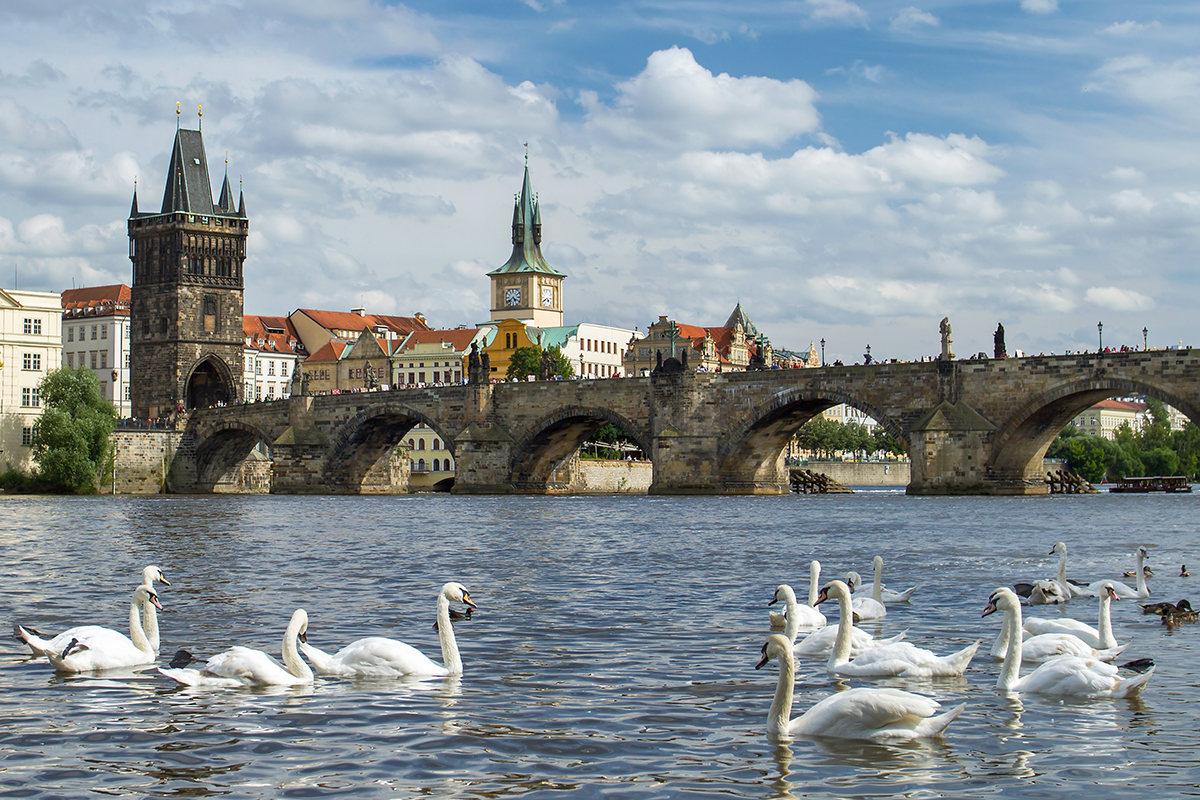
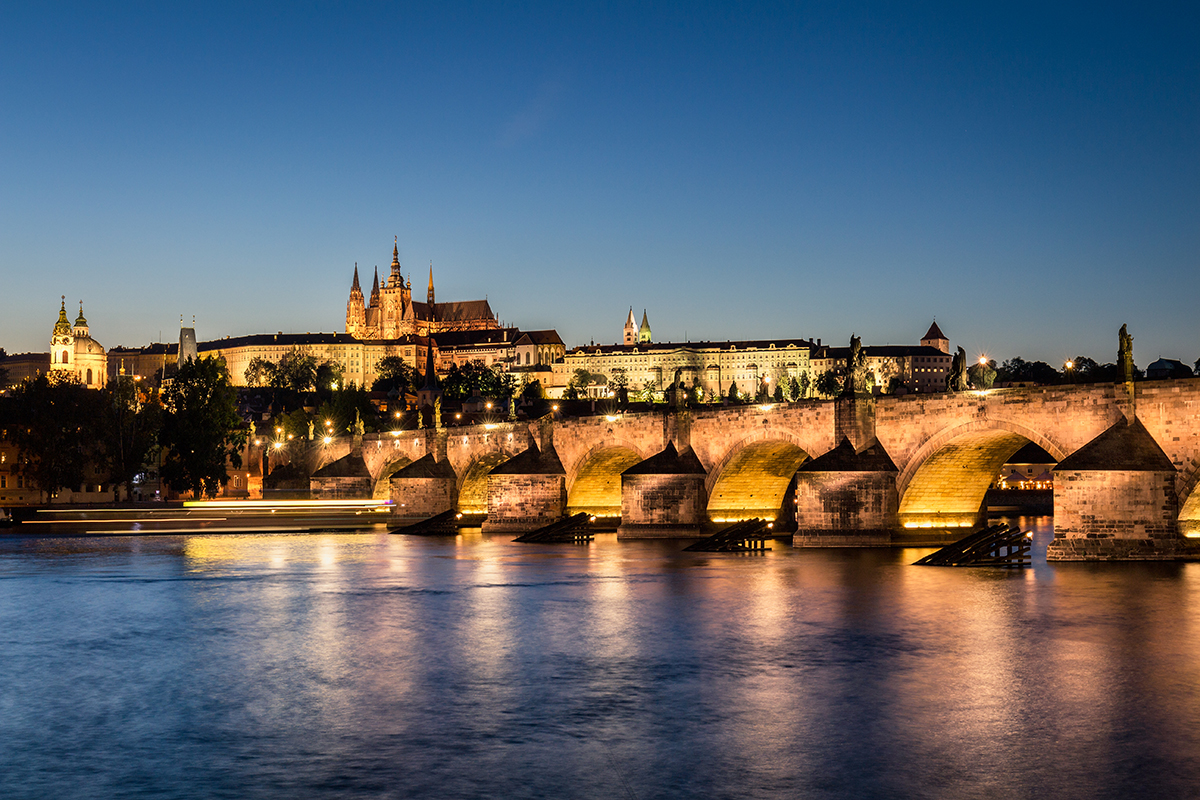
The Charles Bridge is the oldest stone bridge across the Vltava River in Prague, which has been preserved until today. After the stone bridge in Písek it is the second oldest bridge in the Czech Republic.
Previously it was called simply the stone bridge or the Prague bridge and the name Charles only took hold in the 19th century at the initiative of K. H. Borovský. Until the 19th century it was also the only link between the right and left banks of the Vltava.
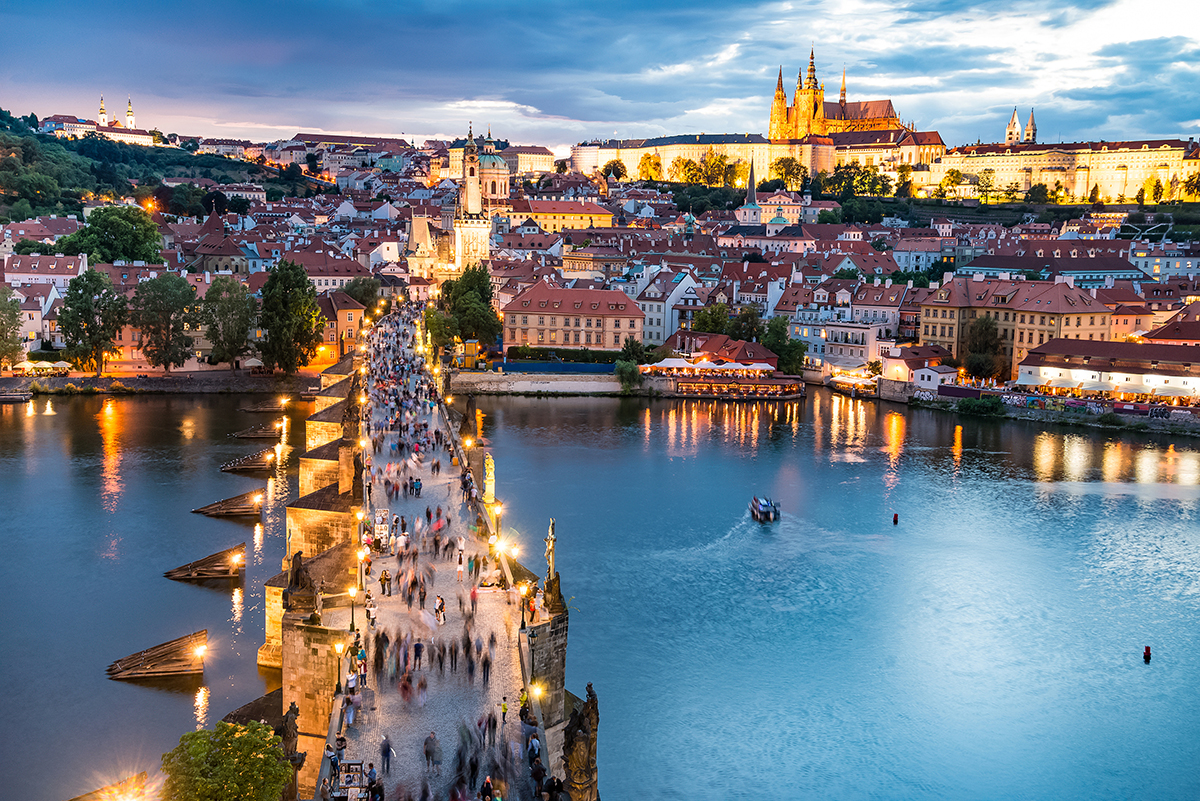
Charles IV ordered it to be built at the site of the stone Judith Bridge that was destroyed by a flood. The base stone was laid on 9 July 1357 at 5:31 and this date and time were chosen deliberately. When written one after the other, they represent an upward 1 3 5 7 9 7 5 3 1 and a downward sequence of numbers, which was considered magical. The construction of the bridge was entrusted to Peter Parler, who had proven himself with the construction of the St. Vitus Cathedral, but the bridge was only completed after his death at the beginning of the 15th century. The bridge is built of sandstone blocks, is over 515 m in length, 9.5 m in width and rests on 16 bridge arches. At the time of its creation it was one of the most massive bridges.
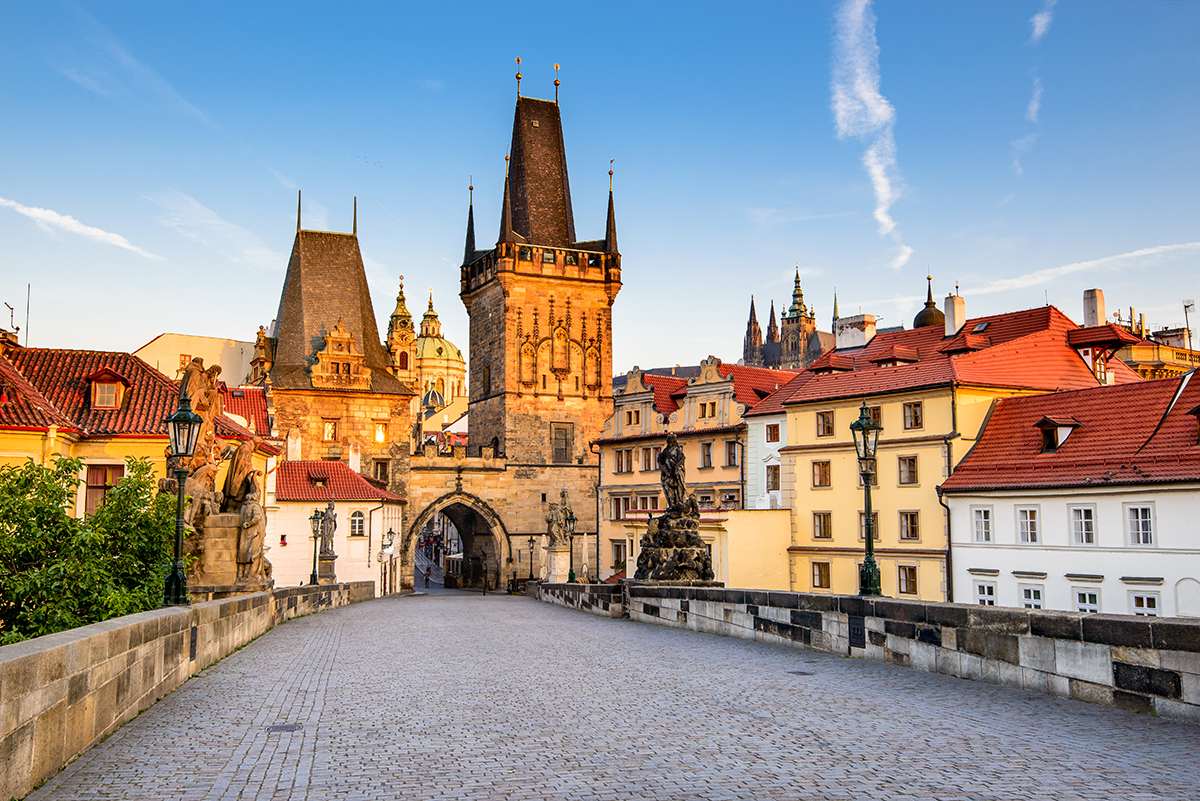
There are also three bridge towers – two towers on the Lesser Quarter side, the smaller of which was part of the former Judith Bridge and the larger built only in the 15th century, and one tower on the Old Town side, which was also built in Parler's ironworks. The lower part of the tower was built during the lifetime of Charles IV, meaning that his seated statue, which is part of the decoration, probably is a true likeness of the monarch. The second seated figure is Wenceslas IV and among them is St. Vitus – the patron of the bridge.
At the top, representing the celestial sphere, is a statue of St. Procopius and St. Sigismund. There was originally also rich sculptural decoration from the side facing the Lesser Quarter, but it was destroyed in an unsuccessful siege of the bridge by the Swedes in 1648. After 1621, baskets containing the heads of the 12 lords who were executed in Old Town Square after the uprising were hung from the tower.
The bridge withstood several floods in 1784, in particular in 1890, when driftwood from the upper Vltava River destroyed two pillars and three vaults. In 1723 the bridge was given oil lamps, and in 1844 the staircase to Kampa was built. The bridge also used to serve traffic, first horse-drawn trams, then the electric railway. But heavy vehicles shook the bridge too much and were later replaced with buses on tires. Public transport operated here until the Second World War; car traffic ended in 1965.
The famous sculptures on the bridge include 30 sculptures and sculptural groups and come mainly from the 18th and 19th centuries. They represent the harmonious fusion of Medieval Gothic architecture and predominantly Baroque sculptural creation.
The first to be placed on the bridge was a cross, already in the 14th century. This was followed in the 16th century by a statue of Bruncvík, placed outside of a row of sculptures on a pedestal in the water, which was later consumed by high waters. In its place is a replica of a knight character. The oldest still standing in its original form is a statue of St. John of Nepomuk dating from 1683; the newest is a sculpture of St. Saints Cyril and Methodius from 1928. Most of the statues are not originals. Those that were in one way or another damaged and restored were replaced with copies by contemporary artists and the originals have been placed, for example, in the Lapidarium of the National Museum or the Gorlice in Vyšehrad. Most of the sculptures are made of sandstone.
The author of a number of Baroque statues is Matyáš Bernard Braun, Jan Brokof and his son Ferdinand Maxmilián Brokof. The statue of St. Francis Xavier is considered to be the most valuable work of Ferdinand Maxmilián Brokof on the bridge, although he created it in just 23 years. The most expertly rendered work is considered the sculpture of St. Luitgard from the year 1710. It is made of sandstone and was paid for by the Abbey of the Cistercian Monastery in Plasy Evžen Tyttl. The original is located in the Lapidarium of the National Museum. The copy on the bridge is from 1995. Other sculptors who left their imprint in the sculptural decoration of the bridge are Matěj Václav Jäckel and Jan Oldřich Mayer, Emanuel Max and Hieronymus Kohl.
Currently the sculptural decoration is managed by the Gallery of the City of Prague and the bridge by the Association of Artists of Charles Bridge. In 2007 a comprehensive reconstruction of the bridge began, which will continue in a second stage. The Charles Bridge is a national cultural monument.