National Theatre
the most important theatre in the country
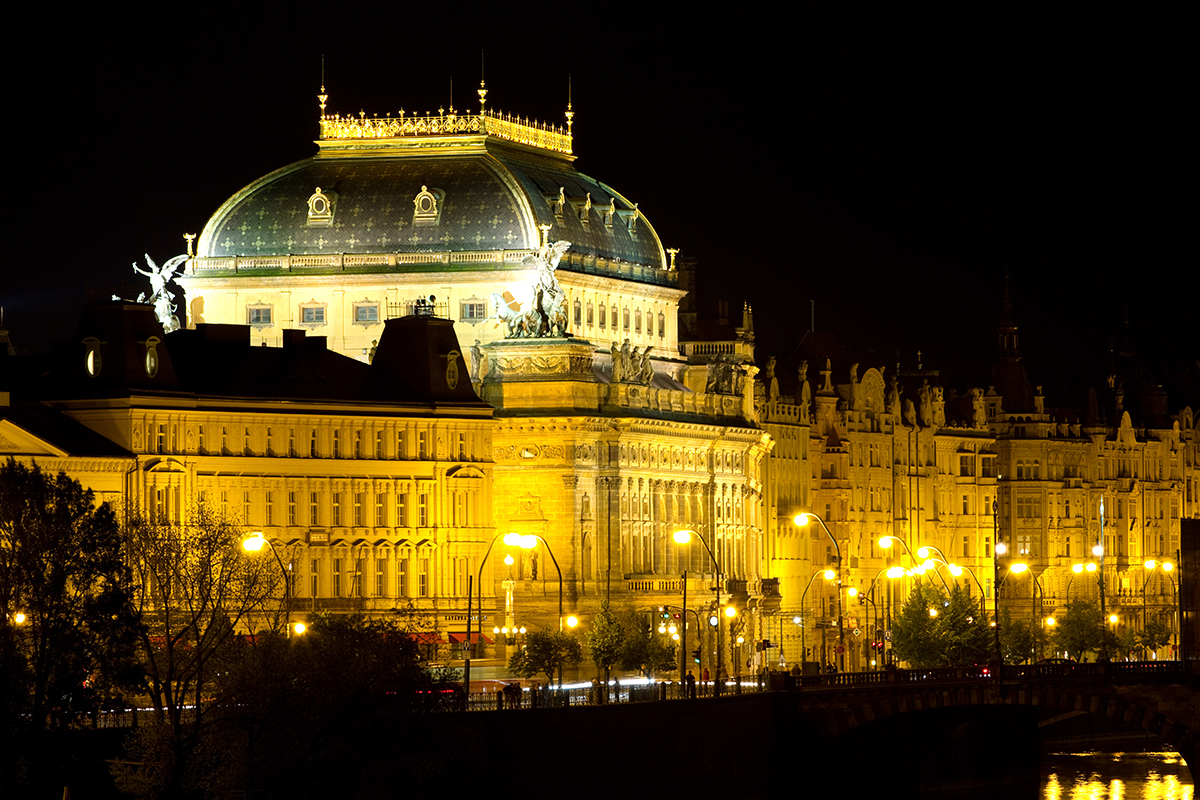
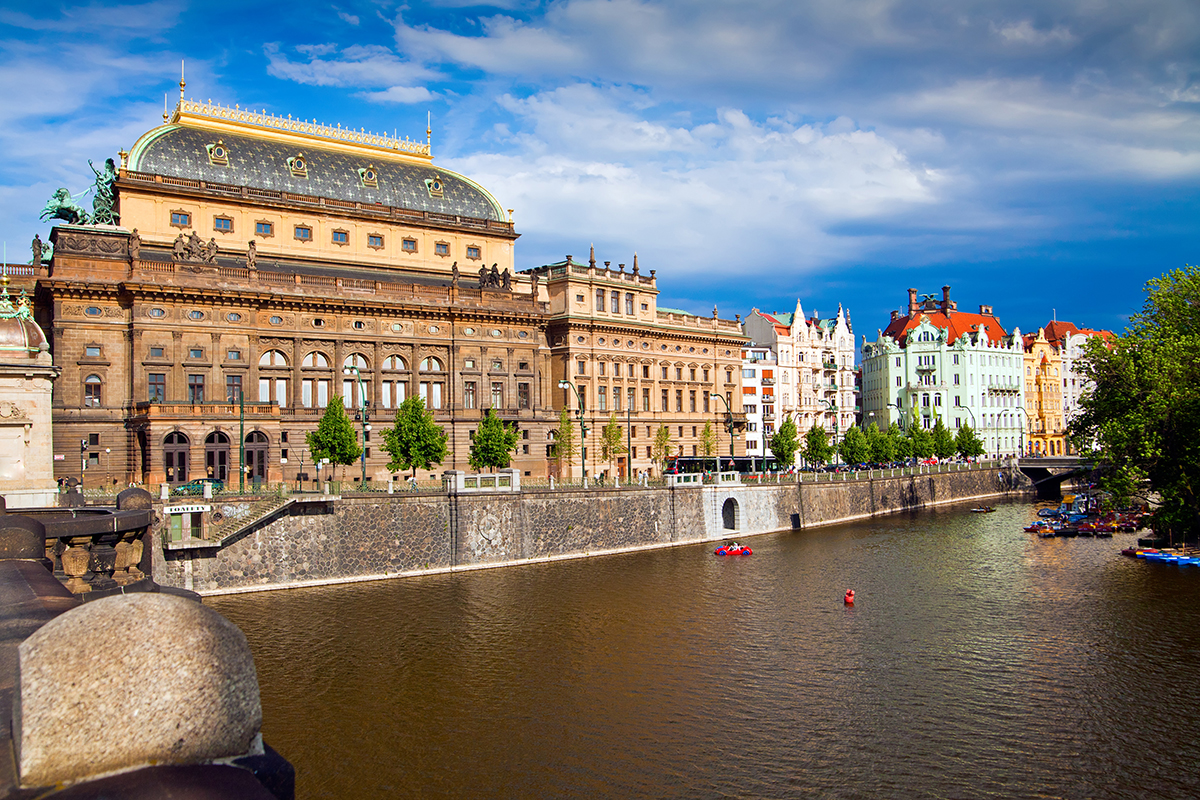
The distinctive neo-Renaissance building from the mid-19th century, which the people of the nation built themselves, is one of the most respected sites in the Czech Republic.
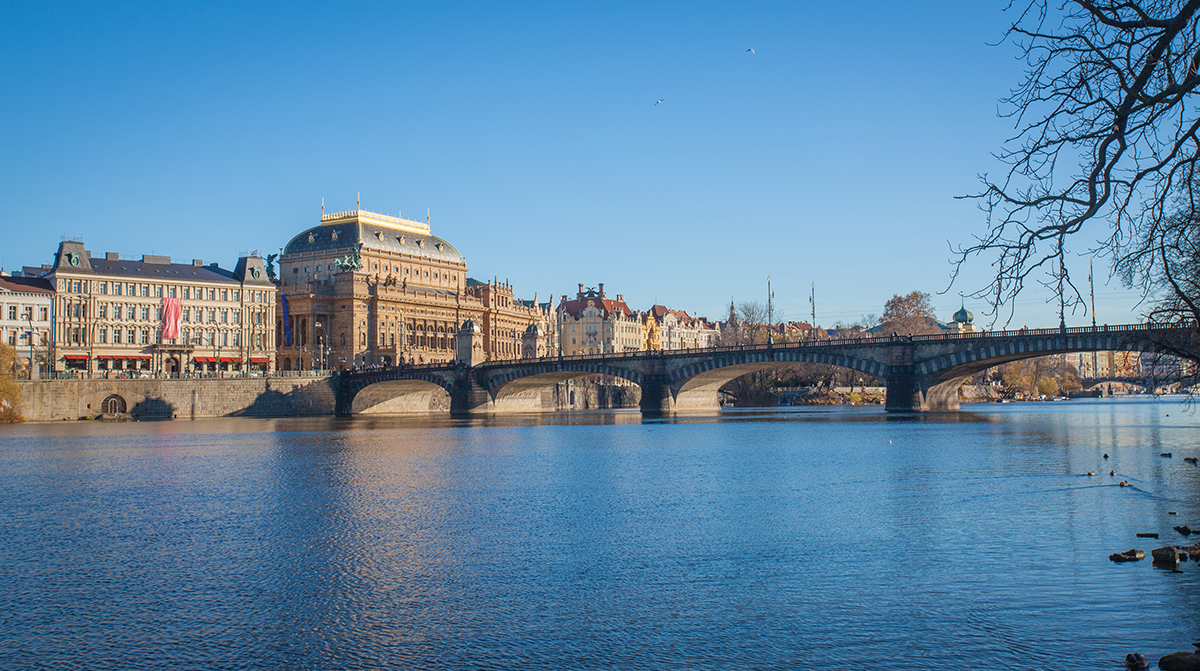
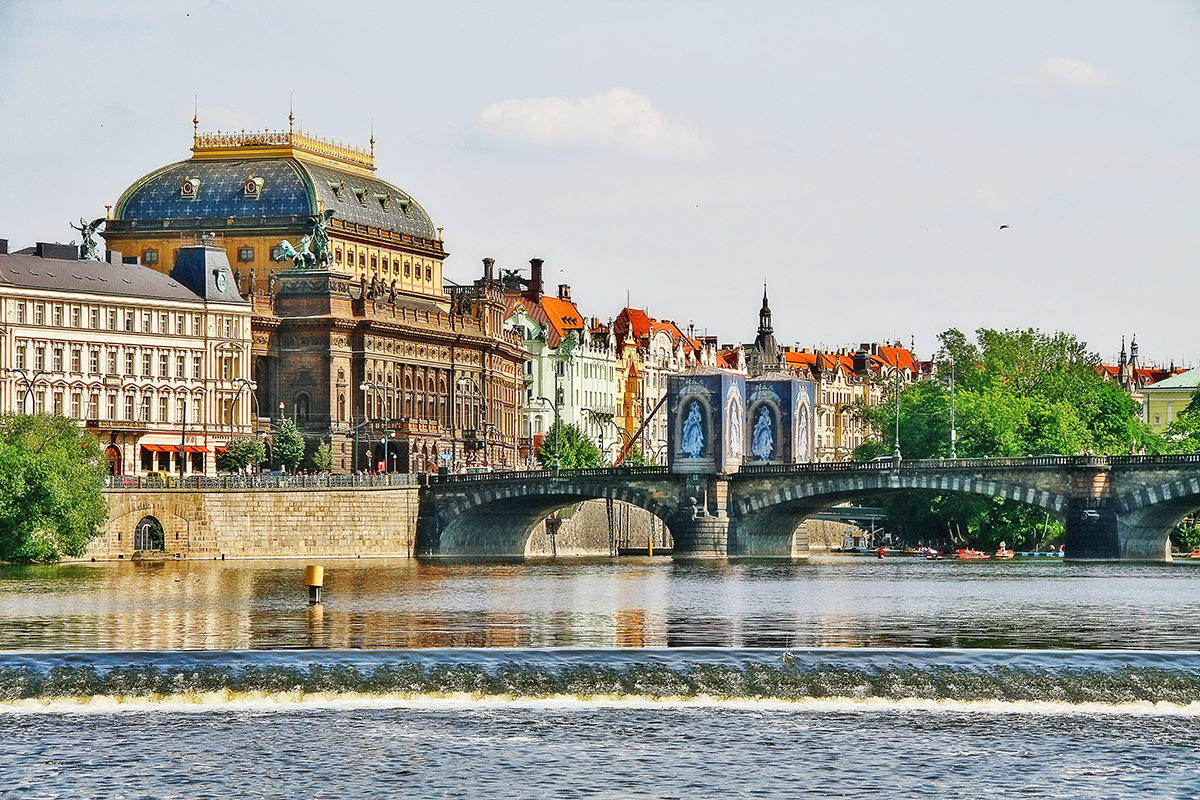
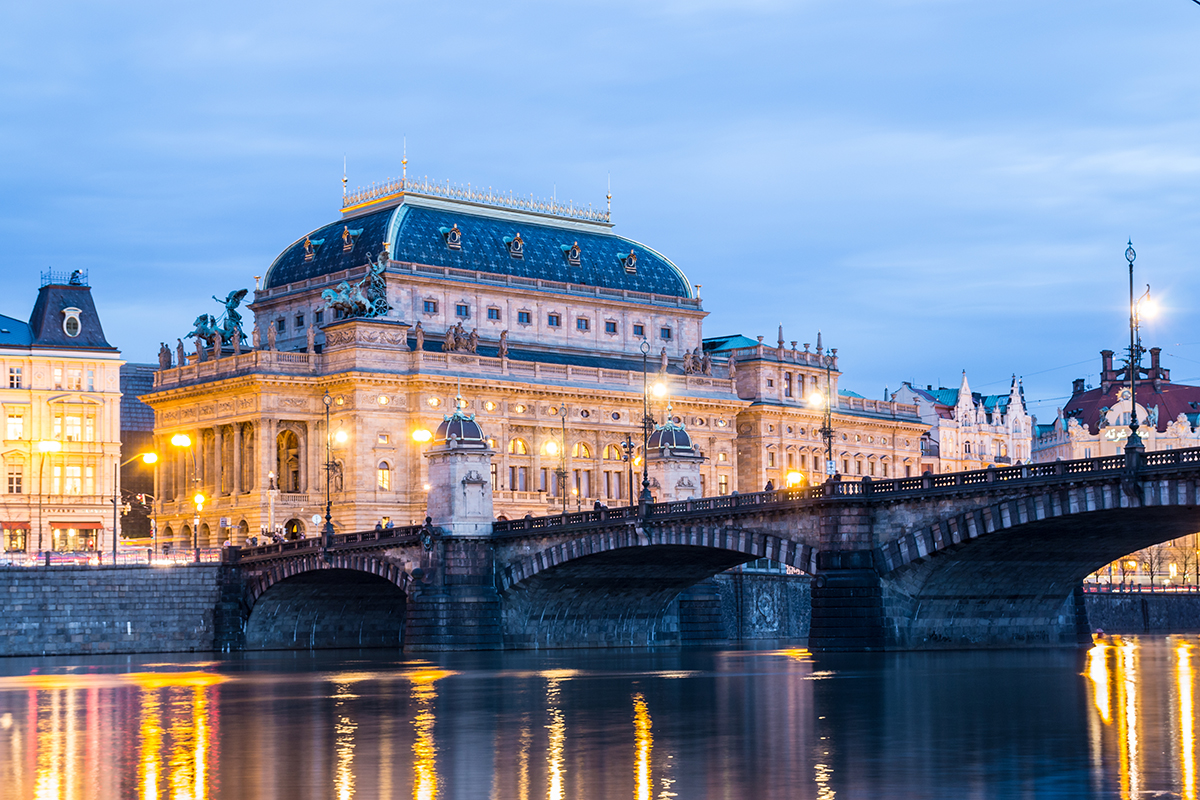
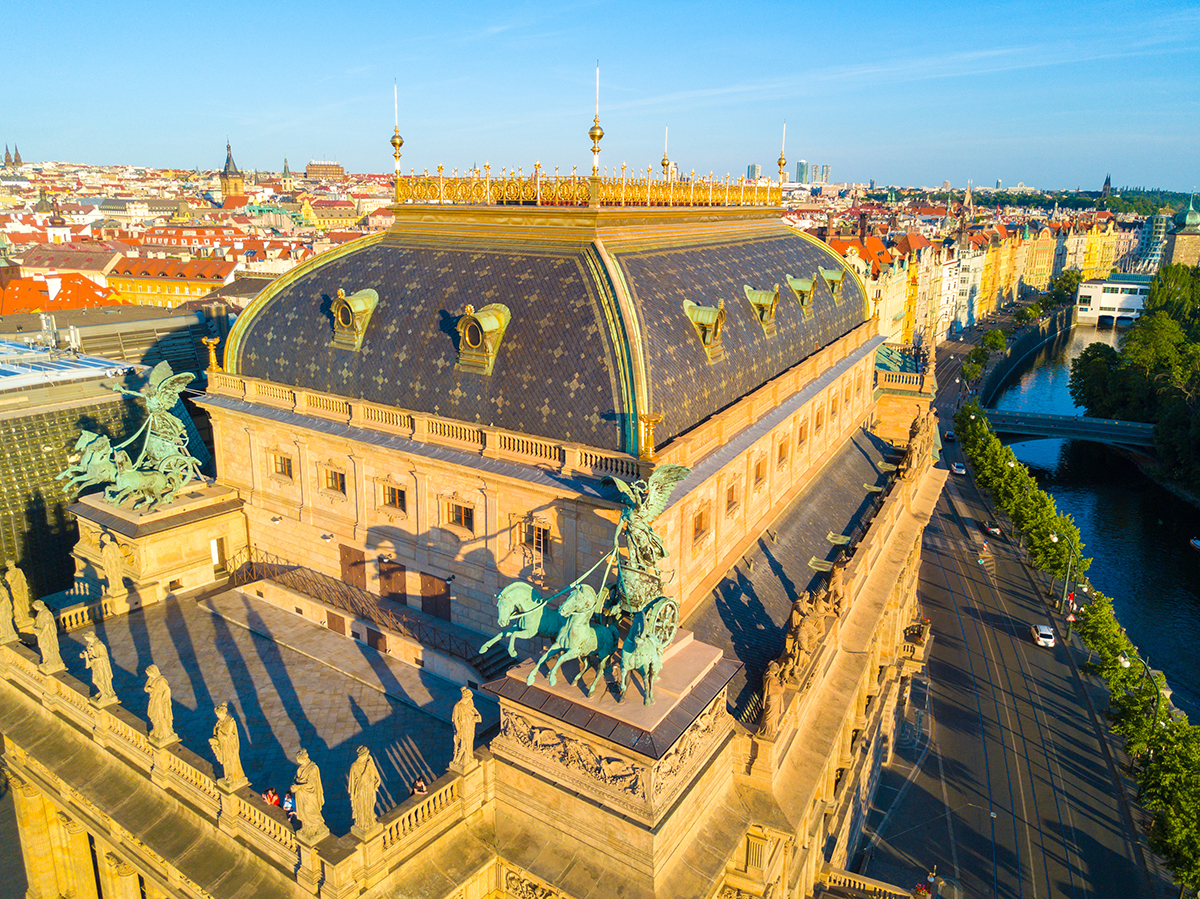
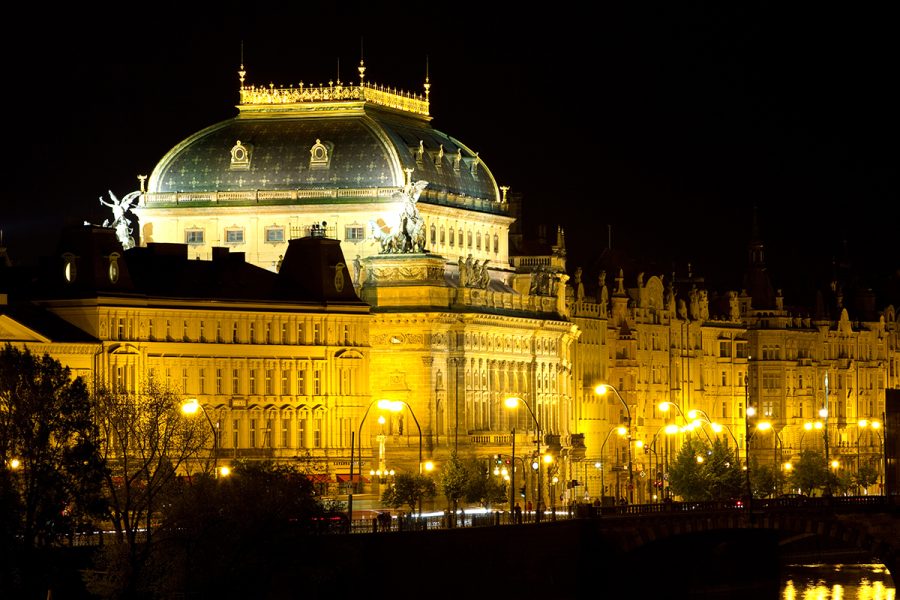
The neo-Renaissance building of the National Theatre is located on the Masaryk Embankment and thanks to its golden roof is one of the most distinctive landmarks on the Vltava River.
Its history dates back to the mid-19th century, when it was established at the initiative of a theatre cooperative of Czech patriots, whose aim was to build a Czech stone theatre. The idea to organise a collection for the establishment of the theatre originated with Josef Kajetán Tyl. Donors hailed from the ranks of the nobility, important cultural personalities, but also various associations, industrial workers, and individual citizens. Emperor Franz Joseph I also made a significant personal contribution. The disagreement about whether to be built a cheaper theatre more quickly or a more magnificent theatre over a longer period of time was resolved by building a provisional theatre, where productions were staged until 1883.
The foundation stones of the National Theatre were laid on 16 May 1868. In total there were 26 of them – the main one was granite from Louňovice and one even from fellow countrymen in America. Famous personalities of the day took part in the dedication ceremony, such as František Palacký, Jan Evangelista Purkyně for science, Josef Wenzig for art, Josef Jiří Kolár for theatre, Bedřich Smetana for music and the theatre architect himself, Josef Zítek.
The theatre was first opened on 11 July 1881 on the occasion of the visit of Crown Prince Rudolf. The opening performance was the premiere of the opera Libuše by Bedřich Smetana, which the already deaf composer himself conducted.
During the finishing works, which were still ongoing, due to the carelessness of construction workers there was a fire on the roof of the theatre. Josef Zítek was wrongly accused of neglecting fire safety measures and bitterly resigned from the reconstruction, which was taken over by his student Josef Schulz. A new collection was started, thanks to which one million gulden was collected in 47 days, and the theatre could be restored. On 18 November 1883, the theatre was reopened and again played Smetana's Libuše.
The National Theatre is also significant in terms of decoration, as leading visual artists contributed and their work on the theatre is considered their masterpieces. That is why these artists of the late 19th century are also referred to together as generation ND. Among them are Mikoláš Aleš, Bohuslav Schnirch, Josef Václav Myslbek, Jan Šturs, Bohumil Kafka, Václav Brožík, Julius Mařák and many more. The original curtain was the work of Franišek Ženíšek. After the fire it was replaced with a curtain by Vojtěch Hynais, which depicts a temple under construction as a symbol of the emerging theatre, and the painters, sculptors, architects, builders and craftsmen coming to it. In front of this curtain there is an iron sprinkler system.
In the middle of the auditorium from the ceiling hangs a huge gold-plated chandelier made of cast bronze designed by Josef Zítek in Mainz. The National Theatre was one of the first theatre buildings in Europe to be lit by electricity. The electricity system was installed by the firm of František Křižík.
In the 1950s the building underwent renovations and completions, thanks to which administrative and operational areas were constructed, in particular the New Scene. It was designed as a steel skeleton, the exterior decked with glass breeze blocks and the interior with green Cuban marble.
The National Theatre is a national cultural monument. It was the first institution where Czech was used as the official language. The National Theatre today manages the historical buildings of the National Theatre, the State Opera, the Estates Theatre and the New Scene. These are home to opera, drama and ballet companies as well as Laterna magika.