Vyšehrad
a castle shrouded in myth
The second Prague castle is associated with the mythical history of the Czech lands. It is a national cultural monument of great significance.
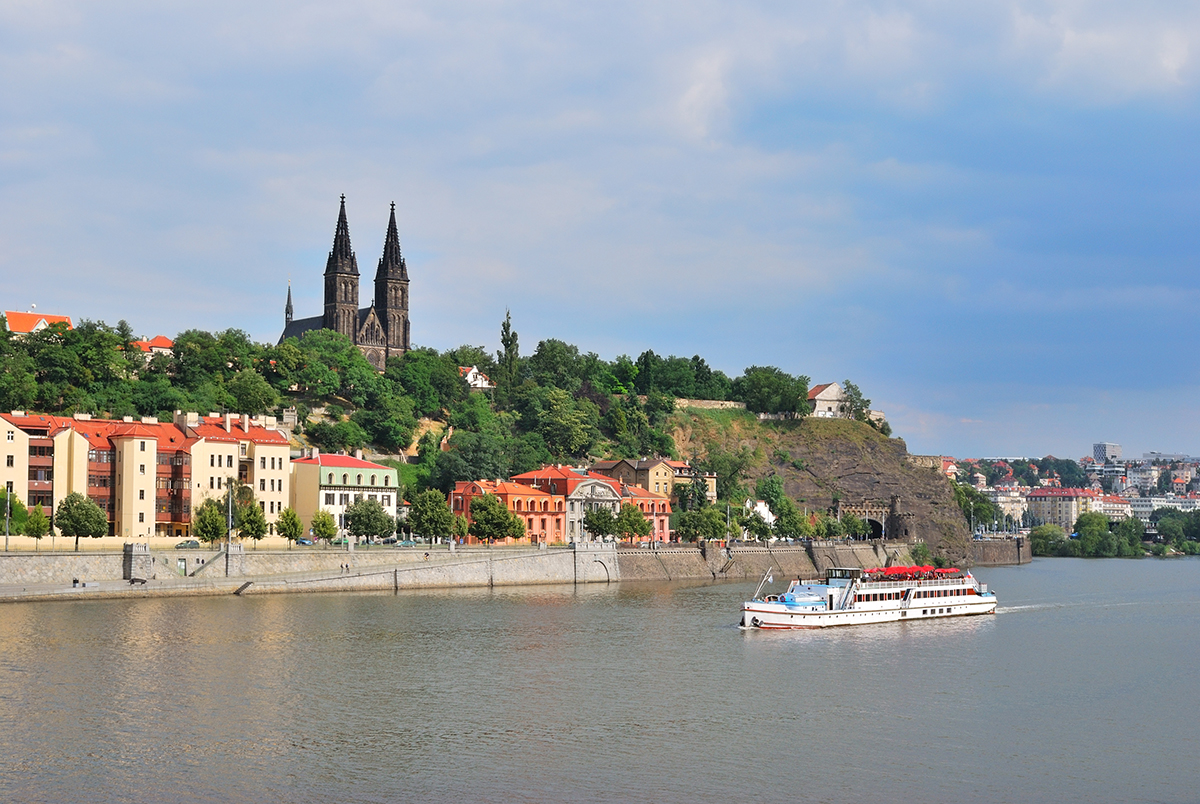
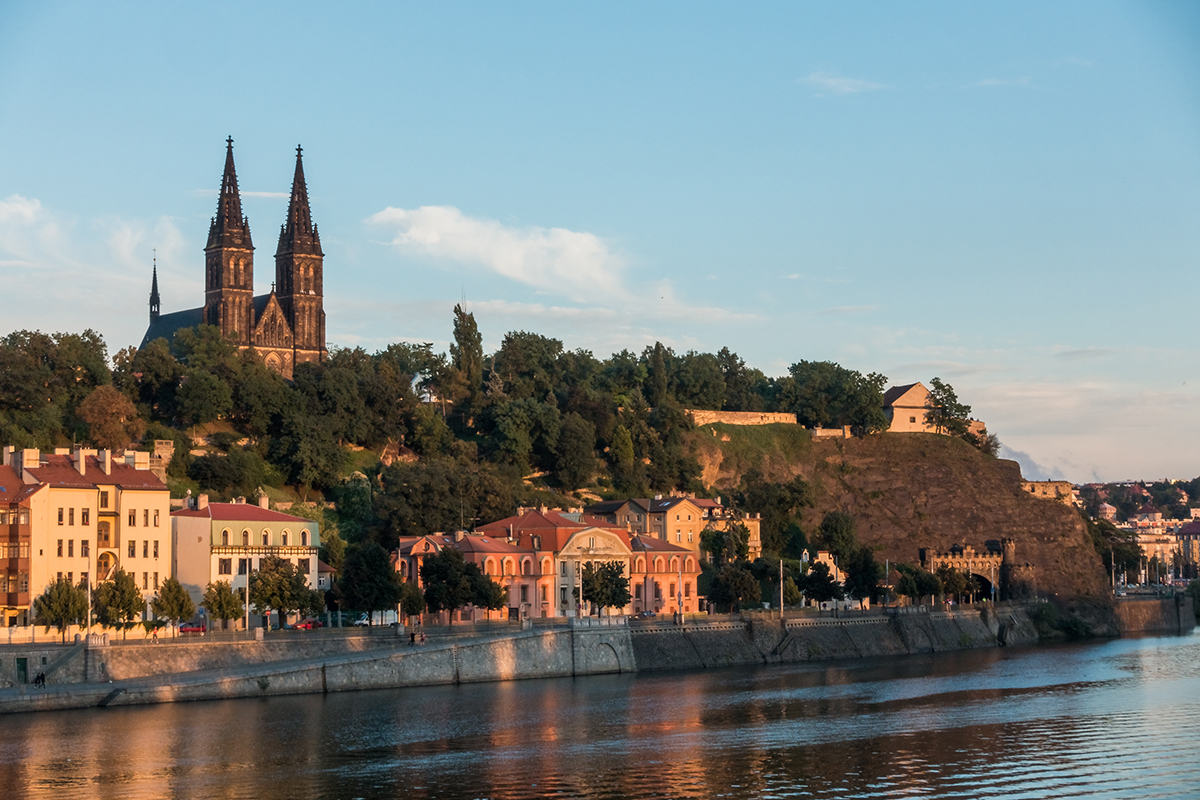
Above the Vltava River, on the Vyšehrad cliff, rises a castle named Vyšehrad. It was founded in the 10th century and is therefore younger than Prague Castle. Vyšehrad is shrouded in many myths and national legend, for example, about a girl's war, Princess Libuše or Horymír. However, the historical sources are silent about these events of Czech antiquity, so they remain legends.
Vyšehrad was subordinated to the Prague Castle, with the exception of the 11th century, when it enjoyed its greatest fame. At that time it became the seat of the first Czech King, Vratislav I. Then its significance again declined until the reign of Charles IV, who in the 14th century decided to restore its glory and honour its Přemyslid ancestry. In the Coronation Order of the Czech Kings he added the obligation to carry out a late afternoon pilgrimage to Vyšehrad, where the future king would examine the bast shoes and satchel of Přemysl the Ploughman, a legendary Přemyslid prince. Charles IV here built a beautiful royal palace and other buildings. From this period have been preserved also the remnants of a Gothic gate, which was part of the fortifications.
When taking a boat ride on the Vltava River you will certainly notice the torsos of the Gothic buildings, which are literally glued to the Vyšehrad rock. It is a remnant of the sentry bastions, which today is known as the Libuše spa. According to a romantic legend Princess Libuše bathed with her lovers here, whom she then threw from the rocky trench into the river.
The castle complex contains among other things the oldest surviving building in Vyšehrad, the Romanesque rotunda of St. Martin from the second half of the 11th century. The second-oldest preserved religious building is the Romanesque Basilica of St. Lawrence.
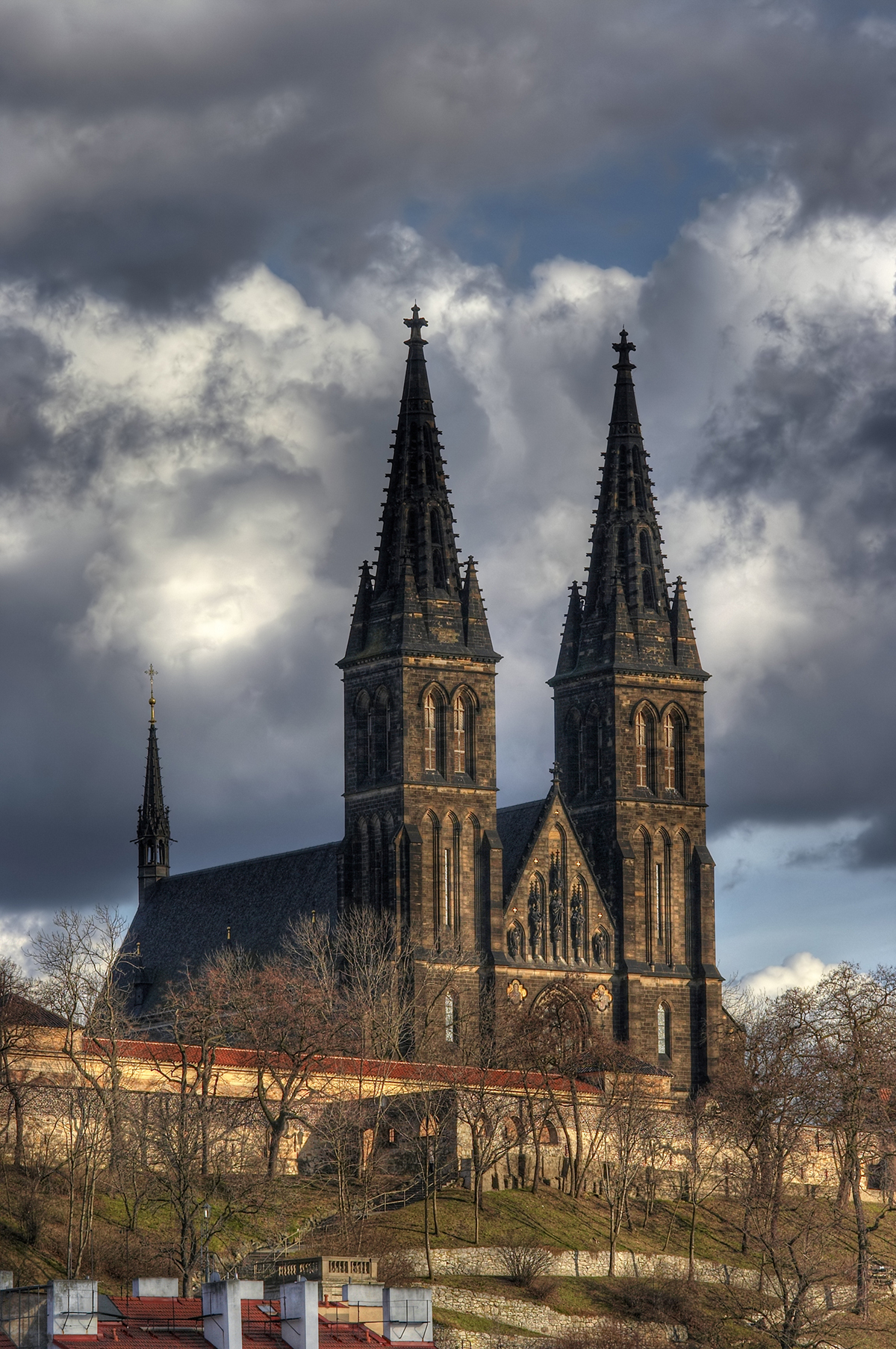
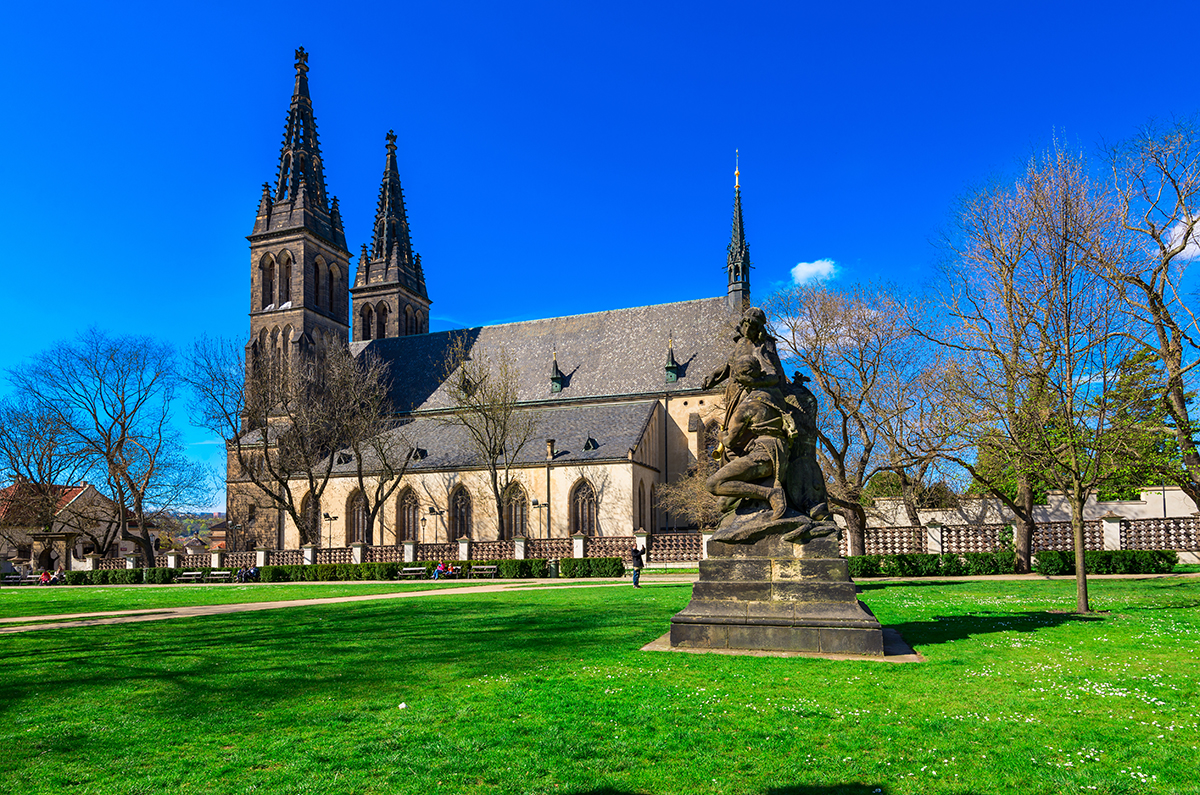
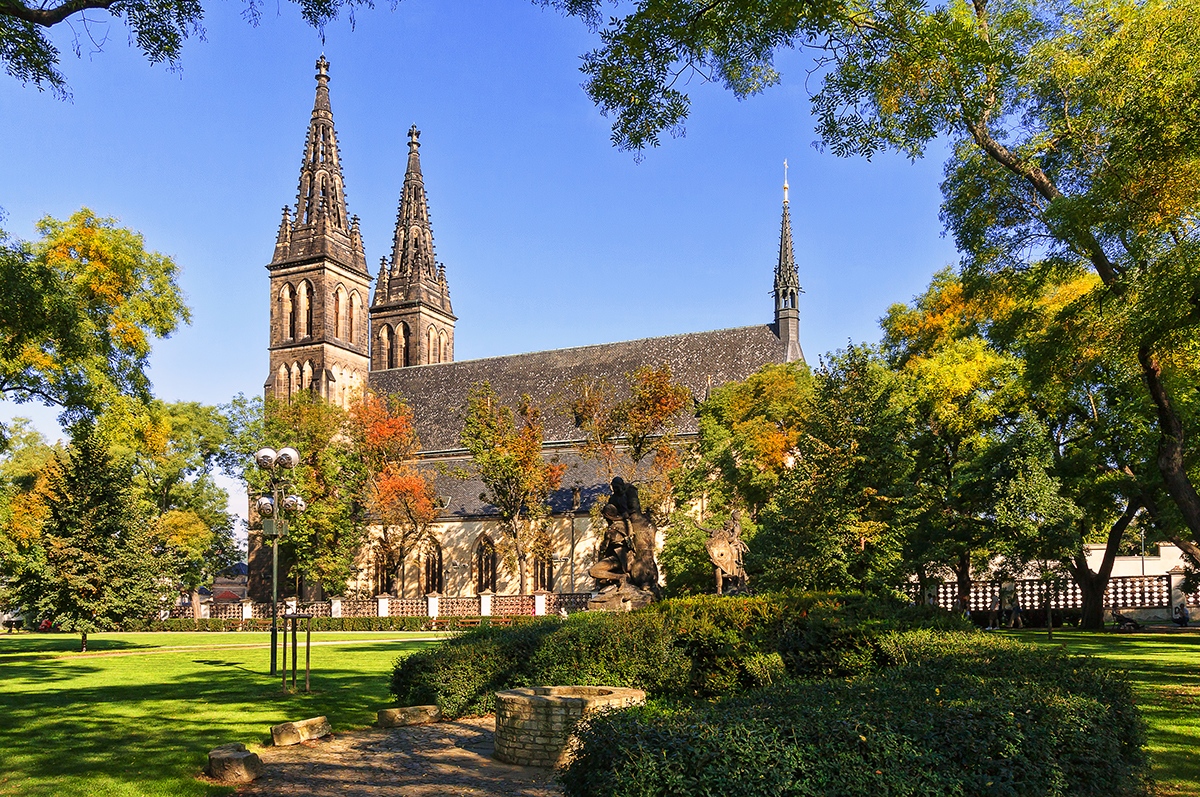
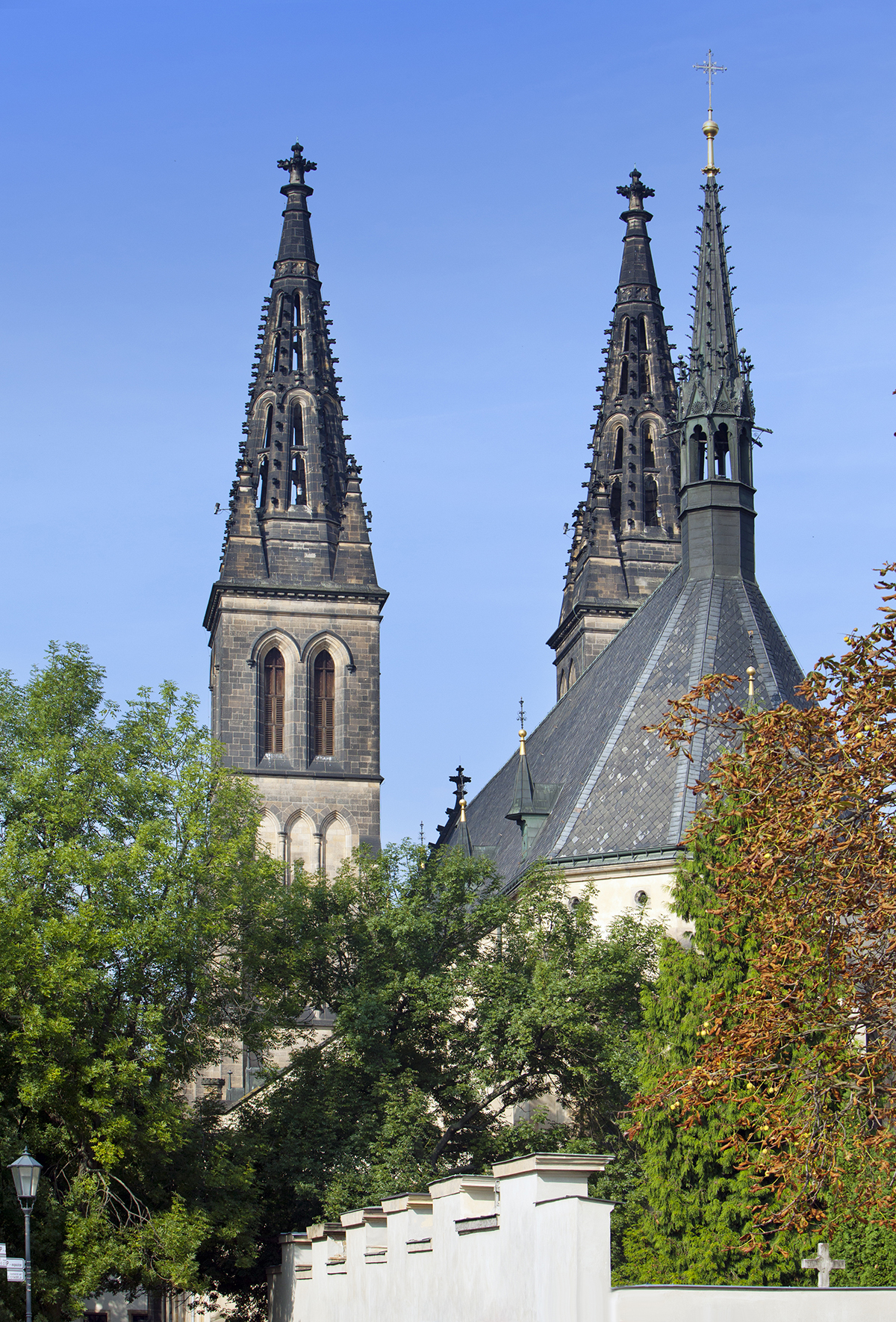
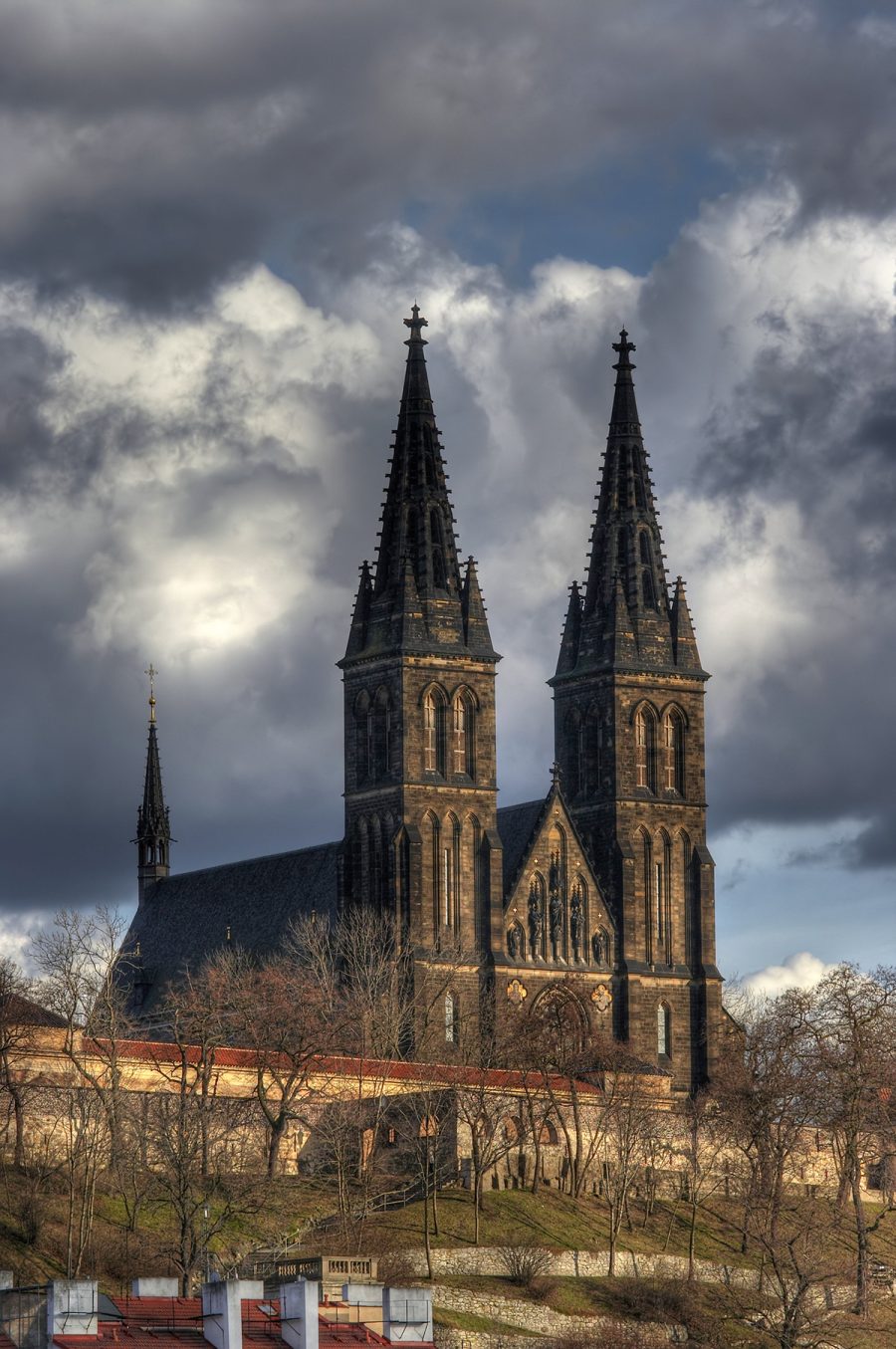
Also dating from the second half of the 11th century is the dominant landmark of Vyšehrad today, the Basilica of St. Peter and St. Paul. Its construction was ordered by Prince Vratislav II based on the model of the Church of St. Peter and St. Paul in Rome and as a deliberate antithesis of Prague Castle. At the same time the Vyšehrad Chapter was founded, which was not subject to the Bishop of Prague, but directly to the Pope in Rome. Today's church is the result of an early 20th century neo-Gothic reconstruction.
The church is adjacent to the Vyšehrad Cemetery, where important Czech personalities from the 19th century are buried, such as the composers Antonín Dvořák and Bedřich Smetana, the writer Karel Čapek, and others. Part of the cemetery is also a common tomb of the most important national personalities – Slavín. Here rest, for example, Jaroslav Vrchlický, Alfons Mucha, Václav Špála, Ladislav Šaloun, Ema Destinnová, Rafael Kubelík and Kamil Hilbert.
Vyšehrad in the past also had an important function as a fortification, protecting the southern approach to Prague. The reconstruction of Vyšehrad into a Baroque citadel was begun by Ferdinand II in the 17th century. To this day the Tábor and Leopold gates, which were part of the fortifications, have been preserved. A later building is the Empire style Brick Gate..
In the 18th century during the French occupation the French army built underground passages designed to move and shelter troops, known as casemates. The casemates were later used by the Austrian and Prussian army. When they left Vyšehrad they wanted to destroy it and left fuses and 133 barrels of explosives in the corridors for the last soldier to blow everything up. Vyšehrad was saved from complete destruction by three brave men from the village of Podskalí near Prague who infiltrated the casemate and put out the fuses. For their heroism they were awarded by Maria Theresa and received an annuity of 200 gulden per year. Inside the casemates there is also a huge room called Gorlice, which served to gather the troops. Today it houses the lapidary with the originals statues from the Charles Bridge. Part of the casemate, including Gorlice, is accessible for visitors.
Since 1962 Vyšehrad is a national cultural monument and is a contributory organisation established by the Capital City of Prague. Part of the property was returned to the Vyšehrad Chapter. Vyšehrad is a popular tourist destination, but also a place of leisure for Prague inhabitants. Various cultural and social events are held here.