The Liechtenstein Palace
Audio narration in this language is not available yet.
a classicist palace above the water surface
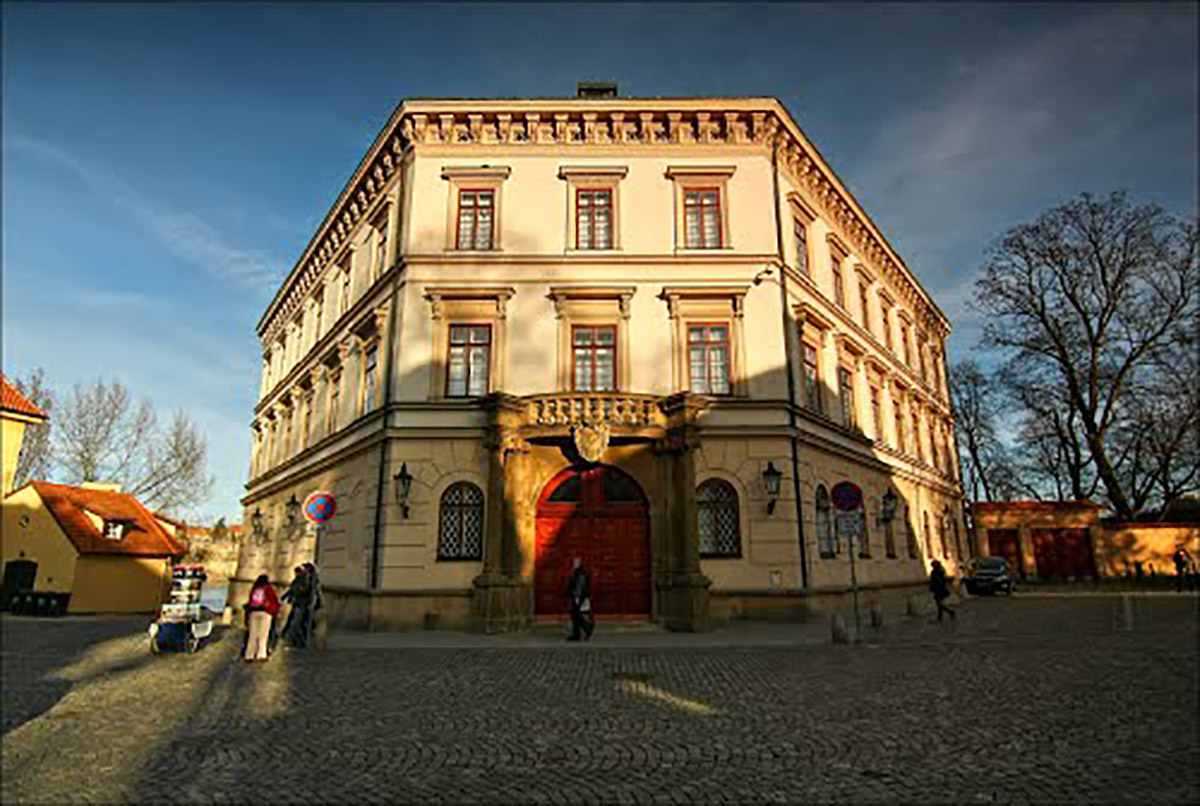
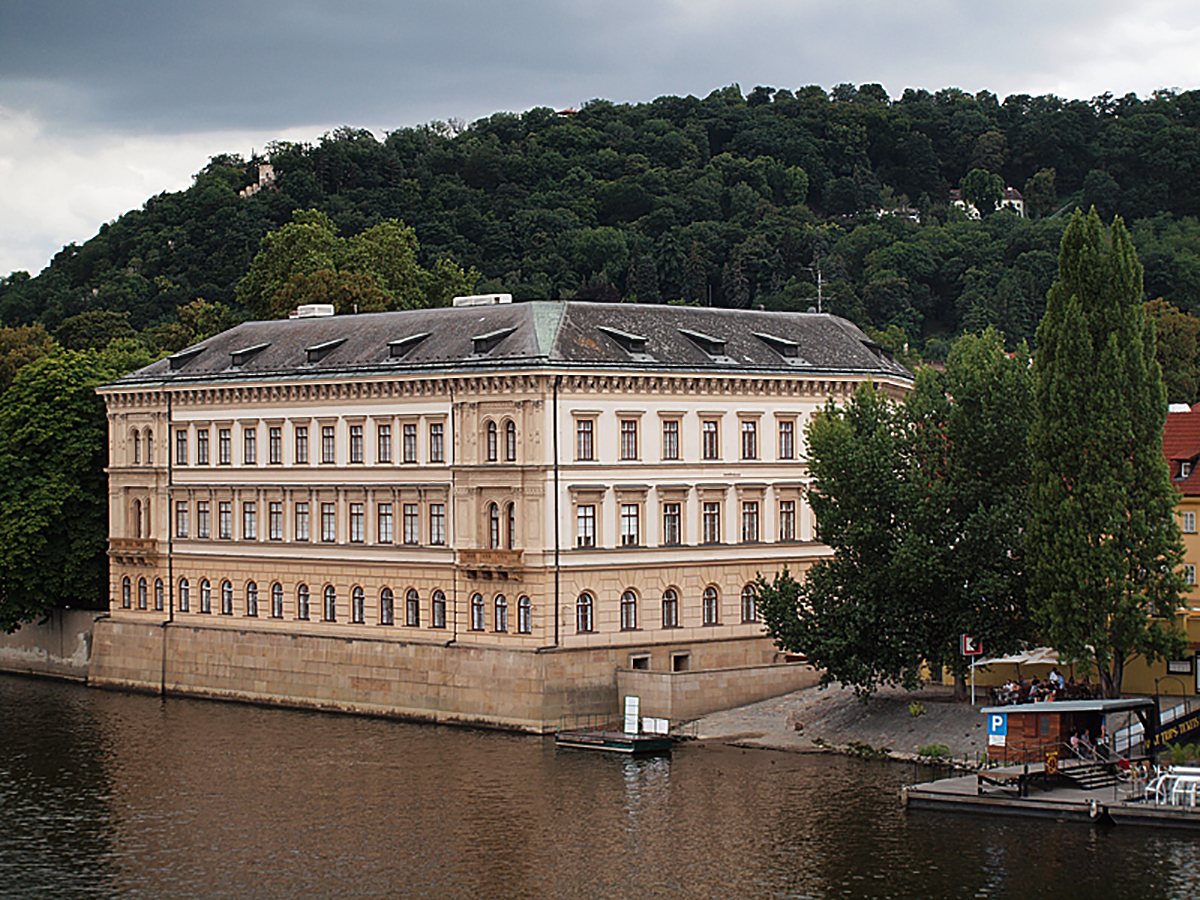
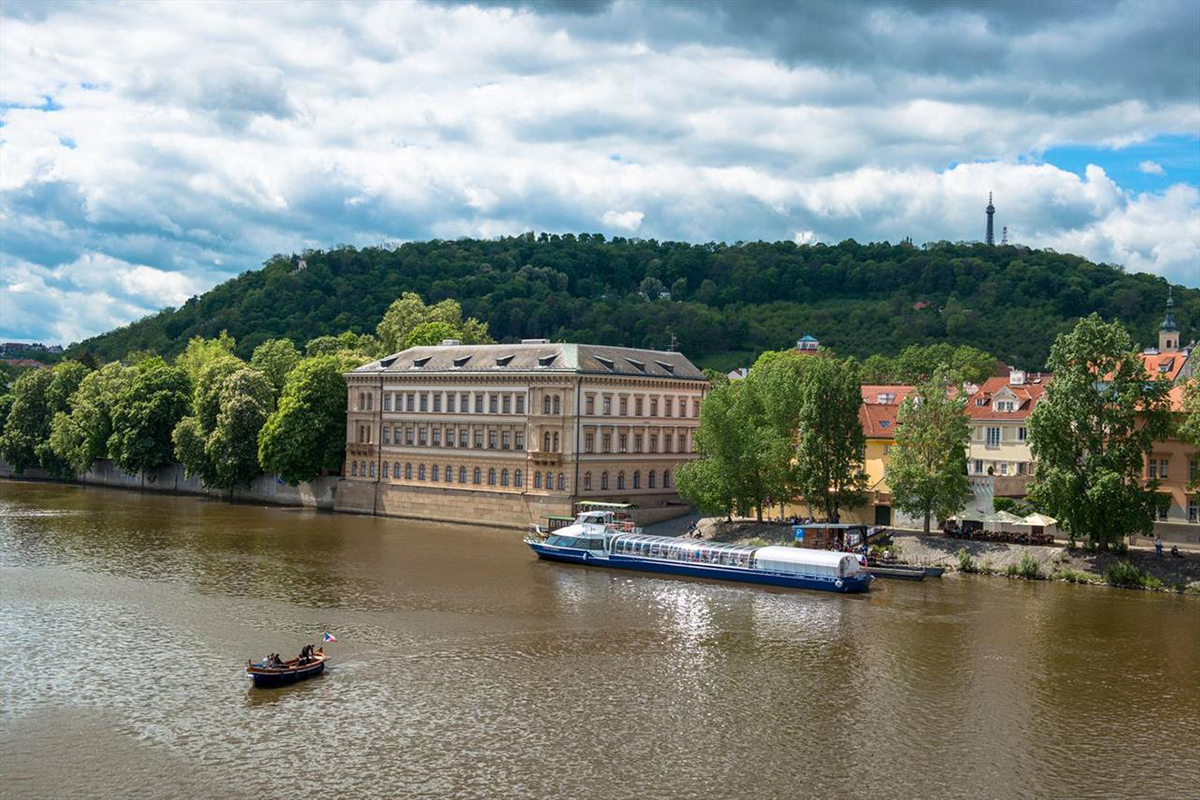
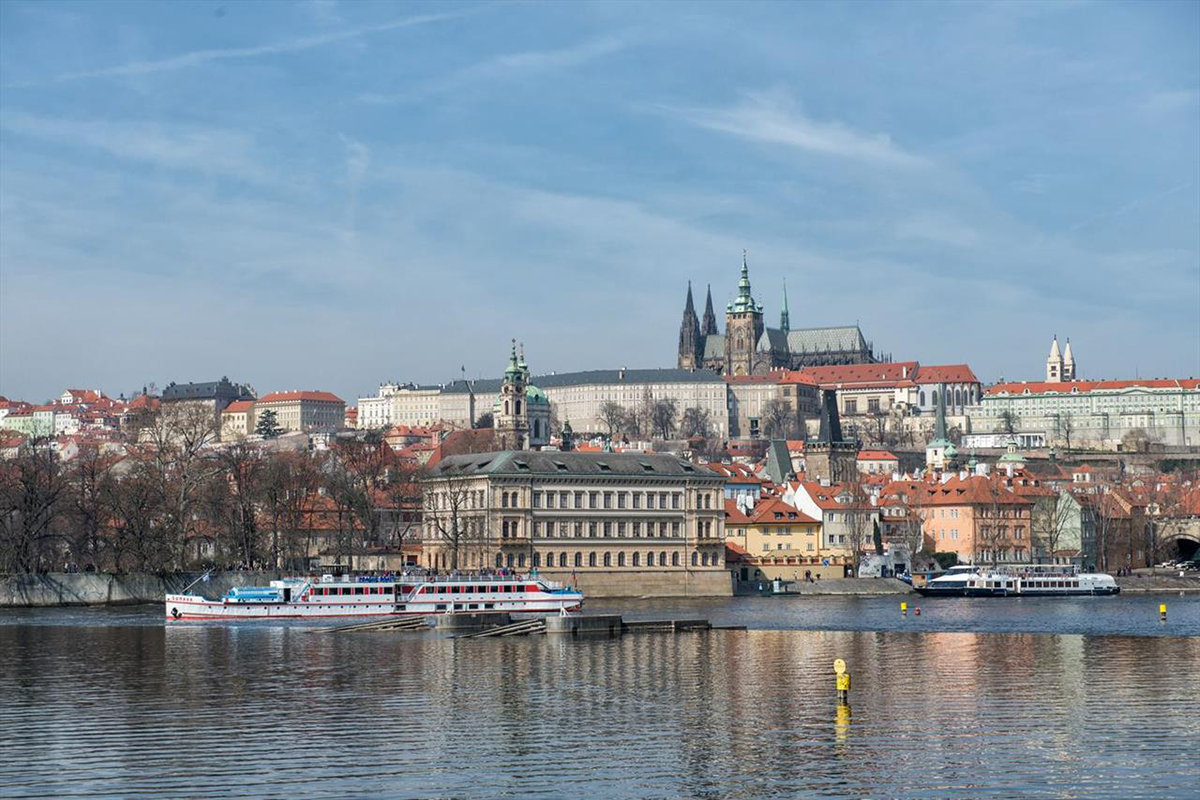
The Liechtenstein Palace in Kampa, rebuilt in the classical style, is used to accommodate important state visitors.
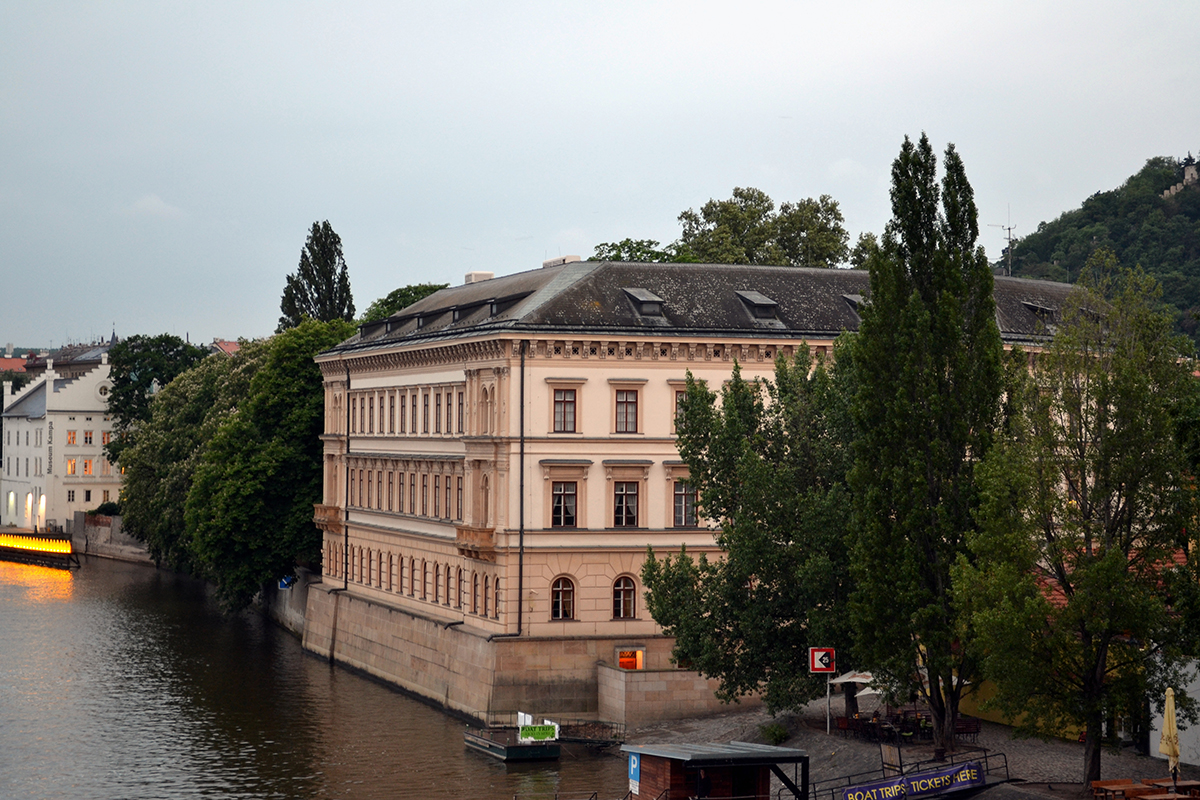
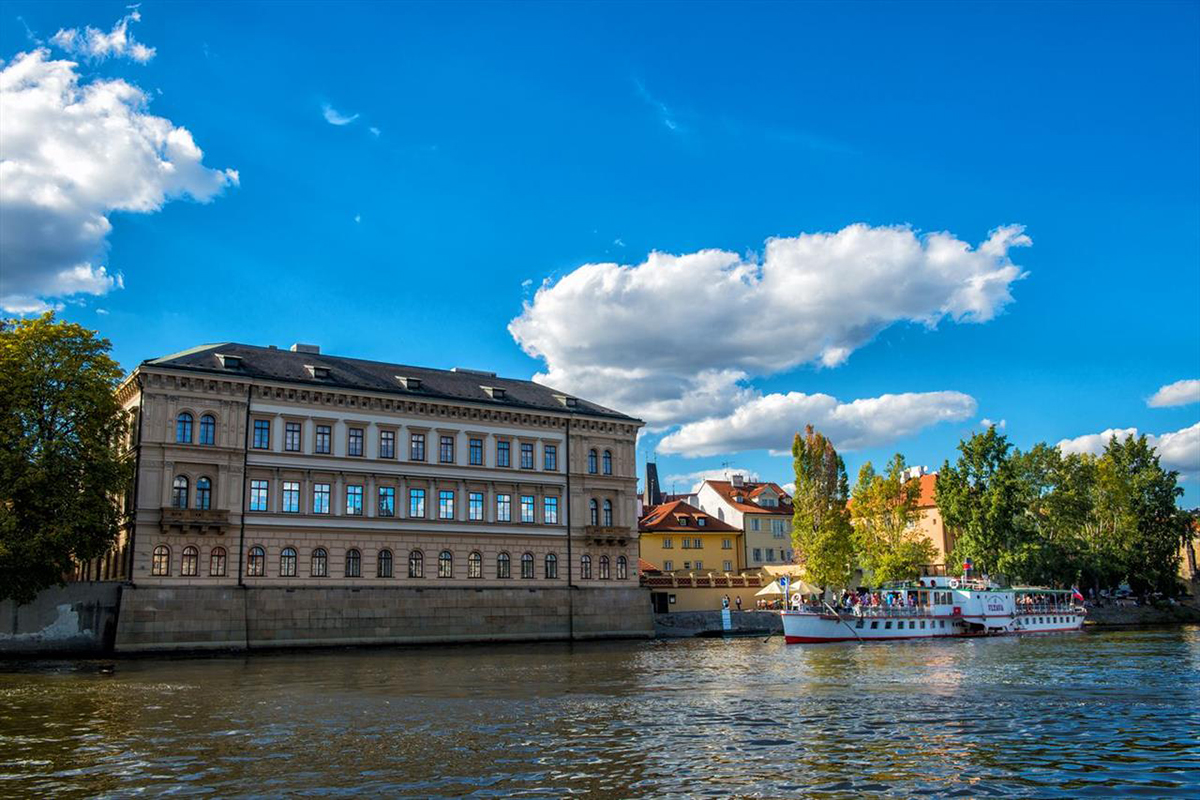
The Liechtenstein Palace is located in Kampa and its south facade extends directly to the surface of the Vltava River, which is always threatened when there is flooding. After the great fire in the Lesser Quarter in 1541, rubble from burnt houses was weighed out here in order to strengthen the bank and protect it from floods. Later there a house was built here that was bought by one of the leading burghers of the Lesser Quarter, but he was executed in the Old Town Square for his participation in the conspiracy against Emperor Ferdinand II.
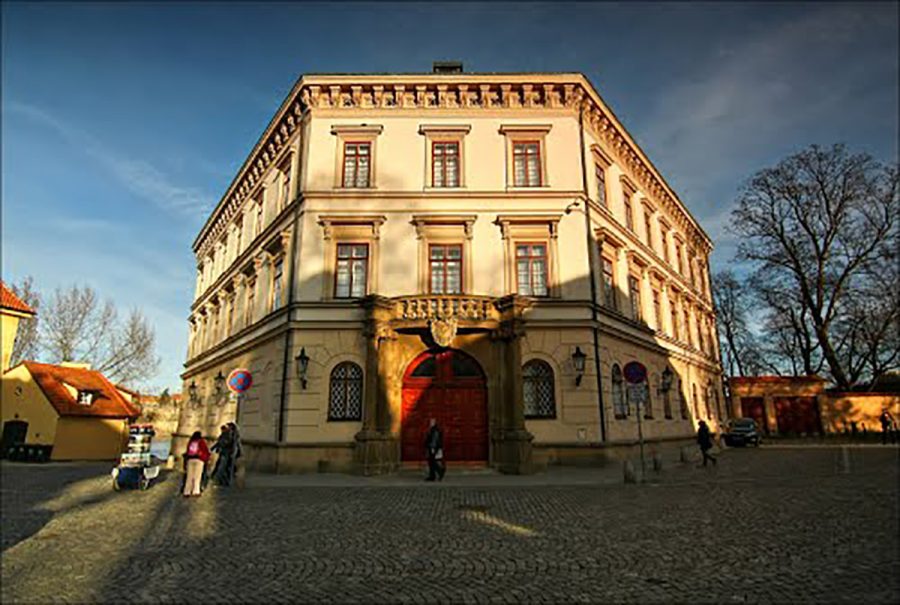
The first Palace was built here in 1696. It was a one-storey hexagonal baroque palace with a courtyard in the middle, with the two towers and rich decorations. The palace was probably the work of the architect Giovanni Battista Alliprandi, was named after its owner Kaiserstein. Since 1831 the palace belonged to the family of Liechtenstein, who carried out the largest architectural changes to it. The palace was rebuilt in the classical style and the original tower was removed. From the original Baroque building was left only the column portal, which was decorated with the emblem of the Liechtenstein family. This is the same as the coat of arms of the Principality of Liechtenstein.
In 1864 the palace was bought by the miller František Odkolek, who had it rebuilt in neo-Renaissance style and increased by one floor. The project of the reconstruction, whose author was probably Vojtěch Ignác Ullmann with the participation of architect Josef Zítek was heavily criticised for disrupting the historical panorama. The palace was later acquired by the municipality of Prague and was seized by the Germans during the occupation. The municipality then transformed the garden into a public park and had offices built in the palace.
A great reconstruction of the palace began in 1982, because the building was in danger because of the influence of the Vltava River water. The palace was under the authority of the Government, which planned to build luxury apartments in it for important state guests. The perimeter walls of the palace had to be sealed against water with Milanese walls, whose concrete defence was recessed to the slate substrate to a depth of 10 to 14 metres.
Work was completed in 1991, and the palace has been used by the Government of the Czech Republic since that time. For example, the Dutch and Danish queens, the duke of Luxembourg and his wife and the king and queen of Spain have stayed in the palace, followed later by the governor of Canada and the president of Portugal. In 1996, Queen Elizabeth II and her husband, Prince Phillip, became two of the most important guests to have stayed in the palace.