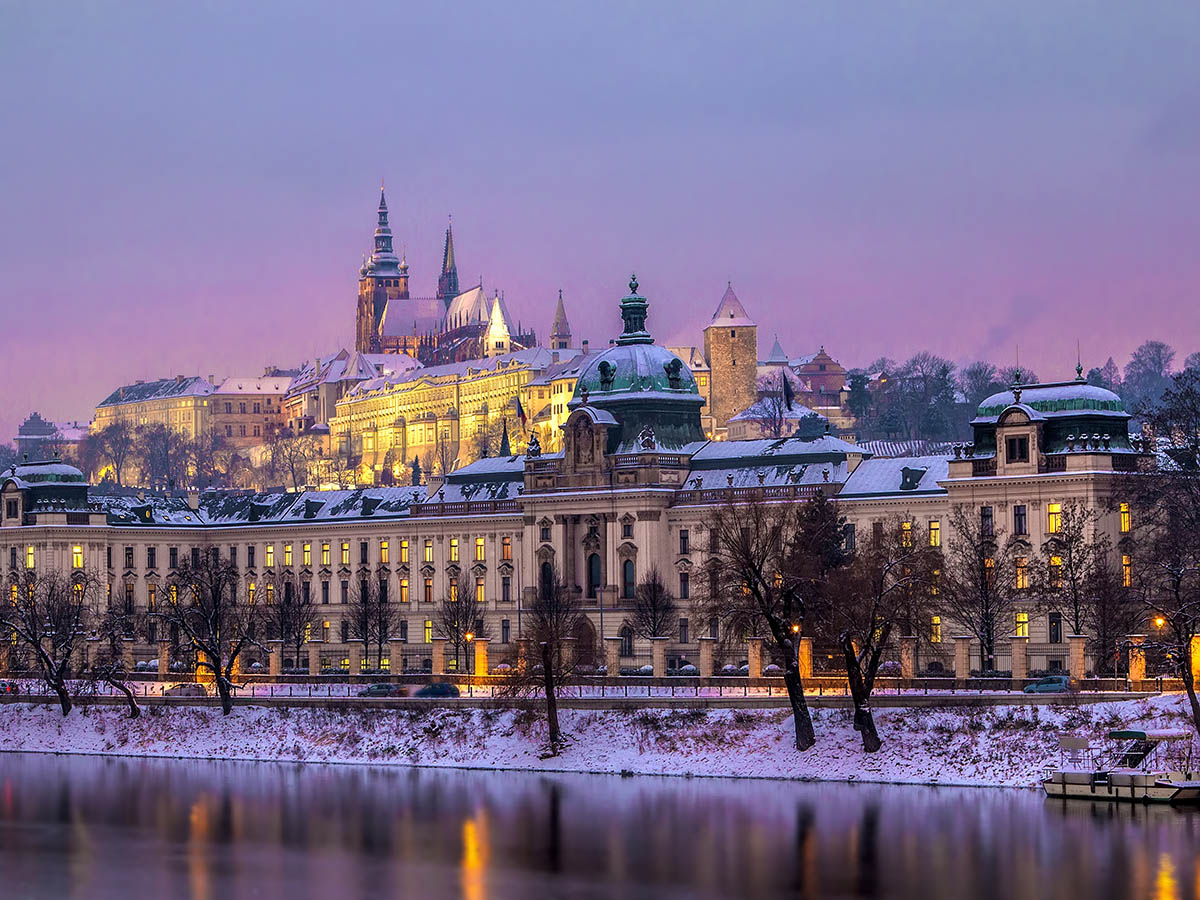
Prague Castle
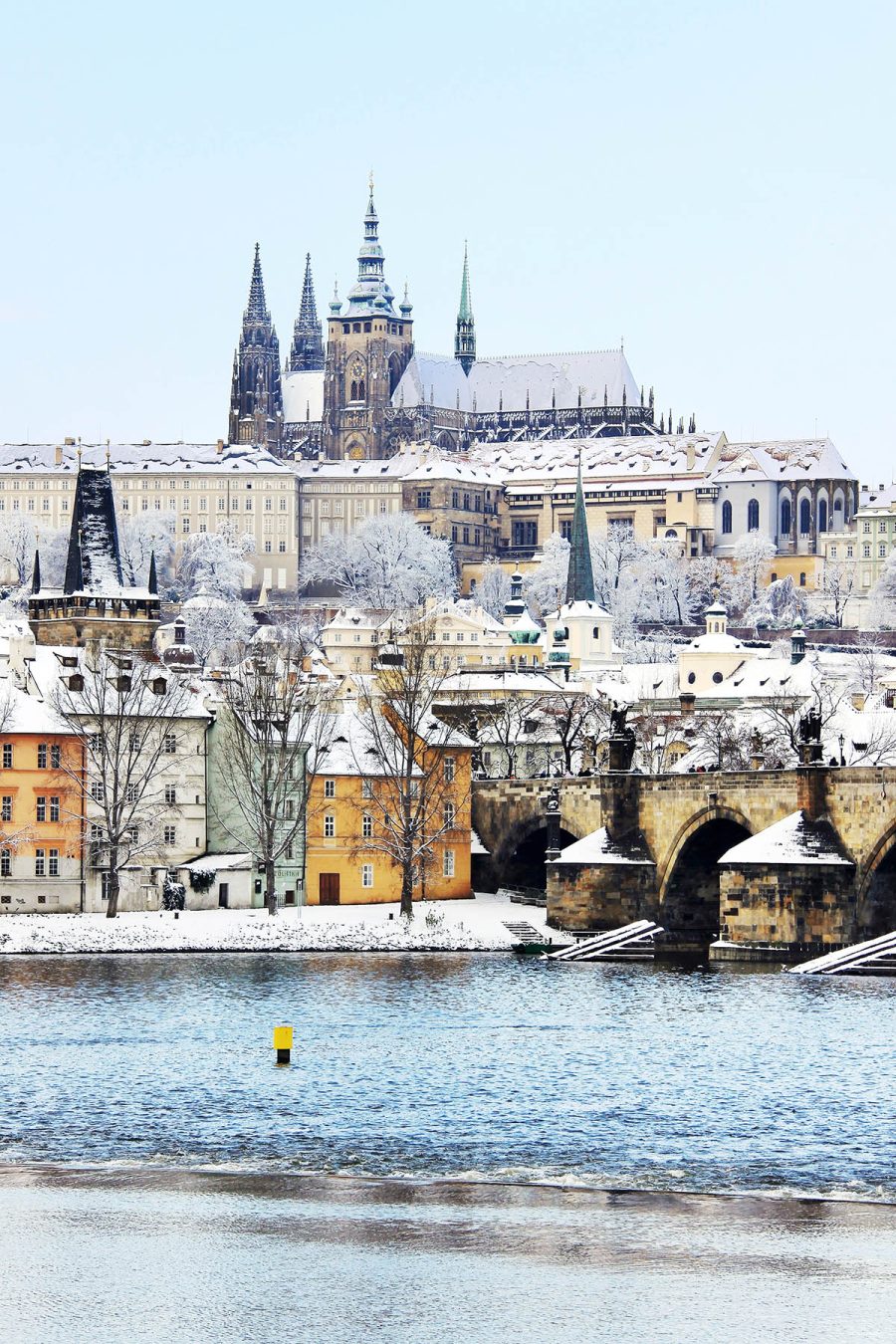
the ancient symbol of Czech statehood
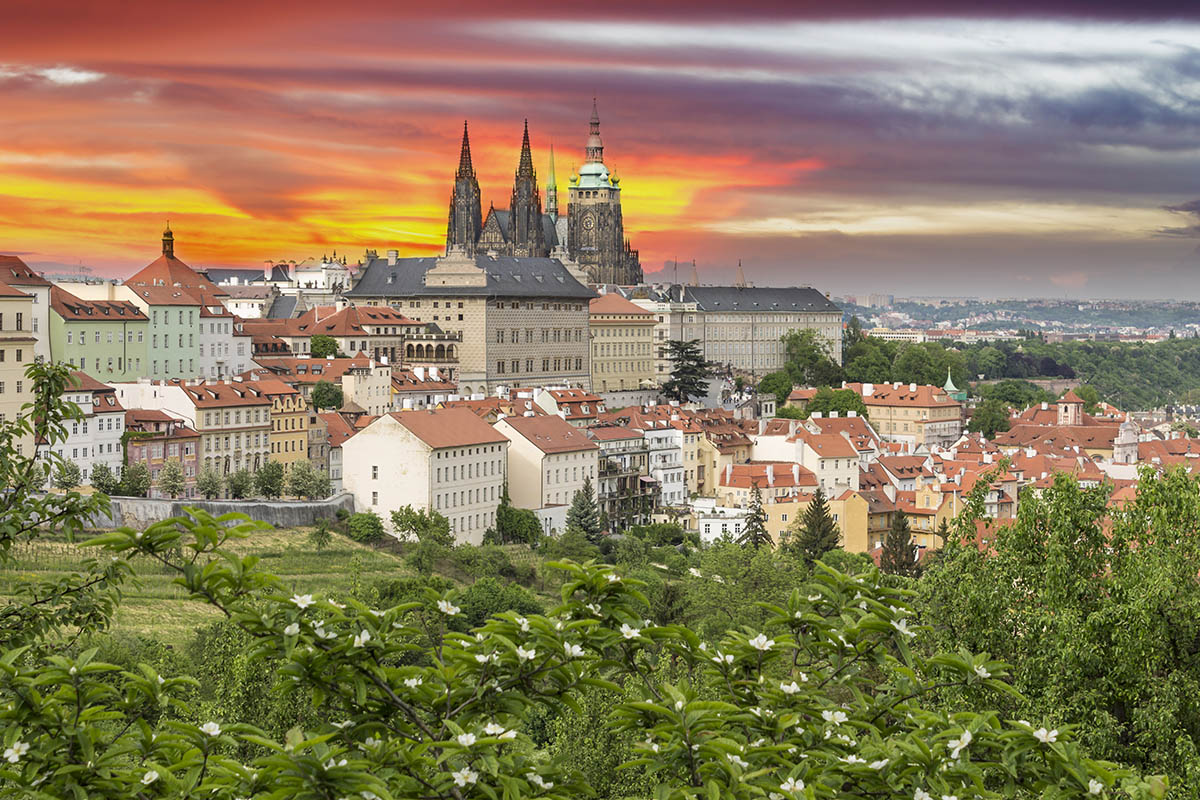
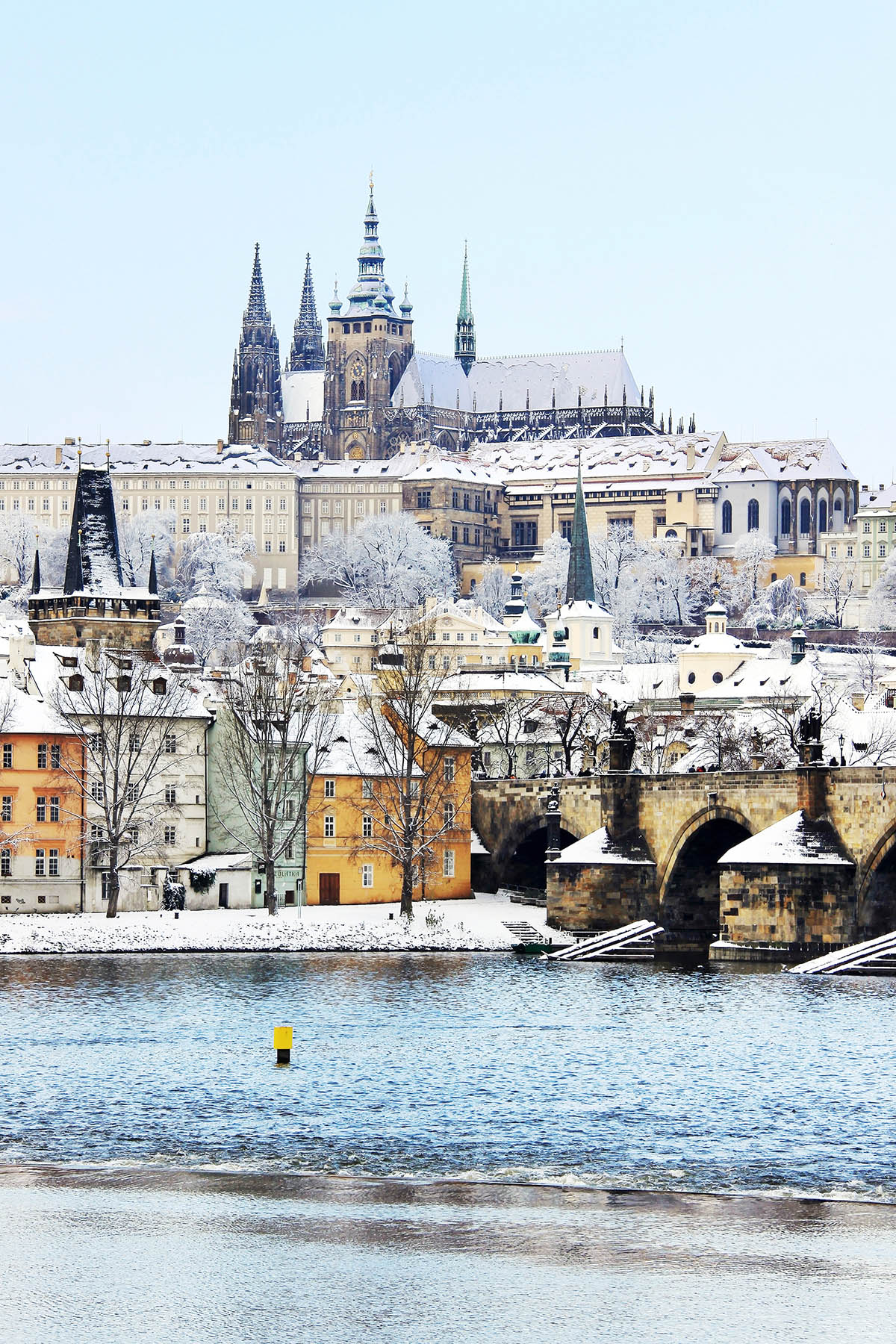
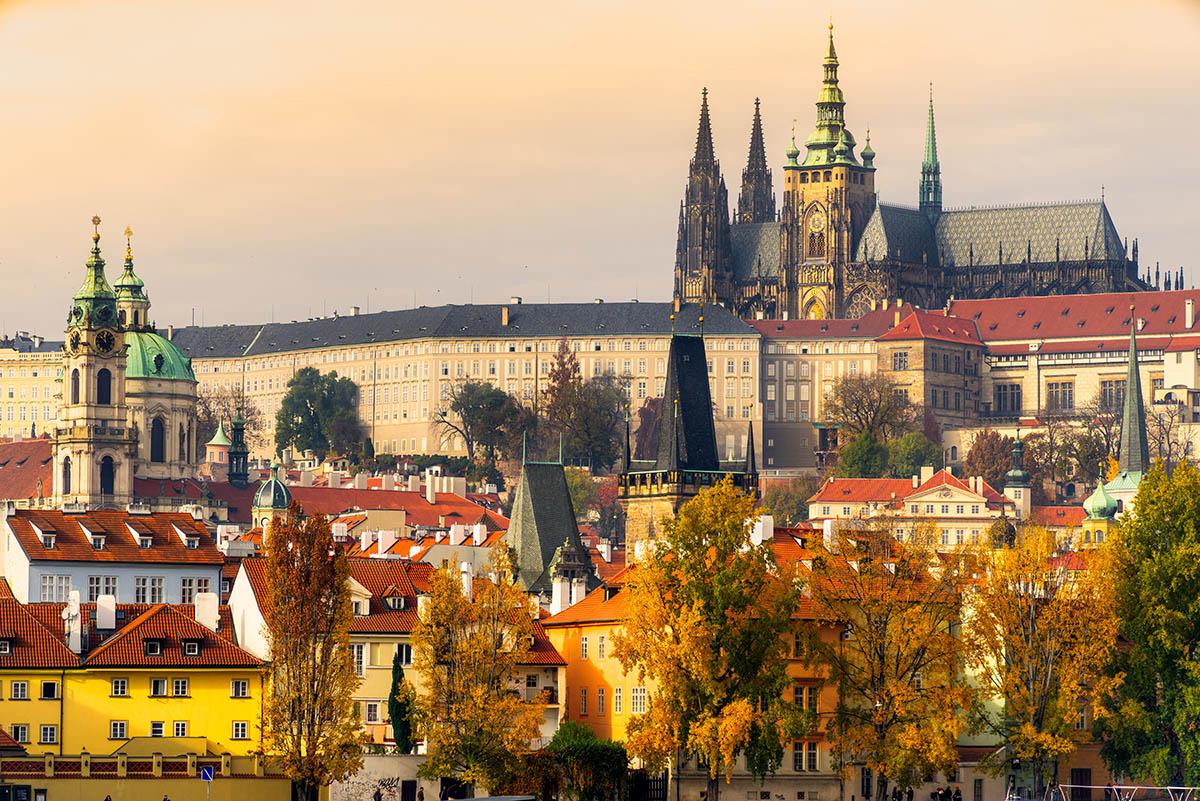
The largest contiguous castle complex in the world, whose foundation dates back to the 9th century. A symbol of Czech statehood, it is included in the UNESCO list of world heritage sites.
Prague Castle with over a thousand years of tradition is the most important cultural monument in the country. The castle complex, which is included in the UNESCO list of world heritage sites, is a destination of visitors from all over the world. According to the Guinness Book of Records the Prague Castle with an area of 70,000 m2 is the largest castle complex in the world.
Prague Castle was founded in the 9th century by Prince Bořivoj of the Přemyslids. Today it consists of a large collection of palaces and ecclesiastical buildings founded at various times and in a variety of styles. Among them are the remains of Roman buildings from the 10th century, Gothic buildings from the 14th century, pearls of the Renaissance period, but also classical reconstructions. To this day are admired modifications from the period of the First Republic by Josip Plečnik or the latest restorations from the end of the 20th century.
The first brick building in the castle grounds was the little church of the Virgin Mary, the remains of which can be seen in the passage between the second courtyard and the Garden on the Ramparts. The second important building was the female Benedictine monastery next to the Church of St. George, which was founded by Prince Boleslav II and his sister Mlada in 973, and is the oldest monastery in the country.
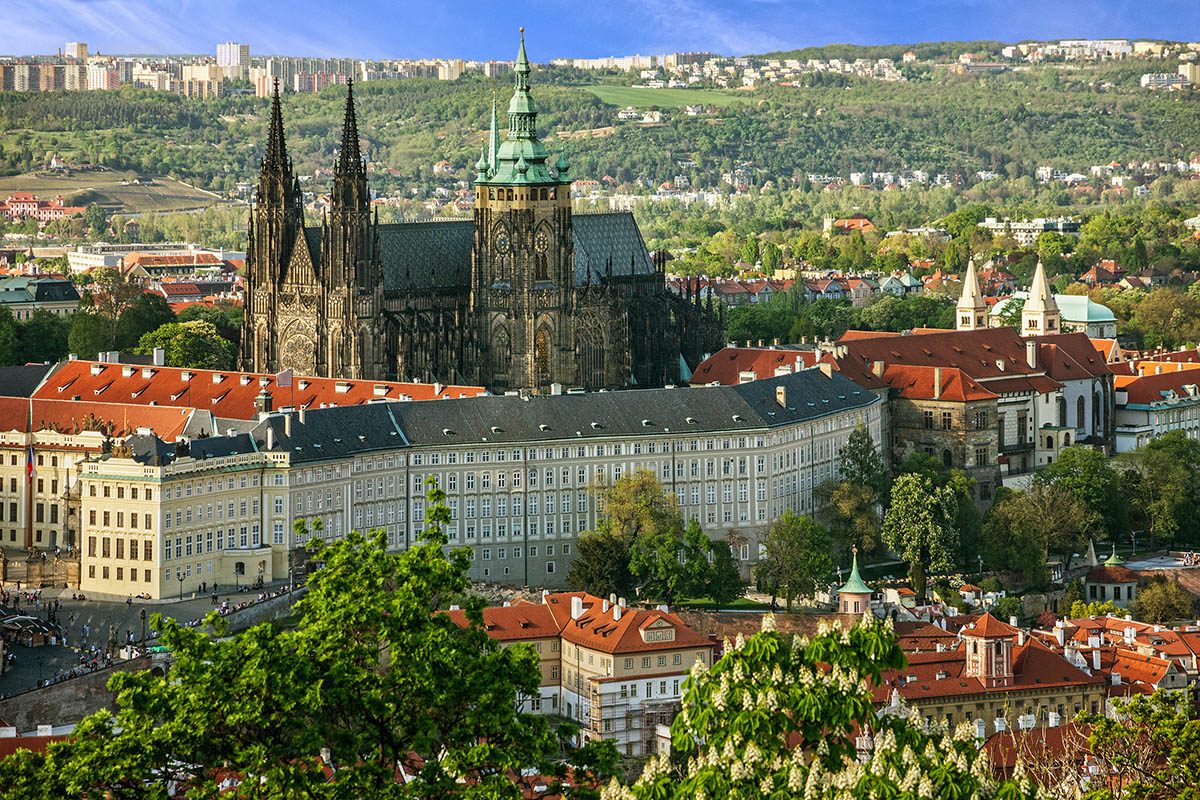
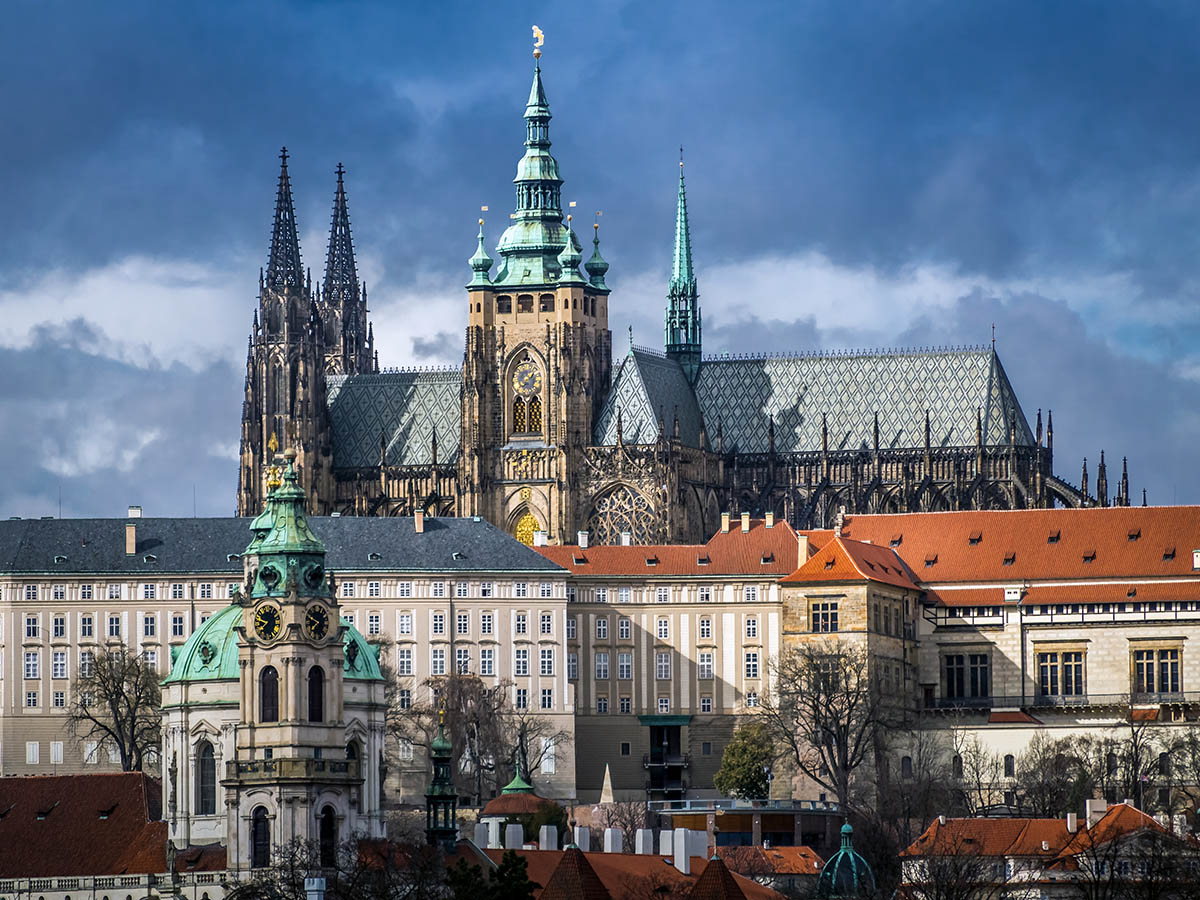
The dominant feature of the castle complex is the St. Vitus Cathedral, which was preceded by a rotunda and later a basilica. Construction of the Gothic cathedral was initiated by Charles IV, along with his friend Arnošt of Pardubice in 1344, on the occasion of the promotion of the Prague bishopric to an archbishopric. The cathedral became a traditional place for the coronation of Czech kings, but also the site of their final resting place. Also buried in the cathedral are archbishops, clerics, nobles and people connected to the Prague Court.
The Crown Chamber in the middle of the Cathedral houses the Bohemian Crown Jewels – the Crown of St. Wenceslas, Royal Sceptre, Royal Orb and Coronation Cloak. The chief architects were Matthias of Arras and Peter Parler. The Cathedral has three naves, a transverse nave, a gallery and a chapel wreath. The most important of these is the St. Wenceslas Chapel built over the grave of St. Wenceslas. The Great Tower, 96.5 metres high, was started by Peter Parler, but not completed until 1554, and in 1770 was topped with Baroque domes. Like the cathedral itself it was completed only in the 20th century and ceremonially reopened on the occasion of the Saint Wenceslas Millennium in 1929.
In the 1330s a costly reconstruction of the Royal Palace based on the model of French settlements was initiated. Today, the Old Royal Palace is a complicated building complex, which originated in several stages and is part of the lower floor of the Romanesque chapel of all saints, the Gothic floor, the arcade from the time of Charles IV, the Hall of Zemské desky (Land Tables) or the Column Hall of Wenceslas IV. Furthermore, the Dvorské desky room and representational spaces – the foyer and the Green Room, the Vladislav Small Audience Hall and the two rooms of the Czech Office. There is also the Hall of the Imperial Court, the Terezian Wing, the New Zemské desky, the Chamber, the Equestrian Staircase, the All Saints Church and, above all, the beautiful Vladislav Hall, built in the late Gothic style.
The area of the Prague Castle contains a series of other structures, such as the Prague Castle Riding Hall, the Ball Games Hall, the Lion Courtyard, Queen Anne's Summer Palace, the New Royal Palace (with the Spanish Hall), the Rosenberg Palace, the Lobkowitz Palace, the Mocker Houses, the Picture Gallery of the Prague Castle, the Supreme Burgrave, the famous Golden Lane, the Daliborka Tower, Mihulka and the Black Tower and ramparts. Then are also the many gardens, such as the Royal Garden (with the Singing Fountain), Na Valech Garden, the Garden on the Ramparts, the Hartig Garden, the Garden of Eden, the Deer Moat and others.
In the past Prague Castle was the seat of kings and emperors, and today serves as the official residence of the President of the Czech Republic. Prague Castle has been a national cultural monument since 1962.